
Listen to this podcast in the app for free: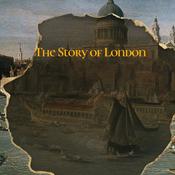 Download for free in the App Store
radio.net
Sleep timer
Save favourites
220 episodes
Chapter 216- The Dutch Daredevil Atop St. Paul’s… (1553-1554)
2026-10-23 | 50 mins.The story returns after a brief hiatus with the opening months of the reign of Queen Mary Tudor… and we examine how and why London had gone from the place that exploded in joy at her proclamation as Queen… to hundreds of armed Londoners joining an armed rebellion against her. It’s a few months where we watch the trappings of regime change as London would have seen it, of fiery pamphlets filling the streets, of suicidal judges, of the fraught relationship between the Queen and her half-sister, and the causes of a rebellion down in Kent (its always Kent).
More than that, it’s about the pageantry and splendour of when a new monarch takes the throne, and the moment when a Dutch daredevil climbed to the very top of old St. Paul’s cathedral…
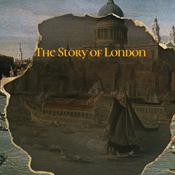
Cover includes detail of St. Paul’s in 1540 by Van der Wyngarde.Chapter 215- Bloody (Minded) Mary (July 1553) (The Fall & Rise of the Tudors: IV)
2026-10-08 | 52 mins.Continuing and concluding the saga of the reign of Lady Jane Grey and her brief moment on the throne, the story follows the dramatic sudden twists, that were to see a London haberdasher suddenly become most important man in the kingdom for a few hours, London itself erupt into a wild two day spontaneous celebration fulled by copious amounts of booze, and the unlikely figure of a woman already known to suffer from fear induced paralysis, suddenly stare down the government of England… and seize the throne for herself.
Cover includes detail of portrait of Queen Mary I by unknown artist.Chapter 214- The 18 Days in July… (July 1553) (The Fall and Rise of the Tudors III)
2026-10-01 | 50 mins.In July 1553, London witnessed a new Queen- Jane Grey, cousin of the late teenager Edward VI. her story is supposedly this tragic romantic tale of an innocent young woman placed upon the throne by an ambitious father-in-law…
But as this chapter will show? It was no such thing. To London, Jane WAS the Queen, and the regime behind her executed an almost faultless plan to make her queen, and to ensure the smooth running of the state. But one simple miscalculation made what was a smooth transition difficult… and a crisis will suddenly emerge where no crisis should have been. Around this, London carries on, starting life as loyal subjects of their new queen… over 18 days in July.
Cover includes detail of portrait of Jane Grey.Chapter 213- Childish Things (1551-1553) (The Fall and Rise of the Tudors: II)
2026-09-23 | 54 mins.The last two years of the reign of Edward VI were VERY busy for London; there was a economic crisis to get out from under; there were brutal storms which devastated Flanders, which the cities merchants could exploit; there was the successful removal of the rights of the German merchants in the Steelyard. But it was also a time that saw a brutal epidemic of Sweating Sickness, wild expeditions to China leaving the docks of Deptford, and the rise in power of the son of a man who once ran the cities first true secret police force… but while all this was happening, the teenage King got it into his head to implement a policy to change the line of succession- suddenly dragging the nation to the brink of a civil war, and threatened the stability of the Tudor dynasty itself.
Cover includes extract of from profile of King Edward VI, holding the red rose of the royal house of Lancaster, in a portrait attributed to the court artist Guillim Scrots.Chapter 212- The (mostly) true and tragic death of Arden of Faversham (1551) 4th Anniversary Special
2026-09-16 | 1h 2 mins.February 1551… and in a small town near London a terrible murder takes place; a man is killed by his wife and a large assortment of colourful characters, and the case of it creates an uproar that scandalises London all that year… and beyond. The crime became immortalised in poems, ballads, plays, and over 25 years later was included in detail in one of the great historical accounts of the history of England. What was it that so intoxicated the Tudor audiences that they were drawn back again and again to rehash the details so salacious? In this special chapter, made to celebrate our 4th anniversary, we examine the most detailed account of this event to see what it tells us about the time, and to witness an amazing story of London Grocers, criminal soldiers, and children who helped murder their own father.
Cover includes detail of a cover of Arden of Faversham, produced by the artist Hugh Ribbans.
More History podcasts








Trending History podcasts

















About The Story of London
Welcome to The Story of London, a podcast dedicated to telling the history of London as a single narrative tale; from its birth until the present day.Each episode takes us along that tale, a chronicle of the most fascinating and vibrant city on Earth.There is a lot of content in here and each listener can enjoy it in a variety of ways. You can listen to an episode by itself for a slice of life from London’s past; or, if you have a favourite period of time you want to explore, find the era and follow the Chapters in that section.Or maybe you want to join us on the grand journey, starting at the beginning and following along? Whatever option, welcome to the chronological tale of this amazing place.The Story of London covers events as they happened, from the actions of the great and the good, down to those of the poor and marginalised. We try to be as historically precise as possible, sometimes stumbling upon little gems of history that change the way we see the past, and never take ourselves too seriously.Feel free to join us… new episodes every week.
Podcast websiteListen to The Story of London, The Rest Is Classified and many other podcasts from around the world with the radio.net app

Get the free radio.net app
- Stations and podcasts to bookmark
- Stream via Wi-Fi or Bluetooth
- Supports Carplay & Android Auto
- Many other app features
Get the free radio.net app
- Stations and podcasts to bookmark
- Stream via Wi-Fi or Bluetooth
- Supports Carplay & Android Auto
- Many other app features

The Story of London
Scan code,
download the app,
start listening.
download the app,
start listening.
The Story of London: Podcasts in Family
 Canada - english