
Listen to this podcast in the app for free: Download for free in the App Store
radio.net
Sleep timer
Save favourites
308 episodes
Transmissions :: Joe Casey of Protomartyr (2026)
2026-10-21 | 1h 24 mins.Social media is a strange thing. Not long ago, Transmissions host Jason P. Woodbury was retweeted by famed MTV News legend Kurt Loder. Loder was sharing a repost of a viral video featuring Detroit band Protomartyr, performing their song “Jumbo’s” at a BBQ in 2011.
In the video, frontman Joe Casey smokes a cigarette and sips whiskey, alternating between deadpan ambivalence and dark menace as he prowls the stage and the band churns behind him. Loder noted, "Apparently [rock & roll] actually will never die…"
This week on Transmissions, w're speaking with return guest Joe Casey of Protomartyr, a band that, perhaps all on their lonesome, is indeed keeping something like rock & roll alive—whatever we really mean by that—on their new album, Hotel Usona.
Since 2012’s debut No Passion All Technique, the band has taken leaps forward with each album, and Hotel Usona, recorded with producer Dave Friedman, incorporates elements of mid-century exotica, musique concrète, and jazzy noir.
Yet, there are moments on the album that radiate heaviness too—the band’s post-punk informed take on indie rock has never sounded more bracing. And it all sets a groundwork for Casey to create his most fully realized lyrical concept to date. Set around the loose concept of a hotel in which each room contained a character and a story, it's both a timely meditation on an empire in decline and a genuine work of defiance and hope.
In this conversation, we discuss Detroit’s cinematic glories, Catholicism, JD Vance, and much more. It was a blast to catch up with Joe and a pleasure to share this conversation with you on Aquarium Drunkard Transmissions.
Learn more about your ad choices. Visit megaphone.fm/adchoicesTransmissions :: Richard Thompson (2026)
2026-10-14 | 1h 4 mins.Hippies, Thugs, and Heroes finds guitarist Richard Thompson sounding as savage, lyrical, and eloquent as ever. This week on Aquarium Drunkard Transmissions, we're pleased to welcome Thompson back to the show.
If you dig this show, there’s a pretty solid chance that you already know that he's one of the founding fathers of British folk rock, known for his work with Fairport Convention, Sandy Denny, his former wife Linda Thompson, Nick Drake and others.
Writing about Thompson, Aquarium Drunkard’s own Tyler Wilcox praised his “unparalleled instrumental prowess, his superhumanly sensitive tone, and his singular melodies.”
Thompson last joined us in 2021 to discuss his memoir, Beeswing: Losing My Way and Finding My Voice (1967-1975). Since then, he’s released Ship to Shore in 2024, and now Hippies, Thugs and Heroes, which was produced by Thompson and James Frazee in Weehawken, New Jersey.
In this conversation, Thompson guides us into the crime-ridden world of the new album, discusses the jangling influence of Tom Petty and The Byrds, his own prowess on the drum kit, working quickly and without much worry, and some of his past collaborators, including Mitchell Froom and Tchad Blake.
From outlaw ballads to the wilds of social media, from Buddy Holly to Johnny Cash, Thompson is a well seasoned guide through this conversation, so let’s get into it. Aquarium Drunkard Transmissions drops weekly on Wednesdays in partnership with the Talkhouse Podcast Network.
Learn more about your ad choices. Visit megaphone.fm/adchoicesTransmissions :: Peanut Butter Wolf
2026-10-07 | 56 mins.Stones Throw is one of the most dynamic labels of the 21st century. The label's founder, Peanut Butter Wolf, joins us to discuss the label’s journey, from a small backpacker hip-hop imprint to an Adult Swim-boosted powerhouse, to the diverse roster of post punk, electro, and R&B artists taking the stage to celebrate Stones Throw’s 30th anniversary on Saturday, October 16, 17, and 18th in Highland Park.
Presented by Lodge Room and KCRW, Stones Throw 30 speaks to just how expansive the the label’s sound is in 2026, from the fuzzed out synth punk of N8NOFACE to the violin powered art-soul of Sudan Archives.
In this career spanning conversation with host Jason P. Woodbury, Wolf takes us back to the label’s earliest days, discusses his own major label experiences, and traces the thread that connects the Stones Throw artistic lineage.
Along the way, we devote conversational space to the greats, including talk about Madlib, J Dilla, and the major hip-hop artists, including Nas and Kanye, who pulled from the vast catalog of sound in the Stones Throw sonic universe.
Learn more about your ad choices. Visit megaphone.fm/adchoicesTransmissions :: Johnny Marr
2026-09-30 | 1h 12 mins.Certain people play guitar in a way that is immediately recognizable, no matter the context. Our guest this week on Transmissions, Johnny Marr, is one of those guitarists. As a founding member of legendary indie band The Smiths, as well as a collaborator with groups like The The, The Pretenders, The Cribs, Modest Mouse, and Electronic, his sound is recognizable, a blend of jangle, chime, bite, and attitude.
But this recognizability never comes at the sake of the song. In fact, that’s what makes Marr so iconic, not just his tone or his parts, but the way he operates in first and foremost as a composer—turning the guitar into an instrumental of orchestration, a way to bring each song to life.
On October 2nd, Marr releases his latest solo album, The Age of Everything. Inspired by the everything-all-at-once pace of our current age, it’s a record that finds Marr sounding spry and loose.
In this conversation, Marr reflects on the new album, and gets into his philosophy regarding collaboration. It’s not just that Marr played on a Modest Mouse or Cribs record—he actually joined those bands full-on. What makes him so willing to dive in? What makes for a great artistic team-up? Marr drops his takes on those questions here.
Along the way, we also get into the global influence of The Smiths, discuss how Black American musicians inspired his sound, and share some of his less apparent influences, including Neil Young, who if you hear Marr tell it, played a rather pivotal role in the development of British punk rock. Style, sound, and spirit—Johnny Marr brings each this week, so tune in.
Learn more about your ad choices. Visit megaphone.fm/adchoicesTransmissions :: Matt Baldwin
2026-09-23 | 1h 31 mins.Welcome back to Aquarium Drunkard Transmissions. This week on the show, guitarist and psychotherapist Matt Baldwin, who is here to teach you How To Play Guitar.
OK, not exactly. But Baldwin is the author of How To Play Guitar, a series of zines that have been collected into a handsome book edition. If you’re just picking up the instrument, well, Baldwin isn’t writing about how to play a C chord or run scales.
These aren’t “how to” guides so much as “why to” prompts, stressing intuition over technique, dismissal of music industry norms, and the imperative to hone a singular, personal philosophy regarding the instrument—think Captain Beefheart’s “Ten Commandments of Playing Guitar.”
Baldwin is just as likely to devote page space to warning about being on time to the gig, stressing moral and internal rectitude, and the exposing dangers of social media as he is to dispense tips like “stop using a flat pick” and “play banjo for a while”—both solid tactical suggestions he espouses.
When he’s not writing or exploring ketamine therapies, Baldwin makes music himself. His latest LP is called Welcome to Your Pool, a wonderfully languid set of instrumentals housed in a fully 3D lenticular cover sleeve—it’s a wonder to listen to, but also just a wonder to see.
On October 3rd, Baldwin will perform at one of my favorite Los Angeles places, the Philosophical Research Society, with fellow traveler Imaad Wasif. In this talk, we discuss his own guitar journey, the paranormal, John Fahey, Philip K Dick, and much more. Dive in: the water is fine.
Learn more about your ad choices. Visit megaphone.fm/adchoices
More Music podcasts




Trending Music podcasts














About Transmissions
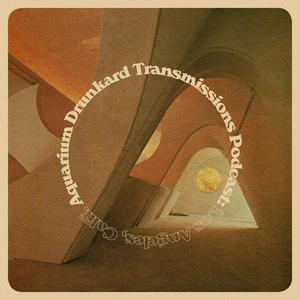
Weekly interviews with musicians, artists, authors, and filmmakers presented by Aquarium Drunkard.
Podcast websiteListen to Transmissions, DISGRACELAND and many other podcasts from around the world with the radio.net app
Get the free radio.net app
- Stations and podcasts to bookmark
- Stream via Wi-Fi or Bluetooth
- Supports Carplay & Android Auto
- Many other app features
Get the free radio.net app
- Stations and podcasts to bookmark
- Stream via Wi-Fi or Bluetooth
- Supports Carplay & Android Auto
- Many other app features
Transmissions
Scan code,
download the app,
start listening.
download the app,
start listening.
 Canada - english