
Listen to this podcast in the app for free: Download for free in the App Store
radio.net
Sleep timer
Save favourites
36 episodes
Boosting Testosterone & Understanding Your Testosterone Levels (Aging, Muscle Growth & Nutrition)
2026-10-14 | 1h 41 mins.In this episode, I explore testosterone and performance, building on my conversation with Dr. Ben House to take a closer look at how nutrition, metabolic health, and aging affect your hormones. I explain why excess body fat and underfueling can both suppress testosterone, how aggressive dieting differs from a modest calorie deficit, and what research suggests about hormone recovery after refeeding. I examine emerging findings on testosterone and aging, why metabolic health matters, and how total testosterone, free testosterone, and sex hormone-binding globulin (SHBG) can tell different stories. I also discuss the Defense Health Agency’s new testosterone guidelines for male service members, the importance of repeat testing, and what to consider before starting testosterone replacement therapy (TRT), including fertility and ongoing monitoring. We then look at testosterone’s role in muscle growth, why normal hormone levels and brief post-exercise increases do not reliably predict training results, and what androgen receptors can and cannot explain. I also discuss practical considerations for protein intake, anabolic resistance, and strength training as you age. This episode is for anyone who wants to better understand their hormone health and make more informed decisions about nutrition, training, and testosterone.
Sponsors
Momentous: https://livemomentous.com/galpin
David: https://davidprotein.com/perform
LMNT: https://drinklmnt.com/perform
Chapters
(00:00:00) Testosterone & Performance
(00:06:37) Low Testosterone: Lab Results, Symptoms & Obesity
(00:13:31) Underfueling, Calorie Deficits & Low Testosterone
(00:23:05) Testosterone Recovery: Refeeding, Sleep & Stress
(00:30:11) Testosterone & Aging: The Role of Metabolic Health
(00:44:39) New Testosterone Guidelines & Accurate Testing
(00:50:42) TRT: Safety, Fertility, Treatment Targets & Benefits
(01:00:01) Daily Testosterone Rhythms & Testing Time
(01:03:37) Total vs. Free Testosterone: Understanding SHBG
(01:13:12) Does Higher Testosterone Mean More Muscle Growth?
(01:21:46) Androgen Receptors & Individual Training Responses
(01:25:12) Aging, Anabolic Resistance & How Much Protein You Need
(01:34:53) Strength Training With Age & Final Takeaways
Disclaimer & Disclosures
Learn more about your ad choices. Visit megaphone.fm/adchoicesTestosterone Explained (Low T, Muscle Growth, Aging & TRT) | Dr. Ben House
2026-09-30 | 2h 41 mins.In this episode, my guest is Dr. Ben House, a nutritional scientist who has spent nearly two decades working with elite athletes and professional sports teams. We take a detailed look at testosterone, what your lab results can and cannot tell you, and why a higher number does not automatically mean better health or more muscle. Ben explains total and free testosterone, sex hormone-binding globulin (SHBG), and how testing methods, sleep, hydration, meals, and the timing of your blood draw can affect the result. We examine research on testosterone and muscle growth, why population averages can obscure individual differences, and how metabolic health complicates the story of testosterone and aging. We also discuss obesity, low energy availability, dietary fat, carbohydrates, micronutrients, and recovering after a calorie deficit. Ben shares his approach to investigating low testosterone, the importance of informed consent before testosterone replacement therapy (TRT), and the distinction between restoring normal levels and using higher doses for performance or physique goals. We finish with lessons from professional sports on managing training loads, fueling, sleep, and recovery. This episode is for anyone who wants to better understand hormone testing, support long-term performance, and make more informed decisions about testosterone.
Sponsors
Momentous: https://livemomentous.com/galpin
LMNT: https://drinklmnt.com/perform
David: https://davidprotein.com/perform
Eight Sleep: https://eightsleep.com/perform
Chapters
(00:00:00) Ben House: Testosterone, Health & Performance
(00:03:51) Personal Baselines & Normal Testosterone Ranges
(00:12:00) Total vs. Free Testosterone: SHBG & Albumin
(00:17:49) Accurate Hormone Testing: Methods, Timing & Measurement Error
(00:23:36) Daily Testosterone Fluctuations & Why Repeat Tests Matter
(00:29:33) High SHBG: Interpreting Lab Ranges in Context
(00:32:08) TRT: Informed Consent & Finding the Cause of Low Testosterone
(00:35:04) TRT Monitoring: Hematocrit, Lipids, Estradiol & Heart Health
(00:43:38) Natural Testosterone Production, Testicular Atrophy & Stopping TRT
(00:48:11) The Brain–Testicle Hormone Axis & Training with Low Testosterone
(00:55:16) Calorie Deficits, Body Recomposition & Testosterone
(01:00:44) Does Higher Testosterone Predict More Muscle Growth?
(01:15:03) Obesity, Leptin & Low Testosterone
(01:22:45) Is Testosterone Declining Across Generations?
(01:29:52) Testosterone & Aging: The Role of Metabolic Health
(01:39:44) Low Testosterone Symptoms & Looking Beyond Fatigue
(01:44:54) Supplements, Weight Loss, Refeeding & Sleep
(01:53:14) Micronutrients, Metabolic Health & GLP-1 Medications
(01:57:45) Training Stress, Underfueling & Overlooked Medical Causes
(02:03:33) Getting Too Lean: Energy Availability & Hormone Recovery
(02:10:19) Dieting Too Hard? Symptoms, Tradeoffs & Individual Responses
(02:15:19) Refeeding: Dietary Fat, Carbohydrates & Changes in Scale Weight
(02:21:22) Professional Athletes: Training Loads, Fueling & Recovery
(02:28:38) Better Recovery: Trust, Sleep & Low-Intensity Movement
(02:34:27) TRT vs. Higher-Dose Use: What Cardiovascular Research Actually Shows
Disclaimer & Disclosures
Learn more about your ad choices. Visit megaphone.fm/adchoicesHow to Train Without Pain (Back, Shoulders, Mobility & Strength) | Dr. John Rusin
2026-09-16 | 2h 23 mins.In this episode, my guest is Dr. John Rusin, a physical therapist and strength coach who bridges rehabilitation and human performance. We discuss his approach to persistent back, shoulder, and knee pain and how to build a body that can handle demanding training for the long term. John walks through his six-phase warm-up, a 10–12-minute sequence that combines foam rolling, stretching, corrective exercises, activation, movement practice, and explosive drills. He explains why breathing matters during soft tissue work, how mobility differs from flexibility, and why feeling tight doesn't necessarily mean you just need more stretching. We cover simple movement breaks for desk workers, detailed cues for hip and shoulder stability, face-pull technique, bracing, lifting belts, and how to adapt exercise form to your body and goals. We also discuss progressing back to heavier training, maintaining strength, muscle, and power as you age, and using loaded carries to build and assess full-body capacity. This episode is for anyone who wants to move more comfortably, train consistently, and keep getting stronger.
Sponsors
Momentous: https://livemomentous.com/galpin
LMNT: https://drinklmnt.com/perform
David: https://davidprotein.com/perform
Eight Sleep: https://eightsleep.com/perform
Chapters
(00:00:00) John Rusin: Bridging Physical Therapy & Performance
(00:07:26) Chronic Pain vs. Acute Injury
(00:17:20) Desk Work, Movement Breaks & Better Posture
(00:23:46) The 10-Minute Warm-Up: Six Phases for Better Training
(00:29:46) Foam Rolling: Technique, Breathing & What Actually Changes
(00:40:49) Tight or Weak? Mobility, Flexibility & Muscle Control
(00:53:17) Back Pain: Surgery, Rehabilitation & Conservative Care
(00:57:11) How to Stretch with Control & Stability
(01:11:25) Corrective Exercises & Activation: Bird Dogs to Hip Thrusts
(01:21:56) Better Face Pulls: Grip, Angles & Technique
(01:29:16) Movement Practice: Turning Better Technique into Habit
(01:39:32) Preparing for Heavy Lifting: Power & Explosive Movement
(01:43:03) Full-Body Bracing & When to Use a Lifting Belt
(01:46:08) What Good Form Means: Your Body, Load & Experience
(01:56:12) Deadlift Grip, Jefferson Curls & Training Spinal Flexion
(02:01:26) Training for Longevity & Knowing When to Progress
(02:07:41) Building Strength, Muscle & Power Together
(02:12:30) Loaded Carries: Benchmarks, Technique & Programming
Disclaimer & Disclosures
Learn more about your ad choices. Visit megaphone.fm/adchoicesHow to Reach Your Fitness Goals (Hard-to-Grow Muscles, Lose Fat, Busy Schedule & More) | Dan Garner
2026-08-19 | 3h 2 mins.In this episode, my guest is Dan Garner, a renowned human performance coach behind UFC champions, Olympic medalists, and CEOs. We discuss how he bridges the gap between sports science and real-world coaching. Dan explains constraint theory — finding the single bottleneck holding someone back — and walks through the blood markers he uses to find it, including why a 20% testosterone swing can be pure noise, why vitamin D has no usable reference change value, and why the omega-3 index is the most honest marker he tracks. We cover his three-step approach to fat loss, diet breaks, low energy availability, hypertrophy clusters, deload strategy, and an evidence-first framework for evaluating peptides. This episode is for anyone who wants to measure what they're doing and adjust it intelligently rather than guessing.
Show notes: https://www.performpodcast.com/episodes/dan-garner-how-to-reach-your-fitness-goals
Sponsors
Momentous: https://livemomentous.com/galpin
Eight Sleep: https://eightsleep.com/perform
David: https://davidprotein.com/perform
LMNT: https://drinklmnt.com/perform
Chapters
(00:00:00) White House UFC & Ronda Rousey's Return
(00:06:14) Dan Garner's Coaching Career & Health as a Performance Constraint
(00:11:19) Build a Better Schedule: Daily Review, Preparation & Consistency
(00:23:22) Results vs. Activity: Measurement, Progression & Deep Work
(00:35:29) Evidence-Based Coaching: Science, Context & Critical Thinking
(00:41:32) Prescribe, Measure & Adjust: Adherence Before Physiology
(00:47:15) Real-Life Constraints, Goal Alignment & Extreme Balance
(00:56:36) Protein, Fiber, Sunlight & Constraint Theory
(01:00:03) Biomarker Noise: Testosterone, Vitamin D & Omega-3
(01:09:42) Testosterone: Optimal Ranges, Performance & Low Levels
(01:15:31) Low Energy Availability, Diet Breaks & Metabolic Health
(01:21:09) Fat-Loss Blueprint: Calories, Macros & Nutrient Timing
(01:27:27) Diet Readiness: Symptoms, Blood Work & Removing Constraints
(01:31:30) Testosterone Testing: Meaningful Change, Free T & Lab Variability
(01:36:31) Omega-3 Index: Targets, Dosing & Measuring Your Response
(01:45:46) Vitamin D: Targets, Dosing & Misleading Results
(01:54:41) Building a Better Physique: Timing, Meal Frequency & Adherence
(02:03:26) Combining Cardio & Lifting; Training Splits for Aesthetics
(02:08:35) Flexible Programming, Recovery Days & Smarter Deloads
(02:14:39) Lagging Muscles, Calf Training & Hypertrophy Clusters
(02:24:20) Training to Failure & the "One Bad Rep" Rule
(02:27:31) Sleep Supplements, Pre-Workouts & Recovery Strategies
(02:40:50) Peptides: Evidence, Risk, Monitoring & SS-31
(02:51:33) MOTS-c: Mitochondria, AMPK & Response Variability
(02:56:20) Retatrutide: Triple-Agonist Therapy, Benefits & Unknown Risks
Disclaimer & Disclosures
Learn more about your ad choices. Visit megaphone.fm/adchoicesThe Fundamentals of Nutrition, Hydration & Performance Fueling
2026-08-05 | 1h 8 mins.In this episode, I answer your questions on nutrition, hydration, and recovery in our second audience Q&A. I start with what I call the 90%: the principles nearly every effective nutrition plan shares, from food quality and caloric balance to fiber targets, vegetable volume, color variety, and liquid calories. I then cover the four elements of fueling around training, glucose, amino acid availability, hydration, and GI distress, including the Galpin Equation for fluid intake during exercise. I walk through the three-step process I use to coach nutrition, which begins by adding nutrients rather than restricting them, and I explain when body recomposition is possible, what the protein data actually support, and why strength training is a bigger signal for muscle growth than protein. I close with what separates high performers from everyone else: energy management. This episode is for anyone who wants the fundamentals before the fine-tuning.
Show notes: https://www.performpodcast.com/episodes/fundamentals-of-nutrition-hydration-performance-fueling
Sponsors
Momentous: https://livemomentous.com/galpin
LMNT: https://drinklmnt.com/perform
David: https://davidprotein.com/perform
Chapters
(00:00:00) Core Tenets of Nutrition
(00:00:09) Audience Q&A, 5 Question Categories
(00:03:57) The 90%; Food Quality & Whole Foods
(00:07:12) Caloric Balance, Under- vs Over-Fueling
(00:08:53) Protein Priority; Carbohydrate & Fat Balance
(00:10:46) Fiber, Soluble vs Insoluble; Daily Target
(00:12:10) Tool: Half Your Plate Vegetables; Color Variety
(00:14:35) Raw vs Cooked, Antioxidants vs Minerals
(00:17:00) Liquid Calories, Hidden & Intentional Use
(00:19:48) Sustainability, Meal Frequency & Timing
(00:21:13) Food Safety, Allergies & Environmental Pollutants
(00:23:15) Refueling & Hydration, 4 Elements; Carbs During Training
(00:26:13) Muscle as a Carbon Sink; Glucose Storage
(00:29:27) Amino Acids; Does Protein Timing Matter?
(00:30:54) Hydration, Tool: Half Body Weight in Ounces
(00:32:14) Tool: Galpin Equation; Electrolytes
(00:33:28) Tool: Post-Workout Rehydration, 125% Rule
(00:35:18) GI Distress, Carbs Per Hour; Training Your Gut
(00:39:17) Coaching Nutrition, Tool: Add Before Subtracting
(00:40:04) Reframing "Bad" Foods; Crowding Out
(00:44:19) Tool: 3 Steps, Deficiencies, Amounts, Fine-Tuning
(00:45:49) Body Recomposition, Muscle Gain in a Deficit
(00:47:49) Body Fat Thresholds; 5-10% Surplus or Deficit
(00:48:50) 3,500 Calories Per Pound of Fat, Small Deficits
(00:50:39) Energetics of Muscle vs Fat, High Investment
(00:52:49) Protein for Muscle Gain, 1.6 vs 2.2 g/kg
(00:54:07) Is vs Ought; Protein in a Caloric Deficit
(00:58:08) Strength Training as the Biggest Signal; 30-Gram Myth
(01:01:27) What Separates High Performers?
(01:02:37) Energy Management, Calories, Recovery & Emotion
(01:04:50) Energy in Sport, Veterans & Strategy
(01:05:45) Tool: Run Your Own Energy Inventory
(01:07:31) Recap & Closing
Disclaimer & Disclosures
Learn more about your ad choices. Visit megaphone.fm/adchoices
More Fitness podcasts


Trending Fitness podcasts

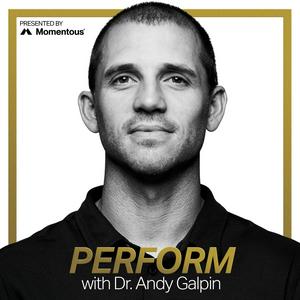
About Perform with Dr. Andy Galpin
This is Perform with Dr. Andy Galpin.
I'm Dr. Andy Galpin, a professor and director of the Human Performance Center at Parker University.
With this podcast, my goal is to help you better understand and maximize your own physical and mental performance, leveraging my two decades of experience with elite performers, including Olympians and world champions across numerous sports. The goal is to cover a range of tools, technologies, and strategies designed to help everyone—from beginners to record-breaks, and everyone in between.
While not all of us are elite athletes—myself included—there are countless lessons and tools we can learn from those performing at the highest levels. And remember, as legendary coach Bill Bowerman stated, "If you have a body, you are an athlete." If you're not already, I hope you'll consider starting to train and recover like one.
Podcast websiteListen to Perform with Dr. Andy Galpin, Boundless Life and many other podcasts from around the world with the radio.net app
Get the free radio.net app
- Stations and podcasts to bookmark
- Stream via Wi-Fi or Bluetooth
- Supports Carplay & Android Auto
- Many other app features
Get the free radio.net app
- Stations and podcasts to bookmark
- Stream via Wi-Fi or Bluetooth
- Supports Carplay & Android Auto
- Many other app features
Perform with Dr. Andy Galpin
Scan code,
download the app,
start listening.
download the app,
start listening.
Perform with Dr. Andy Galpin: Podcasts in Family

 Canada - english