

Listen to this podcast in the app for free: Download for free in the App Store
radio.net
Sleep timer
Save favourites
31 episodes
Your Gut Is Talking To Your Brain: Why Anxiety Can Make You Feel Sick & What Psalm 23 Teaches Us About Peace
2026-09-10 | 39 mins.Bonus Episode
Season 2, Episode 1
Show Notes
Why can anxiety make the stomach hurt? Why do some people feel nauseated, lose their appetite, experience digestive changes, or feel a pit in their stomach when they are stressed?
In this episode of The Christian Mind Reset, Dr. April Joy explores the fascinating connection between anxiety, the gut-brain axis, the nervous system, and gastrointestinal symptoms—and brings the conversation back to one of Scripture's most familiar passages: Psalm 23.
As a board-certified psychiatric mental health nurse practitioner, psychotherapist, Bible teacher, and student of neuroscience, Dr. April Joy explains how the brain and gut are constantly communicating through a complex bidirectional system involving the central nervous system, enteric nervous system, autonomic nervous system, stress-response pathways, immune and endocrine signaling, the vagus nerve, and the gut microbiome.
She explains why anxiety is not experienced only as worried thoughts. Stress can also show up physically through nausea, appetite changes, abdominal discomfort, diarrhea, constipation, muscle tension, changes in breathing, and other bodily sensations.
The episode also explores interoception, the brain’s ability to sense and interpret signals coming from inside the body, and how physical sensations can sometimes become part of an anxiety cycle. A person notices a racing heart, tight stomach, nausea, or another uncomfortable sensation, interprets it as threatening, becomes more anxious, and then experiences even stronger physical sensations.
Dr. April Joy also discusses emerging research on the gut microbiome and brain, including why intriguing findings from animal studies should not automatically be interpreted as evidence that gut bacteria cause human psychiatric disorders.
But the heart of this episode returns to Psalm 23:5:
“You prepare a table before me in the presence of my enemies.”
Dr. April Joy considers this verse through the lens of anxiety and the nervous system. The table is prepared while the enemies are still present. The circumstances have not necessarily disappeared, yet David describes the Shepherd's provision and presence in the middle of them.
For someone whose anxiety makes eating difficult, that image carries special meaning.
The episode connects this truth with Jesus calming the storm, Isaiah 26:3, Philippians 4:6, Matthew 6:34, taking thoughts captive, biblical meditation, neuroplasticity, and prayer. It also examines an fMRI study of committed Christians that found personal, improvised prayer recruited brain regions involved in social cognition, offering an interesting neuroscientific window into the relational experience of prayer without using neuroscience to prove theological claims.
Listeners will also learn about research in people with generalized anxiety disorder showing that 91.4% of the worry predictions recorded in one study did not come true, illustrating how often anxiety can pull the mind into feared futures that never arrive.
In This Episode
Dr. April Joy discusses:
* The gut-brain axis and anxiety
* Why anxiety can cause nausea and loss of appetite
* The enteric nervous system or “second brain”
* The vagus nerve and parasympathetic nervous system
* Stress, the HPA axis, and gastrointestinal symptoms
* Interoception and the anxiety-sensation cycle
* Serotonin and the gastrointestinal system
* The gut microbiome and mental health research
* Why animal microbiome studies require careful interpretation
* Neuroplasticity and repeated patterns of thinking
* What neuroscience can—and cannot—tell Christians about prayer
* Psalm 23 and God’s presence during anxiety
* Why worry often pulls the mind into the future
* Scripture-based breath prayer using Psalm 23
* Biblical declarations for anxiety, fear, and uncertainty
The episode closes with declarations from Psalm 23, a guided prayer, and a reminder that Christians can pray, renew their minds, and trust God while also receiving appropriate medical, psychological, and pastoral support.
Persistent nausea, unexplained weight loss, abdominal pain, appetite changes, changes in bowel habits, or other unresolved gastrointestinal symptoms should not automatically be attributed to anxiety. Appropriate medical evaluation is important.
For more conversations at the intersection of neuroscience, psychology, mental health, Scripture, anxiety, and renewing the mind, follow The Christian Mind Reset Podcast and subscribe to Dr. April Joy’s Substack.
Connect with Dr. April Joy:
Substack: The Christian Mind Reset
If you liked today’s episode, please subscribe, leave a review, follow, like, or share. You can find me on Instagram at @thechristianpsychnp and on Substack at The Christian Mind Reset for more Scripture, neuroscience, and practical tips for renewing your mind.
Listen to The Christian Mind Reset on Apple, Spotify, YouTube, and Substack.
My eBook, The Christian Mind Reset: A 28-Day Psalms Guide to Biblical Meditation, Neuroscience, and Renewing Your Mind, which is a companion to Season 1, is available in my Stan Store at https://stan.store/thechristianpsychnp and on my Substack.
Scriptures Referenced
Psalm 23Isaiah 26:3Joshua 1:8Matthew 6:34Matthew 26:38Luke 8:22–25Philippians 4:6–82 Corinthians 10:5Hebrews 4:15Romans 8:28
References
Haug, T. T., Mykletun, A., & Dahl, A. A. (2002). Are anxiety and depression related to gastrointestinal symptoms in the general population? Scandinavian Journal of Gastroenterology, 37(3), 294–298. https://doi.org/10.1080/003655202317284192
Haug, T. T., Mykletun, A., & Dahl, A. A. (2002). The prevalence of nausea in the community: Psychological, social, and somatic factors. General Hospital Psychiatry, 24(2), 81–86. https://doi.org/10.1016/S0163-8343(01)00184-0
LaFreniere, L. S., & Newman, M. G. (2020). Exposing worry’s deceit: Percentage of untrue worries in generalized anxiety disorder treatment. Behavior Therapy, 51(3), 413–423. https://doi.org/10.1016/j.beth.2019.07.003
Schjoedt, U., Stødkilde-Jørgensen, H., Geertz, A. W., & Roepstorff, A. (2009). Highly religious participants recruit areas of social cognition in personal prayer. Social Cognitive and Affective Neuroscience, 4(2), 199–207. https://doi.org/10.1093/scan/nsn050
Zhao, Z., et al. (2023). Effectiveness of probiotic/prebiotic/synbiotic treatments on anxiety: A systematic review and meta-analysis of randomized controlled trials. Journal of Affective Disorders.
Zheng, P., Zeng, B., Liu, M., Chen, J., Pan, J., Han, Y., Liu, Y., Cheng, K., Zhou, C., Wang, H., Zhou, X., Gui, S., Perry, S. W., Wong, M.-L., Licinio, J., Wei, H., & Xie, P. (2019). The gut microbiome from patients with schizophrenia modulates the glutamate-glutamine-GABA cycle and schizophrenia-relevant behaviors in mice. Science Advances, 5(2), eaau8317. https://doi.org/10.1126/sciadv.aau8317
Zhu, F., Guo, R., Wang, W., Ju, Y., Wang, Q., Ma, Q., Sun, Q., Fan, Y., Xie, Y., Yang, Z., Jie, Z., Zhao, B., Xiao, L., Yang, L., Zhang, T., Liu, B., Guo, L., He, X., Chen, Y., … Ma, X. (2020). Transplantation of microbiota from drug-free patients with schizophrenia causes schizophrenia-like abnormal behaviors and dysregulated kynurenine metabolism in mice. Molecular Psychiatry, 25(11), 2905–2918. https://doi.org/10.1038/s41380-019-0475-4
Biblical References:
NIV
Holy Bible, New International Version. (2011). Zondervan. (Original work published 1978). YouVersion Bible App.
ESV
The Holy Bible, English Standard Version. (2016). Crossway. (Original work published 2001). YouVersion Bible App.
NKJV
Holy Bible, New King James Version. (1982). Thomas Nelson. YouVersion Bible App.
Disclaimer: This podcast/letter is for informational purposes only. It contains general information, drawn from my experience, research, and best practices. It is not health care advice and is not intended to replace the counsel of your health care provider. Consult your provider before starting any new treatments or changing your health routine. This message does not constitute a provider-patient relationship between us.
If you are experiencing significant anxiety, distress, or need support, please seek care from a qualified healthcare professional. You may also consider reaching out to a licensed Christian counselor or pastor for additional support.
Emails, portal messages, text messages, and other communications are not monitored and will not receive a response in an emergency or crisis, or regarding medical or therapy advice. Do not use these methods for medical advice, therapy, urgent, crisis, emergent, or time-sensitive concerns. If you are experiencing a medical or psychiatric emergency, are in crisis, have thoughts of harming yourself or others, or feel unsafe, call 911 (US), contact your local emergency services, or go to the nearest emergency room or hospital immediately.
This is a public episode. If you would like to discuss this with other subscribers or get access to bonus episodes, visit thechristianmindreset.substack.comThe Neuroscience of Renewal: What the “Batman Effect” Can Teach Us About Putting On the New Self
2026-09-04 | 1h 25 mins.Episode 29, Season 1
In the final episode of Season One of The Christian Mind Reset, Dr. April Joy brings together the neuroscience, psychology, and biblical practices explored throughout the past 28 days and looks at what it actually means to renew the mind.
The brain is capable of change. What people repeatedly think about, focus on, practice, and return to can strengthen patterns in the brain and make certain responses more automatic over time. But Romans 12:2 is not simply a lesson in neuroplasticity, and Christian renewal cannot be reduced to “rewiring the brain.”
So what does renewal actually look like?
Dr. April Joy explores that question through Scripture and also through the life of Jesus. If Christians are called to have the mind of Christ and to walk as He walked, it matters how Jesus actually lived. Throughout the Gospels, Jesus prayed, fasted, knew and spoke Scripture, withdrew to be alone with the Father, gave thanks, gathered with others, lived in community, served, showed compassion, and remained dependent upon and obedient to the Father.
This episode looks at some of those practices alongside what neuroscience and psychology have found about attention, repetition, meditation, self-talk, gratitude, emotional regulation, relationships, and repeated behavior.
Dr. April Joy also returns to the biblical language of putting off the old self and putting on the new.
Colossians 3 does not simply tell believers what to stop doing. It tells them what to put on instead: compassion, kindness, humility, gentleness, patience, forgiveness, love, peace, and gratitude.
This is where Batman comes in.
Research sometimes referred to as the “Batman Effect” found that young children who approached a difficult task from the perspective of an exemplar character, such as Batman, showed greater perseverance and were better able to resist distraction. Researchers have studied this in the context of self-distancing, the ability to create some psychological distance from an immediate thought, feeling, or impulse.
Dr. April Joy looks at what this research can teach us about pausing long enough to consider a different response and then connects it to the biblical picture of putting off and putting on.
For the Christian, this is obviously not about pretending to be Batman, or even pretending to be Jesus. It is about remembering who Scripture says believers are, what they are called to put off, what they are called to put on, and then practicing a response consistent with that truth.
The episode also explores why thoughts and feelings are important without automatically treating them as facts, how repeated responses can become more automatic over time, why gratitude is not the same as denying pain, the importance of Christian community, and how prayer, fasting, Scripture, meditation, and speaking truth can become regular rhythms of renewal.
Neuroscience can help explain mechanisms involved in attention, learning, memory, emotional regulation, repetition, and behavior. It can study what happens in the brain during practices such as meditation and prayer. But it cannot measure the work of the Holy Spirit, tell people the meaning of their suffering, or explain away spiritual transformation as brain activity.
Ultimately, Christian renewal is not about becoming better at optimizing the brain.
It is about becoming more like Christ.
And that brings the episode back to one of the most important practices of renewal: abiding.
Jesus said, “Apart from me you can do nothing.”
The goal is not to manufacture renewal or the fruit of the Spirit by trying harder. Fruit grows from connection to the source. Christians participate through obedience, practice, prayer, Scripture, community, and continually bringing the mind back to truth, but Jesus remains the source.
Connect with Dr. April Joy:
Substack: The Christian Mind Reset
If you liked today’s episode, please subscribe, leave a review, follow, like, or share. You can find me on Instagram at @thechristianpsychnp and on Substack at The Christian Mind Reset for more Scripture, neuroscience, and practical tips for renewing your mind.
Listen to The Christian Mind Reset on Apple, Spotify, and Substack.
My eBook, The Christian Mind Reset: A 28-Day Psalms Guide to Biblical Meditation, Neuroscience, and Renewing Your Mind, is available in my Stan Store at https://stan.store/thechristianpsychnp and on my Substack.
In this episode:
* What neuroplasticity can, and cannot, tell us about renewing the mind
* How attention, repetition, and practice shape patterns in the brain
* Why thoughts and feelings are important but are not automatically facts
* Biblical meditation and repeatedly returning attention to God’s Word
* Self-talk and speaking truth rather than simply repeating positive affirmations
* Gratitude and the brain
* Prayer, fasting, solitude, and community
* Looking at the practices and rhythms seen throughout the life of Jesus
* Identity in Christ and why the past does not have to become identity
* Putting off the old self and putting on the new
* What the “Batman Effect” teaches us about self-distancing, perspective, and behavior
* Colossians 3 and intentionally “putting on” compassion, kindness, humility, gentleness, patience, forgiveness, and love
* The armor of God as another biblical picture of intentionally putting on what God has given
* Having the mind of Christ
* Why Christian transformation is more than brain change
* Abiding in Christ and the fruit of the Spirit
Key Scriptures
Romans 12:2; Colossians 3:1–17; 1 Corinthians 2:16; Philippians 2:5; 1 John 2:6; Joshua 1:8–9; Psalm 1:1–3; Psalm 46:10; Proverbs 18:21; Hebrews 4:12; Matthew 4:1–11; Matthew 6:5–18; Luke 5:16; 1 Thessalonians 5:16–18; Ephesians 4:22–32; Ephesians 6:10–18; Galatians 5:22–25; John 15:4–5.
References
Cascio, C. N., O’Donnell, M. B., Tinney, F. J., Lieberman, M. D., Taylor, S. E., Strecher, V. J., & Falk, E. B. (2016). Self-affirmation activates brain systems associated with self-related processing and reward and is reinforced by future orientation. Social Cognitive and Affective Neuroscience, 11(4), 621–629. https://doi.org/10.1093/scan/nsv136
Hölzel, B. K., Lazar, S. W., Gard, T., Schuman-Olivier, Z., Vago, D. R., & Ott, U. (2011). How does mindfulness meditation work? Proposing mechanisms of action from a conceptual and neural perspective. Perspectives on Psychological Science, 6(6), 537–559. https://doi.org/10.1177/1745691611419671
Kini, P., Wong, J., McInnis, S., Gabana, N., & Brown, J. W. (2016). The effects of gratitude expression on neural activity. NeuroImage, 128, 1–10. https://doi.org/10.1016/j.neuroimage.2015.12.040
Schjoedt, U., Stødkilde-Jørgensen, H., Geertz, A. W., & Roepstorff, A. (2009). Highly religious participants recruit areas of social cognition in personal prayer. Social Cognitive and Affective Neuroscience, 4(2), 199–207. https://doi.org/10.1093/scan/nsn050
White, R. E., & Carlson, S. M. (2016). What would Batman do? Self-distancing improves executive function in young children. Developmental Science, 19(3), 419–426. https://doi.org/10.1111/desc.12314
White, R. E., Prager, E. O., Schaefer, C., Kross, E., Duckworth, A. L., & Carlson, S. M. (2017). The “Batman Effect”: Improving perseverance in young children. Child Development, 88(5), 1563–1571. https://doi.org/10.1111/cdev.12695
Yeung, A. W. K., Wong, N. S. M., Tsui, I. S. Y., & Lee, T. C. P. (2025). Neural correlates of religious behavior related to Christianity: An ALE meta-analysis. Frontiers in Psychology, 16, 1557796. https://doi.org/10.3389/fpsyg.2025.1557796
Bible References:
NIV
Holy Bible, New International Version. (2011). Zondervan. (Original work published 1978). YouVersion Bible App.
ESV
The Holy Bible, English Standard Version. (2016). Crossway. (Original work published 2001). YouVersion Bible App.
NKJV
Holy Bible, New King James Version. (1982). Thomas Nelson. YouVersion Bible App.
Thanks for reading The Christian Mind Reset's Substack and Podcast! This post is public, so feel free to share it.
Disclaimer: This podcast/letter is for informational purposes only. It contains general information, drawn from my experience, research, and best practices. It is not health care advice and is not intended to replace the counsel of your health care provider. Consult your provider before starting any new treatments or making changes to your health routine. This message does not constitute a provider-patient relationship between us.
If you are experiencing significant anxiety, distress, or need support, please seek care from a qualified healthcare professional. You may also consider reaching out to a licensed Christian counselor or pastor for additional support.
Emails, portal messages, text messages, and other communications are not monitored and will not receive a response in an emergency or crisis, or regarding medical or therapy advice. Do not use these methods for medical advice, therapy, urgent, crisis, emergent, or time-sensitive concerns. If you are experiencing a medical or psychiatric emergency, are in crisis, have thoughts of harming yourself or others, or feel unsafe, call 911 (US), contact your local emergency services, or go to the nearest emergency room or hospital immediately.
This is a public episode. If you would like to discuss this with other subscribers or get access to bonus episodes, visit thechristianmindreset.substack.comThe Neuroscience of Hope: Why What You Believe About Tomorrow Matters Today
2026-08-20 | 45 mins.Episode 28, Season 1
Show Notes
What happens in the mind and brain when we have hope? Why can hope change the way we experience the present, even when our circumstances have not changed? And how is biblical hope different from optimism, wishful thinking, or simply trying to “think positive”?
In Episode 28 of The Christian Mind Reset, Dr. April Joy explores the psychology and neuroscience of hope alongside the biblical understanding of what it means to place our hope in God.
The episode begins with C. R. Snyder’s Hope Theory, which describes hope through two important processes: agency, our perceived ability to move toward a goal, and pathways, our ability to identify ways forward when obstacles arise. We review research exploring the relationship between hope, anxiety, brain function, and meaning in life.
But psychology and neuroscience only take us so far.
The Bible presents a deeper picture of hope.
Biblical hope is not pretending that everything will work out the way we want. It is not denial of suffering, and it is not positive thinking with a Christian vocabulary. Biblical hope is confidence in God's character, promises, and faithfulness, even when the outcome is still unknown.
Through Psalm 130, Romans 8, and Hebrews 6:19, we explore what it means to hope while waiting, suffering, grieving, and facing an uncertain future. We also look at the lives of Abraham, David, Joseph, Jeremiah, Job, and Paul, people who experienced seasons when God’s promises and their present circumstances did not appear to match.
Their stories remind us that hope does not require us to ignore what is happening around us.
Hope does not mean everything around you is steady. Biblical hope gives your soul something steady to hold onto when everything else is not.
In the final portion of the episode, we move from understanding hope to practicing hope through Scripture-based declarations, grounding, reflection, and prayer. The goal is not simply to learn something about hope, but to begin training our minds to remember where our hope is anchored.
Connect with Dr. April Joy:
Substack: The Christian Mind Reset
If you liked today’s episode, please subscribe, leave a review, follow, like, or share. You can find me on Instagram at @thechristianpsychnp and on Substack at The Christian Mind Reset for more Scripture, neuroscience, and practical tips for renewing your mind.
Listen to The Christian Mind Reset on Apple, Spotify, and Substack.
My eBook, The Christian Mind Reset: A 28-Day Psalms Guide to Biblical Meditation, Neuroscience, and Renewing Your Mind, is available in my Stan Store at https://stan.store/thechristianpsychnp and on my Substack.
In This Episode, We Explore:
* The psychology of hope and Snyder’s Hope Theory
* The difference between agency and pathways
* What neuroscience can tell us about hope
* The relationship between hope, anxiety, and meaning
* Why hope is more than optimism or positive thinking
* What the Bible means by hope in God
* What it looks like to hope while waiting
* Hope in seasons of suffering, uncertainty, and grief
* Lessons about hope from Abraham, David, Joseph, Jeremiah, Job, and Paul
* Why Christian hope is ultimately anchored in God rather than circumstances
* How Scripture can help us renew our minds when hope feels difficult
* Scripture-based declarations, grounding, and prayer
Scriptures We Explore
Psalm 130Romans 8Hebrews 6:19
References
Coan, J. A., Schaefer, H. S., & Davidson, R. J. (2006). Lending a hand: Social regulation of the neural response to threat. Psychological Science, 17(12), 1032–1039. https://doi.org/10.1111/j.1467-9280.2006.01832
Edwards, M. E., Booker, J. A., Cook, K., Miao, M., Gan, Y., & King, L. A. (2025). Hope as a meaningful emotion: Hope, positive affect, and meaning in life. Emotion, 25(6), 1365–1380. https://doi.org/10.1037/emo0001513
Snyder, C. R. (2002). Hope theory: Rainbows in the mind. Psychological Inquiry, 13(4), 249–275. https://doi.org/10.1207/S15327965PLI1304_01
Snyder, C. R., Harris, C., Anderson, J. R., Holleran, S. A., Irving, L. M., Sigmon, S. T., Yoshinobu, L., Gibb, J., Langelle, C., & Harney, P. (1991). The will and the ways: Development and validation of an individual-differences measure of hope. Journal of Personality and Social Psychology, 60(4), 570–585. https://doi.org/10.1037/0022-3514.60.4.570
Wang, S., Xu, X., Zhou, M., Chen, T., Yang, X., Chen, G., & Gong, Q. (2017). Hope and the brain: Trait hope mediates the protective role of medial orbitofrontal cortex spontaneous activity against anxiety. NeuroImage, 157, 439–447. https://doi.org/10.1016/j.neuroimage.2017.05.056
Disclaimer: This podcast/letter is for informational purposes only. It contains general information, drawn from my experience, research, and best practices. It is not health care advice and is not intended to replace the counsel of your health care provider. Consult your provider before starting any new treatments or making changes to your health routine. This message does not constitute a provider-patient relationship between us.
If you are experiencing significant anxiety, distress, or need support, please seek care from a qualified healthcare professional. You may also consider reaching out to a licensed Christian counselor or pastor for additional support.
Emails, portal messages, text messages, and other communications are not monitored and will not receive a response in an emergency or crisis, or regarding medical or therapy advice. Do not use these methods for medical advice, therapy, urgent, crisis, emergent, or time-sensitive concerns. If you are experiencing a medical or psychiatric emergency, are in crisis, have thoughts of harming yourself or others, or feel unsafe, call 911 (US), contact your local emergency services, or go to the nearest emergency room or hospital immediately.
This is a public episode. If you would like to discuss this with other subscribers or get access to bonus episodes, visit thechristianmindreset.substack.comThe Neuroscience of Gratitude and Self-Talk: What the Bible Says About Complaining
2026-08-09 | 54 mins.Episode 27, Season 1
Show Notes
Can gratitude really change your brain? Why does the Bible repeatedly tell us to “give thanks,” while also warning us against grumbling? In this episode of The Christian Mind Reset, we explore what psychology, neuroscience, and Scripture reveal about gratitude, complaining, and the way repeated thought patterns shape our minds.
Together, we’ll examine research on gratitude, neuroplasticity, negativity bias, emotional regulation, and stress while walking through some of the Bible’s richest passages on thanksgiving. We’ll look at David in the Psalms, Israel in the wilderness, and the moments Jesus gave thanks—even in the face of rejection, grief, scarcity, and the cross.
You’ll discover why biblical gratitude isn’t pretending life is easy or denying suffering. Instead, it’s intentionally remembering God’s faithfulness and bringing your attention back to what is still true, still good, and still worthy of praise.
In this episode, we discuss:
* What gratitude does in the brain
* The neuroscience of neuroplasticity and negativity bias
* Healthy lament versus chronic complaining
* Why God repeatedly commands thanksgiving
* What Jesus thanked the Father for
* Psalm 107 and the power of remembering God’s faithfulness
* Practical ways to cultivate biblical gratitude in everyday life
If you’re struggling with anxiety, discouragement, stress, or simply want to renew your mind through Scripture, this episode will encourage you to see gratitude as more than a feeling; it is a spiritual discipline that shapes both the heart and the mind.
Connect with Dr. April Joy:
Substack: The Christian Mind Reset
If you liked today’s episode, please subscribe, leave a review, follow, like, or share. You can find me on Instagram at @thechristianpsychnp and also on Instagram and Substack at The Christian Mind Reset for more Scripture, neuroscience, and practical tips for renewing your mind.
Listen to The Christian Mind Reset on Apple, Spotify, and Substack.
My eBook, The Christian Mind Reset: A 28-Day Psalms Guide to Biblical Meditation, Neuroscience, and Renewing Your Mind, is available in my Stan Store at https://stan.store/thechristianpsychnp and on my Substack.
References
Cheng, S.-T., Tsui, P. K., & Lam, J. H. M. (2015). Improving mental health in health care practitioners: Randomized controlled trial of a gratitude intervention. Journal of Consulting and Clinical Psychology, 83(1), 177–186. https://doi.org/10.1037/a0037895
Emmons, R. A., & McCullough, M. E. (2003). Counting blessings versus burdens: An experimental investigation of gratitude and subjective well-being in daily life. Journal of Personality and Social Psychology, 84(2), 377–389. https://doi.org/10.1037/0022-3514.84.2.377
Fox, G. R., Kaplan, J., Damasio, H., & Damasio, A. (2015). Neural correlates of gratitude. Frontiers in Psychology, 6, 1491. https://doi.org/10.3389/fpsyg.2015.01491
Froh, J. J., Sefick, W. J., & Emmons, R. A. (2008). Counting blessings in early adolescents: An experimental study of gratitude and subjective well-being. Journal of School Psychology, 46(2), 213–233. https://doi.org/10.1016/j.jsp.2007.03.005
Hölzel, B. K., Carmody, J., Vangel, M., Congleton, C., Yerramsetti, S. M., Gard, T., & Lazar, S. W. (2011). Mindfulness practice leads to increases in regional brain gray matter density. Psychiatry Research: Neuroimaging, 191(1), 36–43. https://doi.org/10.1016/j.pscychresns.2010.08.006
Kini, P., Wong, J., McInnis, S., Gabana, N., & Brown, J. W. (2016). The effects of gratitude expression on neural activity. NeuroImage, 128, 1–10. https://doi.org/10.1016/j.neuroimage.2015.12.040
Disclaimer: This podcast/letter is for informational purposes only. It contains general information, drawn from my experience, research, and best practices. It is not health care advice, and is not intended to replace the counsel of your health care provider. Consult your provider before starting any new treatments or making changes to your health routine. This message does not constitute a provider-patient relationship between us.
If you are experiencing significant anxiety, distress, or need support, please seek care from a qualified healthcare professional. You may also consider reaching out to a licensed Christian counselor or pastor for additional support.
Emails, portal messages, text messages, and other communications are not monitored and will not receive a response in an emergency or crisis, or regarding medical or therapy advice. These methods should never be used for medical advice, therapy, urgent, crisis, emergent, or time-sensitive concerns. If you are experiencing a medical or psychiatric emergency, are in crisis, have thoughts of harming yourself or others, or feel unsafe, call 911 (US), contact your local emergency services, or go to the nearest emergency room or hospital immediately.
This is a public episode. If you would like to discuss this with other subscribers or get access to bonus episodes, visit thechristianmindreset.substack.comYour Brain on Hope: The Psychology, Neuroscience, and Bible Study of Perseverance
2026-08-05 | 1h 2 mins.Episode 26, Season 1
Show Notes
What does it mean to “strengthen yourself in the Lord,” and what can David’s life teach us about persevering through suffering?
In this episode of The Christian Mind Reset, Dr. April Joy explores perseverance through the life of David, with a particular focus on 1 Samuel 30:6 and the Psalms. Throughout David’s life, readers see a consistent pattern of returning to God through prayer, worship, gratitude, remembering God’s faithfulness, and fixing his hope on the Lord, even in seasons of fear, betrayal, grief, and waiting.
Drawing from Scripture alongside current research in psychology and neuroscience, this episode examines how practices woven throughout David’s life align with what is known about hope, attention, memory, metacognition, worship, and emotional resilience. Rather than placing confidence in psychological techniques, the episode points listeners back to the biblical truth that lasting perseverance is found by continually returning to God, who is the source of our hope and strength.
Whether listeners are walking through disappointment, suffering, uncertainty, or simply finding it difficult to keep going, this episode offers biblical encouragement and practical insight for persevering while keeping their eyes fixed on Christ.
In This Episode
* What it means to strengthen yourself in the Lord
* Perseverance through the life of David
* Hope through the lens of psychology and neuroscience
* Remembering God’s faithfulness
* Metacognition and biblical self-talk
* Worship, music, and the brain
* Gratitude, prayer, and redirecting attention
* Fixing our eyes on Jesus
* Persevering through difficult seasons with hope anchored in God
Scriptures
* 1 Samuel 24
* 1 Samuel 30:6
* Psalm 23
* Psalm 27:13
* Psalm 42:5
* Psalm 56:3–4
* Isaiah 40:29–31
* Romans 5:3–5
* James 1:2–4
* Galatians 6:9
* Hebrews 12:1–2
Connect with Dr. April Joy:
Substack: The Christian Mind Reset
If you liked today’s episode, please subscribe, leave a review, follow, like, or share. You can find me on Instagram at @thechristianpsychnp and also on Instagram and Substack at The Christian Mind Reset for more Scripture, neuroscience, and practical tips for renewing your mind.
Listen to The Christian Mind Reset on Apple, Spotify, and Substack.
My eBook, The Christian Mind Reset: A 28-Day Psalms Guide to Biblical Meditation, Neuroscience, and Renewing Your Mind, is available in my Stan Store at https://stan.store/thechristianpsychnp and on my Substack.
References
* Chanda, M. L., & Levitin, D. J. (2013). The neurochemistry of music. Trends in Cognitive Sciences.
* Fleming, S. M., Dolan, R. J., & Frith, C. D. (2012). Metacognition: Computation, biology and function.Philosophical Transactions of the Royal Society B.
* Gross, J. J. (2015). Emotion regulation: Current status and future prospects. Psychological Inquiry.
* Koelsch, S. (2014). Brain correlates of music-evoked emotions. Nature Reviews Neuroscience.
* Kross, E., et al. (2014). Self-talk as a regulatory mechanism: How you do it matters. Journal of Personality and Social Psychology.
* Kross, E., & Ayduk, O. (2017). Self-distancing: Theory, research, and current directions. Advances in Experimental Social Psychology.
* Müller, T. H., et al. (2021). Dissociable neural systems for recoverable versus unrecoverable effort. Nature Communications.
* Roediger, H. L., III, & Karpicke, J. D. (2006). Test-enhanced learning: Taking memory tests improves long-term retention. Psychological Science.
* Snyder, C. R. (2002). Hope theory: Rainbows in the mind. Psychological Inquiry.
* Vickers, J. N. (2016). Origins and current issues in Quiet Eye research. Current Issues in Sport Science.
Disclaimer: This podcast/letter is for informational purposes only. It contains general information, drawn from my experience, research, and best practices. It is not health care advice, and is not intended to replace the counsel of your health care provider. Consult your provider before starting any new treatments or making changes to your health routine. This message does not constitute a provider-patient relationship between us.
If you are experiencing significant anxiety, distress, or need support, please seek care from a qualified healthcare professional. You may also consider reaching out to a licensed Christian counselor or pastor for additional support.
Emails, portal messages, text messages, and other communications are not monitored and will not receive a response in an emergency or crisis, or regarding medical or therapy advice. These methods should never be used for medical advice, therapy, urgent, crisis, emergent, or time-sensitive concerns. If you are experiencing a medical or psychiatric emergency, are in crisis, have thoughts of harming yourself or others, or feel unsafe, call 911 (US), contact your local emergency services, or go to the nearest emergency room or hospital immediately.
This is a public episode. If you would like to discuss this with other subscribers or get access to bonus episodes, visit thechristianmindreset.substack.com
More Christianity podcasts
 Timothy Keller Sermons Podcast by Gospel in LifeChristianity, Religion & Spirituality
 Live Free with Josh HowertonChristianity, Religion & Spirituality
 Renewing Your MindChristianity, Religion & Spirituality
 The Bible in a Year (with Fr. Mike Schmitz)Christianity, History, Religion & Spirituality
 Jesus People PodcastChristianity, Religion & Spirituality
 The Catechism in a Year (with Fr. Mike Schmitz)Christianity, Religion & Spirituality, Spirituality
 Pints With AquinasChristianity, Education, Philosophy, Religion & Spirituality, Society & Culture
 The Bible RecapChristianity, Religion & Spirituality
 Unashamed with the Robertson FamilyChristianity, Religion & Spirituality
 Relatable with Allie Beth StuckeyChristianity, News, News Commentary, Religion & Spirituality
Trending Christianity podcasts
- The Christian Mind ResetChristianity, Health & Wellness, Mental Health, Religion & Spirituality, Science
 The Word on Fire Show - Catholic Faith and CultureChristianity, Religion & Spirituality
 BreakpointChristianity, News, News Commentary, Politics, Religion & Spirituality
 Catholic Answers LiveChristianity, Religion & Spirituality
About The Christian Mind Reset
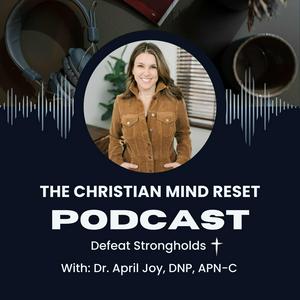
The Christian Mind Reset blends Scripture, psychology, and neuroscience to help you renew your thoughts and break mental strongholds. Hosted by April Joy DNP, APN-C (@thechristianpsychnp), each episode explores real struggles, intrusive thoughts, anxiety, and how God’s Word rewires the brain. Learn how to feed truth instead of strongholds and walk in the peace Christ promises. thechristianmindreset.substack.com
Podcast websiteListen to The Christian Mind Reset, Timothy Keller Sermons Podcast by Gospel in Life and many other podcasts from around the world with the radio.net app
Get the free radio.net app
- Stations and podcasts to bookmark
- Stream via Wi-Fi or Bluetooth
- Supports Carplay & Android Auto
- Many other app features
Get the free radio.net app
- Stations and podcasts to bookmark
- Stream via Wi-Fi or Bluetooth
- Supports Carplay & Android Auto
- Many other app features
The Christian Mind Reset
Scan code,
download the app,
start listening.
download the app,
start listening.
 Canada - english