

Listen to this podcast in the app for free: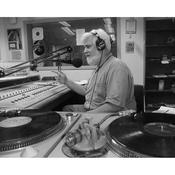 Download for free in the App Store
radio.net
Sleep timer
Save favourites
126 episodes
Miles Davis-John Coltrane Collaborations
2026-09-16 | 4h 53 mins.This program presents the masterwork collaborations of John Coltrane with Miles Davis, in context. It can serve as a history primer “Jazz 101" for the jazz lay person; for the aficionado, it can simply be an opportunity to submerge oneself in five hours of intense musical enjoyment.
Miles Davis was a teenage trumpet prodigy who came to fame during the bebop years of the 1940's. Despite this reputation and additional successful endeavors, such as with the Birth of the Cool band and other post bebop ensembles, by the mid-1950's Miles had fallen from popularity and was also in ill health.
Saxophonist John Coltrane had some accomplishments as a professional jazz musician but in the mid-1950's was mostly performing around his home turf in Philadelphia and searching to develop his sound.
Miles Davis regained notoriety with his captivating performance at the 1955 Newport Jazz Festival. In its wake, he was signed to a lucrative contract by major record label Columbia and was booked for many significant concerts and tours. Assembling a new band for these engagements, Davis hired Coltrane for the saxophone chair, and had the stellar rhythm section of Red Garland piano, Paul Chambers bass, and Philly Joe Jones at the drums.
From the fall of 1955 through the spring of 1957 this group performed regularly and made numerous now-classic recordings to finish Miles’s existing Prestige Records obligations. When released to begin fulfilling his new Columbia contract, Davis made sessions to constitute the acclaimed “‘Round About Midnight” album on Columbia.
Later in 1957 Miles fired Coltrane and Philly Joe, and he moved on to orchestral projects with Gil Evans and a sojourn in France where he did film scores for Louis Malle. Meanwhile Thelonious Monk combined with Coltrane in their legendary association and six month long Five Spot gig, which helped Coltrane’s musical growth to new heights.
In 1958, Miles Davis re-formed his combo, bringing back Coltrane, adding the alto sax of Cannonball Adderley, experimenting with different pianists in addition to Garland, such as Bill Evans and later Wynton Kelly, and drummers such as Art Taylor and Jimmy Cobb, to add further textures and flavors to the ensemble. The 1958 band produced great Columbia recordings “Milestones” and the Green Dolphin Street session with Evans, among others.
With their continued advances, and adaptation of “modal” styles, the Davis-Coltrane musical collaborations hit its zenith in early 1959. The Miles Davis group created the most famous jazz album of all time, “Kind Of Blue”.
At the same time, Coltrane, preparing to leave Davis and emerge in his own stardom, broke out with his “Giant Steps” LP, and moved on in his own career.
Finally, as a savory dessert, Coltrane would reunite with Davis for special concert tours in Europe and elsewhere in 1960, and he sat in on Davis’s 1961 “Someday My Prince Will Come” album.
originally broadcast July 17, 2022Lester Young 4
2026-09-09 | 2h 57 mins.The "Bird-Prez Birthday Broadcast", a 72 hour (and some years longer) marathon celebrating Lester Young and Charlie Parker around their birthday anniversaries, August 27 and August 29, is a long standing tradition at WKCR, and it is among our listeners' favorites.
From the 2026 edition, here's a segment that includes a survey of Lester Young's recordings with small groups during the Big Band years of the 1936-1940 period when he was in the Count Basie orchestra.Bennie Green
2026-09-03 | 4h 57 mins.While lesser-remembered today, Bennie Green was one of the great trombone players in the post war jazz years, a period when the otherwise cumbersome instrument developed into a persuasive and interpretive soloist’s vehicle. Green had a facile and fluid ease on the trombone, a great sense of rhythm and swing, and a sophisticated understanding of modern jazz harmonies. These traits all informed his ability to succeed in many styles of mainstream jazz, and laid the groundwork for his contributions to the historic developments of jazz trombone.
Bennie Green was born in Chicago in 1923 and came of age with lessons from the famed Walter Dyett at DuSable High School, and he also gained influence from his musical family. His first major professional engagement was with the Earl Fatha Hines big band as a teenager. Green was eventually drafted in to the armed forces later in World War II, but after the war he returned to the Hines organization. In the late 1940's, Green joined Charlie Ventura’s popular “Bop For The People” band, and afterwards he resumed an affiliation with the Hines small groups in the early 1950's.
In addition to his facility with swing and bop, Green participated in seminal early modern jazz dates with Miles Davis and Charles Mingus. By the later 1950's, Green recorded prolifically as a leader, for Prestige, Blue Note and other labels in the prevalent hard bop idiom, while also swinging hard.
As jazz lost its popularity in the rock era, Green worked for a time with Duke Ellington’s orchestra, and then he settled in Las Vegas for a professional career with the resort hotel bands. After a long bout with cancer, Green died in 1977.
originally broadcast July 19, 2015
re-broadcast April 4, 2021Cedar Walton
2026-08-07 | 4h 58 mins.Cedar Walton is one of the leading “hard bop” pianists to come of age in the late 1950's and 1960's. In addition to his great lyrical skill at the piano, Walton is well-known as a composer and arranger, and this radio show focuses on his compositions.
Among the prominent work early in his career was his stint in Art Blakey’s Jazz Messengers in the early 1960's, and he contributed the songs Mosaic, Ugetsu [Fantasy in D], Plexus, and others, which have become classics of the Blakey book. Additionally, Walton has penned many compositions that, if not by title, you will find familiar as standard tunes of the enduring modern jazz repertory, such as Bolivia, Firm Roots, Cedar’s Blues, Afreaka, Mode For Joe, and Turquoise. His songs are dynamic and complex but always “meaty” and accessible numbers for soulful jazz improvisation.
This program features both classic and lesser known recordings of Walton’s songs, by Walton’s own groups, from Blakey’s Jazz Messengers, and friends and musical companions such as Joe Henderson, Lee Morgan, Houston Person, Blue Mitchell and Junior Cook.
Born in Dallas, Texas in 1934, Walton was selected for the prestigious National Endowment for the Arts Jazz Master Award in 2010. He was still active at the age of 79 when I produced this program in July 2013. Unfortunately, after a brief illness, Walton passed away several weeks later on August 19, 2013.
originally broadcast July 7, 2013
re-broadcast September 26, 2021Coltrane On Atlantic
2026-08-02 | 2h 58 mins.John Coltrane’s 1959-1960 recordings for the Atlantic record label are surveyed during this three hour program.
Having finally left the Miles Davis group, John Coltrane had the opportunity to explore his own developing sounds and lead his own groups. This was a transitional period that featured the breakthrough classic albums “Giant Steps” and “My Favorite Things”. Atlantic’s releases also included memorable songs such as “Like Sonny” and “Central Park West”, and the Milt Jackson collaboration, among other choice treats.
originally broadcast September 22, 2019
More Music podcasts
 Dolly Parton's AmericaDocumentary, Music, Music History, Society & Culture
 BandsplainMusic, Music Commentary
 On n'a pas tout ditDocumentary, Entertainment News, Music, Music Interviews, News, Society & Culture
 A History of Rock Music in 500 SongsDocumentary, History, Music, Music History, Society & Culture
 DISGRACELANDMusic, Society & Culture, True Crime
 No Dogs in SpaceHistory, Music, Music History
 Ongoing History of New MusicHistory, Music, Music History
 PRISMATICMusic
 The Joe Budden PodcastMusic
 PopcastMusic, Music Commentary, Music Interviews
Trending Music podcasts
 Perfecto Podcast: featuring Paul OakenfoldMusic
 Relaxing MusicMusic
 JAZZ.FM91Music
 Kreative KontrolComedy, Comedy Interviews, Music, Music History, Music Interviews
 Rockonteurs with Gary Kemp and Guy PrattMusic
 The Rise and Fall of ...Music, Music History
 Recording Studio RockstarsEducation, Music
 Garza PodcastMusic
 No Cover Charge PodcastMusic, Music Commentary, Music History, Music Interviews
About The Gone Sounds of Jazz with Sid Gribetz
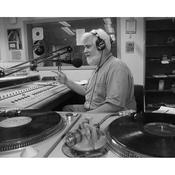
An archive of jazz radio programs focused on intensive in-depth looks at great themes from jazz history. Winner of the Jazz Journalist Association Award for Career Excellence, Sid has been broadcasting for over 40 years on WKCR-FM, NYC. He was also voted ’Best Jazz DJ’ by the Village Voice in its 2008 Best Of NY Issue.
Browse the dozens of episodes by scrolling down on this page. Or for an artists’ index, copy this address into your browser: gonesounds.weeblysite.com/
Podcast websiteListen to The Gone Sounds of Jazz with Sid Gribetz, Dolly Parton's America and many other podcasts from around the world with the radio.net app
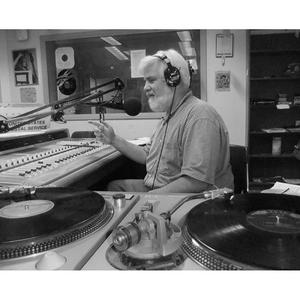
Get the free radio.net app
- Stations and podcasts to bookmark
- Stream via Wi-Fi or Bluetooth
- Supports Carplay & Android Auto
- Many other app features
Get the free radio.net app
- Stations and podcasts to bookmark
- Stream via Wi-Fi or Bluetooth
- Supports Carplay & Android Auto
- Many other app features
The Gone Sounds of Jazz with Sid Gribetz
Scan code,
download the app,
start listening.
download the app,
start listening.
 Canada - english