
Listen to this podcast in the app for free: Download for free in the App Store
radio.net
Sleep timer
Save favourites
291 episodes
The Complete Band Interviews Volume 4
2026-10-13 | 5h 35 mins.Chris Hannah: 2:15-26:17
Todd Kowalski: 26:17-37:00
Jord Samolesky: 37:00-1:05:00
Todd Kowalski: 1:05:00-1:27:10
Sulynn Hago: 1:27:10-2:29:00
David Guillas: 2:29:00-3:09:48
Todd Kowalski: 3:09:48-3:23:48
Chris Brown: 3:23:48-4:14:23
John Samson Fellows: 4:14:23-4:41:12
Todd Kowalski: 4:41:12-4:56:39
Jord and Todd discuss NoMeansNo: 4:56:4-ENDDiscussing NoMeansNo w/Todd Kowalski and Jord Samolesky (Featuring Jason Lamb)
2026-09-18 | 39 mins.Buy the book: https://pmpress.org/index.php?l=product_detail&p=1505
Jason Lamb is the author of NoMeansNo: From Obscurity to OblivionUnscripted Moments: Conversations with Propagandhi (2020-2025) audiobook OUT NOW!
2026-08-20 | 21 mins.This conversation is with Mat Comtois, the reader for the new audiobook edition of Unscripted Moments.
More information available here: https://www.earthislandbooks.com/post/an-audiobook-for-any-lazy-or-busy-propagandhi-fans
Audiobook available from the following outlets worldwide:
Audible / Amazon
Audiobooks.com
Hoopla
The Audiobook Store
Downpour
Overdrive
Libro.FM
Audiobooks Now
StoryTel
BookMate
Nextory
Kobo
Everand (formerly Scribd)
Nook
3 Leaf Group
CloudLibrary
Follett Library Resources
Google LLC
Mackin
Anyplay
Odilo
Wheelers Book Club Limited
Apple
24Symbols
Chirp
Audioteka
UBook
YouScribe
BookBeat
Cliq Digital
Instaread
Divibib
Books-A-Million
Globook
Kids.Radio
Spotify
Speechify
Ulverscroft
Bookwalker
LibraryOne
Deezer
Napster
YouTube Music
Calm RadioDUD "MAY NOT GO" VINYL RELEASE w/Bitter Melody Records
2026-08-07 | 35 mins.Bitter Melody Records is based in North Carolina and has released over 100 releases to date. They are releasing DUD "May Not Go (Unrealized Recordings from 1996)" as a limited vinyl release in collaboration with One Friday Music.
USA Ordering: https://bittermelodyrecords.bigcartel.com/
Canada Ordering: https://dudband1996.bandcamp.com/album/may-not-go-unrealized-recordings-from-1996At Peace by Lisa Gillan
2026-07-28 | 1hLisa Gillan is a nature photographer and musician in Ontario, Canada.
More Music podcasts





Trending Music podcasts









About Unscripted Moments: A Podcast About Propagandhi
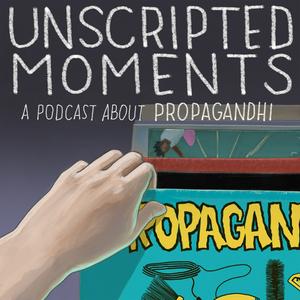
Unscripted Moments: A Podcast about Propagandhi is hosted by two teachers who break down a different Propagandhi song each episode.
Podcast websiteListen to Unscripted Moments: A Podcast About Propagandhi, Soul Music and many other podcasts from around the world with the radio.net app
Get the free radio.net app
- Stations and podcasts to bookmark
- Stream via Wi-Fi or Bluetooth
- Supports Carplay & Android Auto
- Many other app features
Get the free radio.net app
- Stations and podcasts to bookmark
- Stream via Wi-Fi or Bluetooth
- Supports Carplay & Android Auto
- Many other app features
Unscripted Moments: A Podcast About Propagandhi
Scan code,
download the app,
start listening.
download the app,
start listening.
 Canada - english