
Listen to this podcast in the app for free: Download for free in the App Store
radio.net
Sleep timer
Save favourites
27 episodes
The Fake That Made Michelangelo Famous
2026-10-20 | 22 mins.Michelangelo’s Sleeping Cupid was sold as an ancient Roman sculpture. There was just one problem: it wasn’t ancient.
In 1496, the young Michelangelo became entangled in a deception involving an art dealer, a powerful cardinal, and the Renaissance obsession with antiquity. He went to Rome and tried to recover his sculpture. He failed—but the affair introduced him to patrons who could change his career, provided he could deliver on their expectations.
Before the David and the Sistine Chapel, this lost sculpture helped open doors. This episode follows the Sleeping Cupid scandal, the connections behind Michelangelo’s Bacchus and Pietà, and Isabella d’Este, the collector who eventually wanted the Cupid, knowing exactly who had made it.
Explore the story further in the companion Verso Dossier, with a timeline, a guide to the players, sleeping Cupids across the centuries, and rabbit holes into Renaissance forgery and Charles I’s art collection. Available to paid subscribers only on Substack.
Subscribe to my Substack here
Follow me on TikTok here
Follow me on Instagram here
Email me: hello@versopod.com
Further reading:
Christian, Kathleen W. Raffaele Riario, Jacopo Galli, and Michelangelo’s Bacchus, 1471–1572. Harvey Miller Publishers, 2025. Read the open-access edition: https://www.census.de/riario-galli-bacchus/.
Wallace, William E. Michelangelo: The Artist, the Man, and His Times. Cambridge University Press, 2010.King Tut and the Making of a Modern Obsession
2026-10-06 | 43 mins.How did a relatively unknown pharaoh become one of the most recognizable figures in the world—and help change what modernity looked like?
When Howard Carter’s team discovered Tutankhamun’s tomb in 1922, the West was already fascinated by ancient Egypt. But the tomb gave that fascination a new protagonist, a stream of astonishing photographs and the suspense of a story unfolding one sealed door at a time. Soon, “King Tut” was appearing everywhere from Cartier jewelry and Art Deco movie palaces to perfume bottles, novelty songs and crates of California lemons.
In this episode, we follow Tutankhamun through two very different lives: his brief reign in ancient Egypt and the strange modern afterlife created for him by archaeologists, photographers, newspapers, designers, advertisers, Egyptian nationalists and museums. Along the way, we look at how the discovery transformed an existing Egyptomania into a global craze—and what disappeared when one young king became the face of an entire civilization.
Subscribe to my Substack here
Follow me on TikTok here
Follow me on Instagram here
Email me: hello@versopod.com
Further reading:
Christina Riggs, Treasured: How Tutankhamun Shaped a Century (PublicAffairs, 2022).
Jean-Marcel Humbert, Michael Pantazzi and Christiane Ziegler, eds., Egyptomania: Egypt in Western Art, 1730–1930 (National Gallery of Canada, 1994).The Afterlife of Albert Barnes
2026-09-21 | 44 mins.Albert Barnes spent decades building an institution that was never supposed to become an ordinary museum. After his death, the collection stayed together—but the Foundation around it changed dramatically.
This episode follows the battles over Barnes’s rules, the people who inherited them, and the eventual move from Merion to downtown Philadelphia. It asks a larger question: when we preserve a legacy, are we preserving the objects themselves—or the ideas, systems, and values that gave them meaning in the first place?
Subscribe to my Substack here
Support the Green Fairy's Canvas Kickstarter here
Follow me on TikTok here
Email me: hello@versopod.com
Further Reading:
Anderson, John. Art Held Hostage: The Battles over the Barnes Collection. New York: W. W. Norton & Company, 2003.
Gopnik, Blake. The Maverick’s Museum: Albert Barnes and His American Dream. New York: Ecco, 2025.Hilma af Klint, Wassily Kandinsky, and Who Really Invented Abstract Art
2026-09-07 | 43 mins.In 1914, Hilma af Klint and Wassily Kandinsky showed work in the same building in Malmö. He had five paintings in the grand galleries and a reviewer comparing them to bacteria. She had one conventional landscape in a women's section near the fire exit, and ten enormous abstract canvases she'd finished seven years earlier sitting somewhere else entirely.
A century later, that coincidence has turned into a contest: the Swedish mystic who got there first, and the well-connected man who took the credit. But af Klint never used the word abstract, Kandinsky spent years insisting he wasn't ready to abandon the visible world, and nobody in 1912 could agree on what to call any of it.
This episode is about what af Klint actually made and who helped her make it, the twenty years she spent trying to find an audience for it, and why the story of a new idea always seems to need one name attached. Featuring séances in Stockholm, a museum that fit inside a suitcase, a conference in London where almost nothing happened, and the question of what we close off when we hand her the title we took from him.
Buy Me a Coffee: https://buymeacoffee.com/versopod
Follow Me on TikTok: https://tiktok.com/@versopod
Email me: hello@versopod.com
Further Reading:
Bashkoff, Tracey, ed. Hilma af Klint: Paintings for the Future. New York: Solomon R. Guggenheim Museum, 2018.
Dickerman, Leah, ed. Inventing Abstraction, 1910–1925: How a Radical Idea Changed Modern Art. New York: The Museum of Modern Art, 2012.
Voss, Julia. Hilma af Klint: A Biography. Translated by Anne Posten. Chicago: University of Chicago Press, 2022.
Voss, Julia, and Daniel Birnbaum. Hilma af Klint and Wassily Kandinsky: Dreams of the Future. New York: David Zwirner Books, 2026John Singer Sargent, Madame X, and The Strap That Scandalized Paris
2026-08-24 | 47 mins.In 1884, John Singer Sargent unveiled a portrait at the Paris Salon that he was certain would make him the most celebrated painter in France. Instead, a single fallen shoulder strap turned into the scandal of the season, and the room laughed at both the artist and his sitter.
The woman in the black dress was Virginie Amélie Avegno Gautreau, a New Orleans–born Creole beauty who had spent nearly her whole life in Paris and was still described in the papers as American. Sargent was an American too, born in Italy, raised nowhere in particular, and equally desperate to be claimed by a French art world that would never quite claim him. They staked their reputations on the same canvas.
Then their paths split. Sargent lost commissions, fled to London, and was back on top within five years. Amélie commissioned portrait after portrait trying to replace the image that had defined her, and watched Paris stop caring. The painting that ruined her made him, and by the time it reached the Metropolitan Museum of Art in 1916, her name had been removed from it entirely.
This episode covers the Paris Salon of 1884, the professional beauties of the Third Republic, the nineteenth-century debate over cosmetics and artifice, and what happens when two outsiders take the same risk and only one of them is allowed to recover from it.
Buy Me a Coffee: https://buymeacoffee.com/versopod
Follow Me on TikTok: https://tiktok.com/@versopod
Email me: hello@versopod.com
Further Reading:
Elizabeth L. Block, "Virginie Amélie Avegno Gautreau: Living Statue," Nineteenth-Century Art Worldwide 17, no. 2 (Autumn 2018)
Alina Cohen, "Why Madame X Scandalized the Art World," Artsy, April 9, 2019
Deborah Davis, Strapless: John Singer Sargent and the Fall of Madame X (New York: Tarcher, 2004)
Justine De Young, "1884 – John Singer Sargent, Madame X (Virginie Gautreau)," Fashion History Timeline
Stephanie L. Herdrich, "Sargent and Gautreau: Fashioning Celebrity in Paris," in Sargent and Paris (New York: Metropolitan Museum of Art, distributed by Yale University Press, 2025).
More Arts podcasts









Trending Arts podcasts
























About Verso: An Art History Podcast
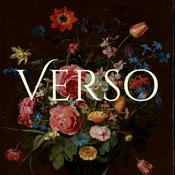
Discover the hidden side of art history with Verso. Every other week, we peel back the layers of famous and forgotten masterpieces to reveal the stories that shaped them—art heists, secret paintings, scandals, and more. Whether it’s uncovering the drama behind the canvas or exploring the unexpected connections between art and culture, Verso will change how you see the art, and the world, around you.
Want to support the show? Buy me a coffee here: https://buymeacoffee.com/versopod
Email me: hello@versopod.com
Podcast websiteListen to Verso: An Art History Podcast, DTFae and many other podcasts from around the world with the radio.net app

Get the free radio.net app
- Stations and podcasts to bookmark
- Stream via Wi-Fi or Bluetooth
- Supports Carplay & Android Auto
- Many other app features
Get the free radio.net app
- Stations and podcasts to bookmark
- Stream via Wi-Fi or Bluetooth
- Supports Carplay & Android Auto
- Many other app features

Verso: An Art History Podcast
Scan code,
download the app,
start listening.
download the app,
start listening.
 Canada - english