Listen to this podcast in the app for free: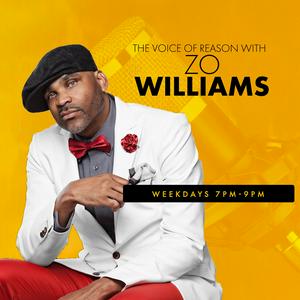 Download for free in the App Store
radio.net
Sleep timer
Save favourites
Available Episodes
5 of 476
- Intimate Relationships, Beyond what Gender Roles Prescribe?Let’s incinerate a sacred cow right now. Most folks enter relationships asking one loud question while simultaneously avoiding one dangerous truth. They ask, “What do you bring to the table?” They never ask, “What already sits inside you when you sit down at the table?” Because the table never holds only money, degrees, status, hustle, body, ambition, or provision. The table also holds your nervous system. Your attachment injuries. Your childhood negotiations for love. Your unfinished grief. Your relationship survival strategies are dressed up as an actual personality. And no amount of external success cancels that receipt. We built an entire culture around outsourced offerings. Who pays. Who protects. Who provides. Who performs competence. Who keeps the lights on and the peace intact. But peace never functioned as a transferable asset.--------1:17:27
- Why You Never Date a Person, Only Their Verdict in Your HeadMost people believe relationships fail because of incompatibility, poor communication, or unresolved conflict. This assumption misses the deeper architecture at work. In truth, many relationships collapse under the weight of an unexamined internal Trinity—a psychological and spiritual structure that governs perception long before intimacy begins. Within the psyche, the Father emerges as the Inner Lawgiver: the internalized authority formed from parents, culture, religion, ancestry, and fear. This Father does not ask who you are; it asks whether you measure up. It watches, evaluates, and judges. From this position, love becomes conditional and relational life becomes a courtroom governed by verdicts rather than presence. The Son appears as the self in relationship—the embodied ego, the attachment-wounded identity seeking approval, safety, and redemption. This is the part that enters intimacy carrying hope and terror in equal measure, unconsciously offering itself as evidence in a trial it never agreed to attend. When relationships become exhausting, it is often because the Son believes love must be earned, proven, or justified. The Holy Spirit, however, represents something radically different: direct perception. It is awareness without prosecution, presence without narrative, consciousness unmediated by fear or memory. Where the Spirit is absent, the Father judges and the Son performs. Where the Spirit is present, the courtroom dissolves. This is the heart of the Inner Jury Love Triangle. People do not relate directly; they litigate unconsciously. Partners become symbols, intimacy becomes evidence, and love becomes a verdict. Healing does not come from winning the case or finding the “right” person. It comes from restoring the Trinity—when authority becomes grounded rather than punitive, the self becomes embodied rather than defended, and presence replaces judgment entirely.--------59:18
- The Hidden Fear of Truly Equal RelationshipsMost people claim they want equality, partnership, balance, and mutuality. But deep in the nervous system lives Symmetry Terror—a visceral fear of standing in a relationship where: power is truly shared, both can leave, both can see and name the truth, Neither is superior nor safely inferior. Why It’s Psychologically Counterintuitive We usually pathologize power imbalance. This topic says: we unconsciously seek imbalance because it feels safer than mutual exposure. Being “above” means control. Being “below” means moral innocence. Being “equal” means no hiding place. Psychiatric / Clinical Angle Frames certain “attachment issues” as defenses against symmetry: anxious types chase upward or downward asymmetry, avoidant types preserve distance to avoid symmetrical vulnerability. Re-interpret conflict cycles as covert attempts to break equality and restore a familiar hierarchy.--------1:15:31
- Intimate Back to the Future: How working from the End Result Manifests Love in the Now!A deeper exploration of Neville Goddard’s law of assumption reveals that embodying what you desire from others in the present moment is the key to unlocking unconditional love!--------1:16:00
- Soul Ties Versus Trauma Bonds! A Psycho Spiritual Investigation into Intimate Entanglements!Family… lean in and become intensely present. What you call a “connection” often behaves like a courtroom where your unhealed wounds keep sentencing you to life without parole. You think you choose a partner, but your nervous system—wired by abandonment, inconsistency, and chaos—often delivers a verdict well before you even take the stand in your own defense. Trauma bonds masquerade as divinely cosigned soul ties because pain speaks in a dialect you mistake for destiny.--------1:12:24
More News podcasts
 Pod Save AmericaNews, Politics
 The MeidasTouch PodcastNews, Politics
 World ReportNews
 Global News PodcastNews, Daily News
 The Tucker Carlson ShowNews, News Commentary
 La revue de presse de Paul ArcandNews
 Rachel Maddow Presents: Burn OrderGovernment, History, News
 Front BurnerNews
 The DecibelNews, Daily News, News Commentary, Politics
 PivotNews, Technology, News Commentary
Trending News podcasts
 Oilersnation Everyday with Tyler & LiamNews, Sports, Hockey, Sports News
 Curse of PoliticsNews, Politics
 The Herle BurlyNews, Politics
 The Beat with Ari MelberGovernment, News, Politics
 The 11th Hour with Stephanie RuhleNews, Politics
 Deadline: White HouseGovernment, News, Politics
 The Source with Kaitlan CollinsNews, Politics
 Louder with CrowderComedy, News, Comedy Interviews, Politics
 The Daily ZeitgeistComedy, News, Society & Culture
 The Jasmin Laine ShowNews, Politics
 Anderson Cooper 360News
 The David Pakman ShowGovernment, News, Politics
 The NPR Politics PodcastNews, Politics
 Rebel News PodcastNews, News Commentary, Politics
 George Conway Explains It All (To Sarah Longwell)News, Society & Culture, Politics
 Wall Street BreakfastBusiness, News, Business News, Investing
 This is VancouverNews
 CTV Power Play with Vassy Kapelos PodcastNews, Daily News
 The Rachel Maddow ShowNews
 Real Talk Ryan JespersenNews, News Commentary
About Zo Williams: Voice of Reason
Fans have dubbed Zo Williams “Tupac meets Deepak” or “The Hip Hop Dr. Phil.” Zo brings a thoughtful and unique perspective to relationships, religion, spirituality, social systems and more. He has a gift for connecting random conversations to a more profound meaning of life. For over 20 years now, Zo has dedicated himself to sharing his knowledge and personal experiences, offering listeners a highly non-traditional, scientific, and spiritual approach to deconstructing themselves to understand self and engage in better relationships.
Podcast websiteListen to Zo Williams: Voice of Reason, Pod Save America and many other podcasts from around the world with the radio.net app
Get the free radio.net app
- Stations and podcasts to bookmark
- Stream via Wi-Fi or Bluetooth
- Supports Carplay & Android Auto
- Many other app features
Get the free radio.net app
- Stations and podcasts to bookmark
- Stream via Wi-Fi or Bluetooth
- Supports Carplay & Android Auto
- Many other app features

Zo Williams: Voice of Reason
Scan code,
download the app,
start listening.
download the app,
start listening.
 Canada - english