PodcastsDocumentaryLeft To Their Own Devices

Left To Their Own Devices

Toronto Star
Left To Their Own Devices
Latest episode

13 episodes

  • Left To Their Own Devices

    In conversation with Jonathan Haidt, author of The Anxious Generation

    2026-04-07 | 58 mins.
    The last few months have been a turning point. In late March, New Mexico Attorney General Raul Torrez won his case against Meta, with a jury finding that Facebook and Instagram's parent company had engaged in "unconscionable" trade practices targeting children. Days later, a California jury ruled that Meta and YouTube had addicted a young girl to their platforms. And Australia is now four months into its landmark social media ban for kids under 16.
    At the center of this movement is social psychologist Jonathan Haidt, whose New York Times bestseller The Anxious Generation laid out the case for a phone-free childhood. What once read as provocation is now policy: France and Malaysia have passed their own bans, and Canada and the US are weighing similar moves. But many researchers — and young people themselves — aren't convinced. Ava Smithing argues that social media companies need to reimagine their business models entirely, not just lock kids out.
    In this live conversation from Columbia University's Bollinger Forum, Haidt and Smithing meet across the generational and ideological divide. They dig into Haidt's "Great Rewiring" theory, the toll of "attentional destruction," and the tension between protecting children and honoring the reality of Gen Z's digital-first communities.
    Editor's note: We are also honoured to inform you that Left To Their Own Devices was just nominated for a prestigious Peabody Award. "We are grateful and honored to receive a Peabody nomination. We created Left to Their Own Devices to shine a light on the experiences of young people online," said Ava Smithling, host of Left To Their Own Devices. "We believe these stories deserve to be heard, and more importantly, to be believed. A Peabody nomination validates our work and recognizes the gravity of the harm these platforms inflict on young people. This recognition makes our team's work and the fight for safer online community spaces harder to ignore."
  • Left To Their Own Devices

    Bonus panel discussion: A conversation on building healthy digital habits for youth

    2026-02-02 | 1h 1 mins.
    Today's technology has redefined childhood and adolescence. 

    In a virtual conversation on Thursday, January 22 editor Ceri Marsh was joined by Ava Smithing, host of this podcast Left to Their Own Devices, and Dr. Michele Locke, psychologist and co-founder of the Toronto chapter of Unplugged Canada, to discuss youth and technology.

    They discussed how devices influence children's relationships, development and mental health – with actionable, family-friendly strategies to navigate screen time – and ways to encourage healthy digital habits and foster meaningful offline connections.
    We gave children the most powerful tools in human history. Then, we left them to their own devices.
  • Left To Their Own Devices

    Left to Our Own Devices

    2025-11-21 | 30 mins.
    On December 10, 2025, Australia will be the first country in the world to ban social media for kids. It's a radical step, and lawmakers around the world are taking notice. In the U.S., eight states have proposed similar legislation. In Canada, Quebec and Nova Scotia are reportedly considering bans of their own. These policies are popular, but they're also controversial – and some experts worry they could isolate a generation of children.

    But on the other side of the world, a very different story is unfolding. In North America, where governments have yet to regulate social media in any meaningful way, young people are taking matters into their own hands. Young people like Maddie Freeman, who started a grassroots movement to wean her peers off social media after a wave of youth suicides devastated her community.

    So, as Australia's landmark ban takes effect, only one question remains: will kids figure out how to make social media work for them? Or will governments make that decision for them?
  • Left To Their Own Devices

    The Worst Sex Ed Class Ever

    2025-11-14 | 35 mins.
    The numbers are staggering. In the US, 71% of teenagers say they've watched porn in the last week. In Canada, 88% of boys have seen it by the age of fourteen. And in the UK, one in four kids have been exposed to pornography by the time they turn eleven. Even more alarming: this early consumption has been linked to rising rates of domestic violence among teens.

    In this episode, Ava meets Harrison and Nat – two young people whose journeys began on gaming platforms, and ended in the throes of compulsive porn use. Their stories might sound extreme, but they're part of a troubling pattern: kids are encountering pornography younger and younger, often when they're not even looking for it.
    What happens when an entire generation learns about the birds and the bees from extreme, often violent, online pornography?
  • Left To Their Own Devices

    Under the Influence

    2025-11-07 | 25 mins.
    When Ghyslain Raza – aka the "Star Wars Kid" – became the internet's first viral sensation, it nearly destroyed him. More than twenty years later, many young people today are desperate for that kind of fame – even if it means making their most embarrassing moments available for public consumption. 
    According to one recent poll, more than half of all Gen Zs want to be influencers – online creators who turn their lives into content. To try and understand this phenomenon, Ava tracks down Sophie Fergi, an 18-year old influencer with millions of followers, and journalist Taylor Lorenz, who tracked the rise of content creators like Sophie in her book Extremely Online. 
    Is the influencer boom a sign of narcissism run amok? Or has social media finally democratized fame and given young people a voice? Maybe it's both.

More Documentary podcasts

About Left To Their Own Devices

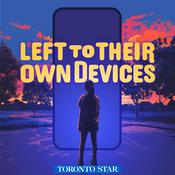
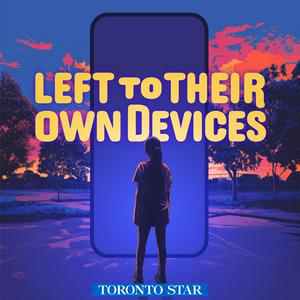
We gave children the most powerful tools in human history. Then, we left them to their own devices. When she was 12 years old, Ava Smithing spiraled down a social media rabbit hole that nearly cost her life. A decade later, she discovered she wasn't alone: Big Tech had rewritten childhood and adolescence for her entire generation. Armed with questions and a year to find answers, Ava embarked on a cross-continent investigation into a hidden digital world. She met teens in 12-step programs for social media addiction, young girls wrestling with compulsive porn use, and boys who had been blackmailed by international cybercriminals. This isn't a self-help guide to digital wellness. It's a survival story from the front lines of 21st century childhood: where young people are re-writing the playbook for what it means to be human in a hyperconnected world.
Podcast website

Listen to Left To Their Own Devices, Sword and Scale and many other podcasts from around the world with the radio.net app

Get the free radio.net app

  • Stations and podcasts to bookmark
  • Stream via Wi-Fi or Bluetooth
  • Supports Carplay & Android Auto
  • Many other app features

Left To Their Own Devices: Podcasts in Family