

Listen to this podcast in the app for free: Download for free in the App Store
radio.net
Sleep timer
Save favourites
34 episodes
34: Biomanufacturing Is the Next Agricultural Superpower Play with John Rafferty
2026-07-15 | 1hJohn Rafferty, CEO of Ontario Genomics, makes the case that Canada's combination of vast acreage, abundant water, and clean energy positions it to become not just an agricultural superpower but a biomanufacturing one — if it can close the capital gap in scaling infrastructure. Rafferty argues that genomics is moving from a specialised research field into the operating system of a circular economy, where biomass inputs from Canadian farms can replace petroleum-derived plastics, food colourants, and industrial chemicals. The episode is a call to action for policymakers, farmers, and investors to treat biomanufacturing not as a science project but as Canada's next major export industry.
Show notes:
In this episode, John Rafferty unpacks the twin missions of Ontario Genomics: precision health on one side, and food and industrial biotech on the other. His central argument is that genomics has spent twenty-five years generating research and is now at a commercialisation inflection point, one where Canada's natural endowments — land, water, and clean energy — make it uniquely positioned to lead a global shift from extraction-based manufacturing toward circular biomanufacturing. He frames this not as a moonshot but as an obligation: roughly sixty percent of everything humans consume, he contends, can be bio-manufactured from agricultural biomass inputs and returned to the earth in a genuinely circular way.
Rafferty is direct about where the bottleneck lies. Ontario, despite hosting the majority of Canada's genomics innovators and post-secondary talent, lacks accessible biomanufacturing scale-up capacity at the thousand-litre range that startup companies need to prove their unit economics. Companies that want to produce hundreds of kilogrammes of a bio-manufactured sweetener or food colourant — enough to demonstrate price competitiveness against commodity sugar — are currently forced to travel to Nova Scotia, Saskatchewan, or another country entirely. Rafferty describes this as a capital problem, not a regulatory one, and he draws a deliberate analogy to the renewable energy transition: just as solar and wind power required patient investment before reaching cost parity with fossil fuels, bio-manufactured materials need that same scaling runway before they can displace petroleum-based plastics and chemicals on commercial terms.
A second tension runs through the conversation: the challenge of communicating a field where, as Rafferty puts it, there is a genome in everything. Ontario Genomics works across soil microbial health, cellular agriculture, rare-disease therapeutics, water bioremediation, and food ingredient innovation simultaneously — a breadth that risks dissolving into what he calls talking about world peace. His proposed solution is to pursue ground-level victories first: working directly with farmer groups to diversify revenue streams, demonstrating that Canadian-grown biomass can supply food ingredients currently imported at supply-chain risk, and letting those concrete wins build the narrative. He also raises the AI paradox squarely — acknowledging that artificial intelligence is accelerating genomic data analysis and commercialisation timelines while simultaneously carrying a significant and troubling environmental footprint of its own, a tension he says society has not yet honestly reckoned with.
For listeners in Canada's agri-food sector, this episode reframes a familiar question — how do we add value to what we grow? — at a much larger scale of ambition. Rafferty's vision is of Canadian farmers as feedstock partners in a national biomanufacturing industry that exports bio-plastics, proteins, and specialty ingredients the same way Canada has always exported grain and oilseeds, but with far greater value per acre. His policy ask is equally concrete: a national network of scaling facilities, challenge-based funding tied to specific import-substitution targets, and regulatory mandates with hard dates — the kind of policy signal that turned renewable electricity from an experiment into an industry. Whether Canada chooses to act on those assets or continues to send raw biomass across borders is, Rafferty argues, a question of political will, not scientific capability.
Topics: Biomanufacturing, Circular Economy, Genomics Commercialisation, Scale-Up Infrastructure, Agricultural Superpowers, Soil Microbial Health, AI and Genomics, Food Innovation Policy33: Meeting People Where Their Futures Already Are with Tianna Brand
2026-07-10 | 1h 6 mins.Title: Meeting People Where Their Futures Already Are
Summary:
Foresight practitioner Tianna Brand argues that the single most important move a leader or organization can make is to resist arriving with pre-baked futures and instead start by uncovering the visions, assumptions, and lived experiences people already carry. Drawing on her work introducing futures thinking to the World Organisation for Animal Health and her background with the Canadian Food Inspection Agency, Brand shows how that principle unlocks genuine agency in contested spaces — from zoonotic disease preparedness to farmer resistance to regulation. The conversation traces a path from organisational humility and the Three Horizons Method to a provocative call for strategy documents reimagined as storybooks of multiple futures.
Show notes:
Tianna Brand is a foresight practitioner and board member of the Association of Professional Futurists whose career has spanned the Canadian Food Inspection Agency, the World Organisation for Animal Health (WOAH), and international bodies including the OECD and UNESCO. She joins The Future Herd to make a case that feels simple but runs counter to most institutional instinct: when navigating uncertainty — whether in a century-old scientific body or a farmers' association wrestling with regulatory distrust — you do not arrive with the future already decided. You meet people where their futures already are, surfacing what is already in their heads before you attempt to shape what comes next.
Brand traces this conviction back to her experience introducing futures thinking inside WOAH, an organisation whose culture was anchored in scientific evidence and disease modelling. Rather than framing foresight as something foreign, she connected it to risk frameworks scientists already used — horizon scanning, emergency management cycles, the recognition that outbreaks never arrive from a single direction. The lesson she drew was methodological and cultural at once: foresight gains traction not through grand gestures but through what she calls 'stealth' — using a speculative conversation about COVID in farmed animals, for instance, to quietly demonstrate how unpacking second- and third-order impacts across an entire organisation produces better decisions than tight disease modelling alone. Culture, she insists (citing futurist Sohail Inayatullah's formulation), eats strategy for breakfast; finding internal champions and working within existing methods matters as much as the quality of the foresight tool itself.
The conversation sharpens around a live tension in Canadian agriculture: the gap between epidemiologists who understand zoonotic transmission risks and producers who experience regulation as control imposed from outside. Brand's response is direct — coming in with futures already baked will be mistrusted immediately, because the underlying fear is loss of agency. Instead, she describes the Three Horizons Method developed by Bill Sharpe and Tony Hodgson as a practical scaffold: Horizon One maps the current agri-food system and its built-in limits; Horizon Three holds the visionary futures stakeholders actually want; and the messy, entrepreneurial Horizon Two is where seeds of change — already visible if you look — can be leveraged to move toward those visions. She extends this into a proposal that strategy documents become storybooks, populated by leader-characters whose competencies can be tracked against the futures being built, turning what is usually an anchor document into a living, narrative accountability tool.
For agri-food leaders in Canada and beyond, Brand's episode offers both a philosophical reframe and practical footholds. The future is not something happening to us, she argues — we are actively creating the conditions for things like avian influenza outbreaks or regulatory breakdown, which means we also hold the agency to create different conditions. Humility, participation, and a willingness to hold multiple futures simultaneously are not soft skills; they are the operational prerequisites for leadership that can actually navigate complexity. At a moment when agricultural associations are struggling with legitimacy deficits and the sector faces compounding pressures from climate, biosecurity, and trade, Brand's framework for meeting people where their futures already are may be one of the more consequential ideas the Future Herd has yet put on the table.
https://miro.com/app/board/uXjVHDZUnCY=/
Topics: Futures Thinking, Three Horizons Method, Organisational Culture, Zoonotic Disease Risk, Agricultural Leadership, Systems Thinking, Policy and Regulation, Agency and Participation32: Food Security Cannot Be Separated From Ecological Health with Sarah Elton
2026-07-07 | 1h 2 mins.Sarah Elton — journalist-turned-academic and author of Locavore — argues that genuine food security requires expanding our definition of 'all' to include not just every human being but every organism and ecosystem that sustains the food system. Drawing on posthumanist theory, microbiology, and years of empirical research, she makes the case that health is not a condition possessed by individual bodies but a property that exists across socioecological systems. The conversation traces her intellectual journey from covering the local food movement to situating the human colon inside the food system itself.
Show notes:
Sarah Elton is a researcher, writer, and academic whose career has moved from CBC journalism and long-form books — including her 2010 work Locavore — through a PhD and into teaching and research at the intersection of food systems, ecological public health, and posthumanist theory. In this episode, she and host Jesse Hirsh take up a deceptively simple question: who, or what, does a food system actually need to feed? The answer Elton arrives at is far more expansive than conventional food-security discourse allows, and it reframes the entire project of building a resilient Canadian agri-food sector.
Elton's first key move is to challenge the boundary between the human body and the food system. Drawing on emerging microbiology, she argues that the colon — and the microbial communities that inhabit it — should be understood as constituent parts of the food system, not merely endpoints of it. Microorganisms synthesise metabolites, reduce inflammation, and mediate how humans are nourished; severing them analytically from 'the food system' is, in her words, absurd. This posthumanist framing, in which humans are placed on the same ontological plane as plants, microbes, soil, and wind rather than above them, is not merely philosophical provocation. It has direct implications for how researchers, policymakers, and producers define sustainability: a system that degrades its microbial and ecological substrates is undermining its own capacity to feed anyone.
A second tension running through the conversation is the gap between the language of local food and its political deployment. Elton was writing about localism and food sovereignty before farmer's markets became supermarket aesthetics, and she offers a nuanced read of what has changed. She notes that nationalist sentiment triggered by trade threats with the United States has produced a surge in buy-Canadian feeling and, more concretely, a federal food security strategy backed by over three billion dollars in new commitments — a scale of state investment she says she could not have predicted. Yet she is careful to distinguish the grassroots goals of the local food movement from the mechanisms a state-led strategy will actually use, and she is equally careful to distinguish rhetorical sustainability from the ecological grounding she believes genuine food security requires. Co-optation of the language, she suggests, does not automatically deliver the substance.
Listeners will come away with a richer vocabulary for thinking about what Canada's agri-food sector is actually trying to sustain — and for whom. Elton's work is a reminder that the sector's most pressing knowledge gaps are not always technical; sometimes they are conceptual, rooted in frameworks that draw the boundaries of 'the food system' too narrowly and too anthropocentrically. At a moment when federal dollars, nationalist energy, and climate pressure are converging on Canadian food policy simultaneously, her ecological public health perspective offers both a corrective and a constructive direction for leaders across the sector.
Topics: Food Security Policy, Ecological Public Health, Posthumanist Theory, Microbiome and Food Systems, Local Food Movement, Socioecological Systems, Canadian Agri-Food Leadership31: Dark Data and Edge Computing Are Reshaping Canadian Farm Strategy
2026-06-24 | 1h 2 mins.Summary:
This episode brings together Canada's sharpest minds at the intersection of AI and agriculture to make a concrete case: the future of Canadian farm competitiveness will be decided not by whether producers adopt AI, but by how intelligently they manage, govern, and deploy the data they already have.
Mohsen Yoosefzadeh Najafabadi introduces the concept of 'dark data'—the vast archive of unused research and field observations sitting dormant in breeding programs and farm records—arguing it represents an untapped foundation for training custom agricultural AI models. Donald Killorn reveals that choosing between cloud-scale processing and on-farm edge inference could mean the difference between 200 gigawatt hours and just 1.5 gigawatt hours of electricity consumption across Canadian agriculture, making edge computing not just a technical preference but a national energy and sovereignty question. Mohamad Yaghi makes the case that the battle for sovereignty is happening faster than we realize as global data governance threatens to outpace local agency.
Show notes:
This episode of The Future Herd gathers Jesse Hirsh, Mohsen Yoosefzadeh Najafabadi, Mohamad Yaghi, Jennifer MacTavish, and Donald Killorn for a rigorous, advanced-level conversation about what it will actually take to make artificial intelligence work for Canadian farmers. The central argument is not that AI is coming to agriculture—it is already here—but that the decisions Canadian producers, researchers, and policymakers make right now about data governance, compute architecture, and model sovereignty will determine whether the productivity gains from AI accrue to Canadian farms or flow to the proprietary platforms of multinational equipment manufacturers and cloud providers. This episode is less a primer on AI and more a strategic briefing on the infrastructure choices that will define the next agricultural policy framework.
One of the most striking contributions comes from Mohsen Yoosefzadeh Najafabadi, who introduces the concept of 'dark data' to describe the enormous volume of agricultural research observations that are collected, archived, and never used again. Drawing on his own plant breeding programme—where he evaluates 200,000 individual plants but ultimately selects a handful—he points out that the discarded data represents precisely the kind of rich, domain-specific training material needed to build trustworthy, custom AI models for agriculture. His argument is that researchers and producers often do not mind sharing this kind of archival data, but lack the governance frameworks and institutional strategies to do so responsibly. His proposal: train models internally on pooled dark data, then share the model outputs rather than the raw datasets, preserving privacy while unlocking collective intelligence.
Donald Killorn grounds the conversation in the physical and political realities of deploying AI at farm scale, reporting directly from a week that included installing a rooftop WiFi gateway in eastern PEI and presenting to the House of Commons Standing Committee on Agriculture. His core insight is that the question of where computation happens—in the cloud versus at the field edge—is not merely a technical detail but a strategic decision with massive implications for energy consumption, data sovereignty, and farm autonomy. He estimates that moving every data point from Canadian farms to central models would require roughly 200 gigawatt hours of electricity, but that training edge inference models to process data locally and send only what is necessary upstream could reduce that figure to approximately 1.5 gigawatt hours. He also raises the unresolved tension with OEM equipment manufacturers like John Deere and Case, whose proprietary data platforms risk locking Canadian producers out of their own farm data, and describes the limits of industry-led interoperability initiatives like AEF's Agon connector.
Listeners will come away from this episode with a clearer understanding of why the ROI conversation around AI in agriculture has to move beyond productivity metrics and encompass labour shortage economics, energy infrastructure, data interoperability, and national policy. Mohamad Yaghi frames the stakes plainly: AI is most valuable not as an automation tool but as a decision-support layer that helps producers commit capital more wisely before it is spent. Taken together, the panel makes a compelling case that Canada's agri-food sector sits at a genuine inflection point—one where the choices made in the next two years around data governance and compute strategy will either entrench dependency on foreign platforms or establish a sovereign, resilient, and genuinely productive AI infrastructure for Canadian agriculture.
Topics: Dark Data, Edge Computing, Data Sovereignty, AI Model Training, Farm Decision Support, Equipment Interoperability, Agricultural Policy, Energy and Compute30: AgriFood Names the Tension Between Capital and Care with Elaine Power
2026-06-19 | 1h 14 mins.Summary:
Elaine Power, a food scholar at Queen's University, argues that the word "AgriFood" itself encodes a fundamental contradiction: the agri side serves corporate capital while the food side is rooted in care, community, and life. In this conversation with Jesse Hirsh, Power traces how invisible and undervalued labour—from racialized farmworkers to domestic cooks—holds the food system together while extracting the least reward from it. Her analysis connects feminist political economy, the ultra-processed food industry, and ecological crisis into a single, unflinching diagnosis of what is broken and why.
Show notes:
Elaine Power is a food scholar at Queen's University whose career has moved fluidly across dietetics, feminist political economy, and food systems research. In this episode, she joins Jesse Hirsh to explore a tension embedded in the very language we use to describe the sector: that "AgriFood" quietly names two opposing logics—one oriented toward capital accumulation, the other toward nourishment, care, and sustaining life. That friction, Power argues, is not incidental. It is the organizing contradiction of the modern food system, and almost everything that is broken about that system flows from it.
Power's first major insight is about the systematic invisibility of labour across the entire food chain. From temporary foreign workers doing backbreaking fieldwork in Canadian agriculture, to grocery clerks briefly celebrated as heroes during the pandemic before being returned to minimum wage and precarious shifts, to the uncompensated domestic labour that happens in every kitchen—Power argues that the people who actually feed us are consistently rendered invisible and undervalued. She connects this pattern explicitly to race and gender: agricultural labour in North America has historically been and remains largely racialized, while domestic food labour has been feminized and therefore dismissed. The feminist movement's fraught relationship with the kitchen, she notes, was a rational response to that devaluation—but it created an opening that corporate food manufacturers eagerly filled with ultra-processed products that monetized the very work society refused to honour.
A second tension Power surfaces is convenience. The agro-industrial food system did not simply respond to a demand for convenience—it manufactured and deepened that demand, replacing the social and nutritional value of cooking with cheap ingredients repackaged as food-like products. Power draws on Tony Winson's concept of "pseudo-foods" to argue that the profit logic of large food multinationals is structurally opposed to genuine nourishment. Meanwhile, the ecological costs of industrial agriculture—she cites hydrogen sulphide poisoning from seaweed blooms caused by fertilizer runoff off the coast of France as a vivid, lethal example—are externalized onto communities and ecosystems that have no seat at the table. Revaluing real food and the labour that produces it, she suggests, would require confronting capitalism's tendency to invert what actually matters.
Listeners will come away from this conversation with a sharper vocabulary for naming what feels wrong about the food system and a clearer sense of why reforming it demands more than consumer choice or technological fixes. For anyone working in or thinking about Canada's agri-food sector, Power's analysis is a necessary provocation: the sector cannot build a legitimate future without honestly accounting for whose labour it depends on, whose health it sacrifices, and whose voices it continues to exclude. In a moment when food security, trade disruption, and climate pressure are converging, this episode makes the case that the most radical thing the sector could do is take care seriously.
Topics: Labour Invisibility, Feminist Food Politics, Ultra-Processed Food, Corporate Agri-Food, Convenience Culture, Racialized Farm Labour, Food System Values, Ecological Crisis
More Arts podcasts
 99% InvisibleArts, Design
 Fresh AirArts, Books, Society & Culture, TV & Film
 The Munk Debates PodcastArts, Business, Business News, History, News
 The Magnus ArchivesArts, Drama, Fiction, Performing Arts, Science Fiction
 The MothArts, Performing Arts
 ill-advised by Bill NighyArts, Books, Comedy, Music
 Myths and LegendsArts, Books, Fiction, History
 Things Bakers Know: The King Arthur Baking PodcastArts, Food, Hobbies, Leisure
Trending Arts podcasts
 Imaginary WorldsArts, Fiction, Science Fiction, Society & Culture
 The OdysseyArts, Books, Drama, Fiction
 The Chris Hedges ReportArts, Books
 The Best 5 Minute Wine PodcastArts, Food, Hobbies, Leisure, Places & Travel, Society & Culture
 Case Closed! (old time radio)Arts, Performing Arts
 Nymphet AlumniArts
 Writer's RoutineArts, Books, Hobbies, Leisure
 Books UnboundArts, Books
 Recipe ClubArts, Food
 The Food ChainArts, Food, Society & Culture
 Books, Beach, & BeyondArts, Books
 Forever35Arts, Fashion & Beauty, Health & Wellness, Leisure
About The Future Herd
A podcast exploring how collective wisdom and adaptive leadership can help us navigate the profound transformations reshaping our food and agriculture systems.
Podcast websiteListen to The Future Herd, 99% Invisible and many other podcasts from around the world with the radio.net app
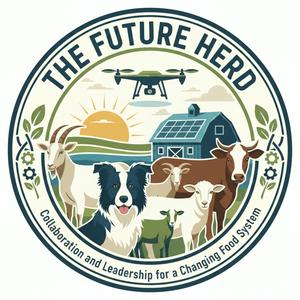
Get the free radio.net app
- Stations and podcasts to bookmark
- Stream via Wi-Fi or Bluetooth
- Supports Carplay & Android Auto
- Many other app features
Get the free radio.net app
- Stations and podcasts to bookmark
- Stream via Wi-Fi or Bluetooth
- Supports Carplay & Android Auto
- Many other app features

The Future Herd
Scan code,
download the app,
start listening.
download the app,
start listening.
The Future Herd: Podcasts in Family
 Canada - english