

Listen to this podcast in the app for free: Download for free in the App Store
radio.net
Sleep timer
Save favourites
88 episodes
86: Perimenopause and the Health Clues I Wish I Tracked Sooner
2026-10-09 | 17 mins.There are a lot of health numbers you could track, but more data does not automatically mean more clarity. In perimenopause especially, the useful part is figuring out which patterns actually help you understand why your sleep, hormones, energy, or blood sugar may suddenly feel different.
In this solo episode of Hello Hormones, I am sharing the health metrics I personally pay attention to and what they have taught me about my own body. I talk about sleep and early-morning waking, hormone patterns throughout the month, glucose and insulin, and a lot more about how I use tracking without letting the numbers take over my life.
I also break down how I use tools like sleep data, hormone testing, glucose monitoring, and a very low-tech workout calendar to spot patterns and make small adjustments. If you have ever wondered which health numbers are actually worth paying attention to, this episode will help you simplify the noise and focus on what gives you useful feedback.
What's Discussed:
(01:05) Sleep tracking and staying asleep during perimenopause.
(03:28) Alcohol, late meals, travel, and their impact on sleep.
(05:25) Tracking hormone patterns throughout the month.
(07:34) Why one hormone test may miss the bigger picture.
(08:17) Glucose and insulin changes across the menstrual cycle.
(09:00) Fasting glucose and insulin levels worth watching.
(11:02) Tracking water and daily movement for accountability.
(13:25) A simple way to track workouts consistently.
✍️ FREE GUIDES:
Top 7 Perimenopause Myths You Need to Stop Believing ASAP: drcarriejones.com/myths
Hormones 101 Cheat Sheet: drcarriejones.com/hormones101
The Perimenopause & Menopause Labs Test Checklist: drcarriejones.com/labs
The 101 on Stress, Cortisol And Your Nervous System Ebook: drcarriejones.com/stressfreebie
Which Stage of Perimenopause Am I In? Ebook: drcarriejones.com/stages
Find more from Dr. Carrie Jones:
Website: drcarriejones.com
Newsletter: drcarriejones.kit.com/newsletter
Instagram: @dr.carriejones
Facebook: @drcarriejones
TikTok: @drcarriejones
YouTube: @drcarriejones
Pinterest: @drcarriejones
Disclaimer: Information provided on this channel is for informational purposes only. This information is NOT intended as a substitute for the advice provided by your physician or other healthcare professional, or any information contained on or in any product. Do not use the information provided on this channel for diagnosing or treating a health problem or disease, or prescribing medication or other treatment. Always speak with your physician or other healthcare professional before taking any medication or nutritional, herbal or other supplement, or using any treatment for a health problem. Information provided on this channel and the use of any products or services related to this podcast by you does not create a doctor-patient relationship between you and Dr. Carrie Jones. Information and statements regarding dietary supplements have not been evaluated by the Food and Drug Administration and are not intended to diagnose, treat, cure, or prevent ANY disease.85: Dr. Jolene Brighten: ADHD and Perimenopause: Why Focus, Memory, and Motivation Change in Midlife
2026-10-06 | 1h 3 mins.You can spend years holding everything together with anxiety, urgency, perfectionism, or sheer willpower, then hit perimenopause and suddenly feel like your brain stopped cooperating. Trouble focusing, emotional overwhelm, forgetfulness, procrastination, and feeling like you have completely lost your ability to multitask can all overlap with ADHD, which is exactly why so many women start asking questions in midlife.
In this episode of Hello Hormones, Dr. Jolene Brighten and I break down the connection between ADHD and perimenopause, including how shifting estrogen can affect dopamine, memory, motivation, and cognitive flexibility. We also talk about testosterone, blood sugar, sleep, exercise, thyroid and iron testing, and why symptoms that look like ADHD still deserve a full evaluation.
Dr. Jolene Brighten is a women's health expert, author, and clinician who specializes in helping women better understand the connection between their hormones and their brains. If you have ever wondered why the strategies that used to keep you organized, productive, and on top of everything suddenly are not working the same way, this episode will help you understand what may be changing and what is worth looking at next.
What's Discussed:
(1:56) Why getting good grades does not rule out ADHD in women.
(3:13) Why ADHD may suddenly feel harder to manage during perimenopause.
(6:38) How masking can make ADHD look very different in women and girls.
(10:50) Why perimenopause and ADHD symptoms can be so difficult to tell apart.
(13:15) Why late-night scrolling and shopping may be your brain trying to reclaim dopamine and personal time.
(16:14) How changing estrogen can affect focus, memory, motivation, and cognitive flexibility.
(23:53) Why low testosterone can feel like losing your motivation or "spark."
(29:35) How blood sugar swings can make ADHD and perimenopause symptoms feel worse.
(44:00) What to rule out before assuming brain fog and forgetfulness are ADHD.
(46:58) Why 20 minutes of exercise may support focus and attention for hours afterward.
✍️ FREE GUIDES:
Top 7 Perimenopause Myths You Need to Stop Believing ASAP: drcarriejones.com/myths
Hormones 101 Cheat Sheet: drcarriejones.com/hormones101
The Perimenopause & Menopause Labs Test Checklist: drcarriejones.com/labs
The 101 on Stress, Cortisol And Your Nervous System Ebook: drcarriejones.com/stressfreebie
Which Stage of Perimenopause Am I In? Ebook: drcarriejones.com/stages
Find more from Dr. Carrie Jones:
Website: drcarriejones.com
Newsletter: drcarriejones.kit.com/newsletter
Instagram: @dr.carriejones
Facebook: @drcarriejones
TikTok: @drcarriejones
YouTube: @drcarriejones
Pinterest: @drcarriejones
Find more from Dr. Jolene Brighten:
Website: drbrighten.com
Instagram: @drjolenebrighten
Facebook: @drbrighten
TikTok: @drjolenebrighten
YouTube: @DrJoleneBrighten
Book: ADHD and Women
Disclaimer: Information provided on this channel is for informational purposes only. This information is NOT intended as a substitute for the advice provided by your physician or other healthcare professional, or any information contained on or in any product. Do not use the information provided on this channel for diagnosing or treating a health problem or disease, or prescribing medication or other treatment. Always speak with your physician or other healthcare professional before taking any medication or nutritional, herbal or other supplement, or using any treatment for a health problem. Information provided on this channel and the use of any products or services related to this podcast by you does not create a doctor-patient relationship between you and Dr. Carrie Jones. Information and statements regarding dietary supplements have not been evaluated by the Food and Drug Administration and are not intended to diagnose, treat, cure, or prevent ANY disease.84: Dr. Tiffany Lester: The Biomarkers Women Should Track Before Symptoms Escalate
2026-09-29 | 52 mins.You can be told your labs are "normal" while still dealing with fatigue, hair loss, weight changes, brain fog, or feeling like something is clearly off. Sometimes the bigger issue is that the right markers were never tested in the first place, or that falling inside a wide reference range does not tell the whole story.
In this episode of Hello Hormones with Dr. Carrie Jones, Dr. Tiffany Lester and I break down the biomarkers women should know before and during perimenopause, including ferritin, fasting insulin, thyroid markers, ApoB, testosterone, inflammation, and more.
Dr. Tiffany Lester is a board-certified integrative medicine physician and the Women's Health Medical Director at Function, where she leads the clinical strategy for women's health. If you have ever been told everything looks "fine" on paper while you still do not feel like yourself, this episode will help you understand what else may be worth looking at and what questions to start asking.
What's Discussed:
(1:22) Why persistent fatigue deserves more investigation than "you're just getting older."
(3:30) Why ferritin can be low even when you are not technically anemic.
(5:37) Why fasting insulin is worth tracking before perimenopause.
(9:21) Why blood sugar and insulin can become harder to manage as hormones shift.
(15:59) What an expanded cholesterol panel can reveal beyond basic LDL and HDL.
(20:59) Why free and total testosterone matter for women in midlife.
(27:02) The thyroid markers Dr. Lester considers essential beyond TSH.
(28:43) When ANA testing may help uncover an autoimmune issue.
(35:44) Why magnesium and vitamin D are two nutrients worth paying attention to.
(44:19) Why it is never too late to start tracking your biomarkers and building a baseline.
Function has created a special credit for Hello Hormones listeners. Use code HELLOHORMONES25 for a $25 credit toward Function's annual membership, normally priced at $365 per year at functionhealth.com
✍️ FREE GUIDES:
Top 7 Perimenopause Myths You Need to Stop Believing ASAP: drcarriejones.com/myths
Hormones 101 Cheat Sheet: drcarriejones.com/hormones101
The Perimenopause & Menopause Labs Test Checklist: drcarriejones.com/labs
The 101 on Stress, Cortisol And Your Nervous System Ebook: drcarriejones.com/stressfreebie
Which Stage of Perimenopause Am I In? Ebook: drcarriejones.com/stages
Find more from Dr. Carrie Jones:
Website: drcarriejones.com
Newsletter: drcarriejones.kit.com/newsletter
Instagram: @dr.carriejones
Facebook: @drcarriejones
TikTok: @drcarriejones
YouTube: @drcarriejones
Pinterest: @drcarriejones
Find more from Dr. Tiffany Lester & Function Health:
Website: drtiffanylester.com/
Instagram: @drtiffanylester
LinkedIn: Dr. Tiffany Lester
Function Health Website: functionhealth.com
Disclaimer: Information provided on this channel is for informational purposes only. This information is NOT intended as a substitute for the advice provided by your physician or other healthcare professional, or any information contained on or in any product. Do not use the information provided on this channel for diagnosing or treating a health problem or disease, or prescribing medication or other treatment. Always speak with your physician or other healthcare professional before taking any medication or nutritional, herbal or other supplement, or using any treatment for a health problem. Information provided on this channel and the use of any products or services related to this podcast by you does not create a doctor-patient relationship between you and Dr. Carrie Jones. Information and statements regarding dietary supplements have not been evaluated by the Food and Drug Administration and are not intended to diagnose, treat, cure, or prevent ANY disease.83: Dr. Saadia Mian: Understanding Thyroid, Hormones, and Metabolism in Midlife
2026-09-22 | 54 mins.You can have "normal" thyroid labs and still feel exhausted, foggy, stuck with weight changes, or like something is clearly off. That is where a deeper look at thyroid function can start to change the conversation.
In this episode of Hello Hormones with Dr. Saadia Mian, we break down what TSH may be missing, why free T3 can matter so much for how you feel, and how thyroid health connects with metabolism in midlife.
Dr. Saadia Mian is a board-certified endocrinologist with more than 20 years of clinical experience who is also trained in functional medicine. If you have ever been told your thyroid is "fine" but you still do not feel like yourself, this episode will give you a much clearer understanding of what else may be worth looking at.
What's Discussed:
(7:42) Why "normal" labs do not always explain how you feel.
(9:15) Why Dr. Mian often starts with gut health.
(13:55) The thyroid labs she checks and when she orders an ultrasound.
(17:03) The thyroid ranges she considers more optimal.
(19:17) When Hashimoto's may require thyroid medication.
(26:14) Why free T3 matters for thyroid function and metabolism.
(29:25) Why T3 is often left out of conventional thyroid treatment.
(35:23) When the thyroid can look like Hashimoto's despite negative antibodies.
(38:21) Why joy and nervous system regulation matter for healing.
(52:35) Practical ways to support hormones through joy, food, hydration, and sleep.
✍️ FREE GUIDES:
Top 7 Perimenopause Myths You Need to Stop Believing ASAP: drcarriejones.com/myths
Hormones 101 Cheat Sheet: drcarriejones.com/hormones101
The Perimenopause & Menopause Labs Test Checklist: drcarriejones.com/labs
The 101 on Stress, Cortisol And Your Nervous System Ebook: drcarriejones.com/stressfreebie
Which Stage of Perimenopause Am I In? Ebook: drcarriejones.com/stages
Find more from Dr. Carrie Jones:
Website: drcarriejones.com
Newsletter: drcarriejones.kit.com/newsletter
Instagram: @dr.carriejones
Facebook: @drcarriejones
TikTok: @drcarriejones
YouTube: @drcarriejones
Pinterest: @drcarriejones
Find more from Dr. Saadia Mian:
Website: saadiamianmd.com
Instagram: @drsaadiamianmd
Facebook: Saadia Mian MD
LinkedIn: drsaadiamian
Book: Hormones in Sync: An Endocrinologist's Guide to Reclaiming Your Energy, Joy, and Health
Disclaimer: Information provided on this channel is for informational purposes only. This information is NOT intended as a substitute for the advice provided by your physician or other healthcare professional, or any information contained on or in any product. Do not use the information provided on this channel for diagnosing or treating a health problem or disease, or prescribing medication or other treatment. Always speak with your physician or other healthcare professional before taking any medication or nutritional, herbal or other supplement, or using any treatment for a health problem. Information provided on this channel and the use of any products or services related to this podcast by you does not create a doctor-patient relationship between you and Dr. Carrie Jones. Information and statements regarding dietary supplements have not been evaluated by the Food and Drug Administration and are not intended to diagnose, treat, cure, or prevent ANY disease.82: Progesterone and Perimenopause: Sleep, Period, Histamine, and Mood Changes
2026-09-18 | 18 mins.Progesterone can be one of those hormones you do not think much about until your period gets heavier, PMS suddenly feels louder, you are waking up at 3 a.m., and your anxiety seems to have developed a personality of its own. Then you start wondering, "Wait, could low progesterone actually explain some of this?" Especially in your late 30s and 40s, the answer may be yes.
Here's where things get interesting. You make most of your progesterone after you ovulate, which means progesterone can start dropping as ovulation becomes less consistent during perimenopause. And the clues can show up in places you may not immediately connect to hormones. Think shorter or longer cycles, heavier bleeding, spotting before your period, breast tenderness, trouble sleeping, feeling more anxious, and even histamine symptoms like itching, stuffiness, headaches, flushing, or a racing heart that seem to get worse at certain points in your cycle. Progesterone also has to be looked at in context with estrogen, because estrogen can be sitting at a perfectly expected level while progesterone is much lower than it used to be.
In this solo episode of Hello Hormones, I am breaking down five categories of symptoms that can point toward low progesterone and explaining what is actually happening behind the scenes. We are talking periods, sleep and anxiety, fertility history, the surprising progesterone-histamine connection, and what can happen when estrogen no longer has the same progesterone counterbalance. I am also clearing up the difference between the progesterone your body makes and the progestins found in birth control pills and hormonal IUDs, including why having an IUD does not necessarily mean every progesterone-related symptom is covered. If you have been wondering whether low progesterone could be part of what you are feeling, this episode will help you connect a lot more dots.
What's Discussed:
(00:00) How progesterone is made, why ovulation matters, and why you do not produce meaningful amounts until after you ovulate.
(02:08) Why progesterone is often one of the first hormones to decline in the late 30s and 40s during perimenopause.
(02:56) The period changes that can point toward low progesterone, including heavier bleeding, spotting, PMS, breast tenderness, and shorter or longer cycles.
(04:25) How progesterone supports calm and sleep through allopregnanolone and GABA, and why low levels may contribute to anxiety or waking at 3 a.m.
(05:23) Why fertility struggles, pregnancy loss, or needing progesterone support in the past may be relevant when evaluating progesterone later in life.
(07:10) The surprising connection between progesterone, mast cells, and histamine symptoms like itching, congestion, headaches, anxiety, and a racing heart.
(09:16) Why low progesterone relative to estrogen may contribute to heavier periods, breast changes, fibroids, endometriosis symptoms, and thickening of the uterine lining.
(12:03) The difference between natural progesterone and the synthetic progestins used in birth control pills and hormonal IUDs.
(12:37) Why a progestin IUD may help with heavy periods without necessarily providing the same calming, sleep, or histamine effects as progesterone.
(13:45) Why being on the birth control pill does not necessarily prevent perimenopause symptoms and what other hormone systems may still be involved.
✍️ FREE GUIDES:
Top 7 Perimenopause Myths You Need to Stop Believing ASAP: drcarriejones.com/myths
Hormones 101 Cheat Sheet: drcarriejones.com/hormones101
The Perimenopause & Menopause Labs Test Checklist: drcarriejones.com/labs
The 101 on Stress, Cortisol And Your Nervous System Ebook: drcarriejones.com/stressfreebie
Which Stage of Perimenopause Am I In? Ebook: drcarriejones.com/stages
Find more from Dr. Carrie Jones:
Website: drcarriejones.com
Newsletter: drcarriejones.kit.com/newsletter
Instagram: @dr.carriejones
Facebook: @drcarriejones
TikTok: @drcarriejones
YouTube: @drcarriejones
Pinterest: @drcarriejones
Disclaimer: Information provided on this channel is for informational purposes only. This information is NOT intended as a substitute for the advice provided by your physician or other healthcare professional, or any information contained on or in any product. Do not use the information provided on this channel for diagnosing or treating a health problem or disease, or prescribing medication or other treatment. Always speak with your physician or other healthcare professional before taking any medication or nutritional, herbal or other supplement, or using any treatment for a health problem. Information provided on this channel and the use of any products or services related to this podcast by you does not create a doctor-patient relationship between you and Dr. Carrie Jones. Information and statements regarding dietary supplements have not been evaluated by the Food and Drug Administration and are not intended to diagnose, treat, cure, or prevent ANY disease.
More Alternative Health podcasts
 EXPANDED Podcast by To Be Magnetic™Alternative Health, Education, Health & Wellness, Religion & Spirituality, Self-Improvement, Spirituality
 I Can’t SleepAlternative Health, Health & Wellness, Mental Health, Science
 8 Hour Sleep MusicAlternative Health, Health & Wellness
 8 Hour Binaural BeatsAlternative Health, Health & Wellness
 Well with Arielle LorreAlternative Health, Arts, Fashion & Beauty, Health & Wellness, Personal Journals, Society & Culture
 Grounded Wellness by Primally PureAlternative Health, Education, Health & Wellness, Self-Improvement
 Passion Struck with John R. MilesAlternative Health, Education, Health & Wellness, Mental Health, Self-Improvement
 Rain Sounds - 10 HoursAlternative Health, Health & Wellness, Nature, Science
 Get Sleepy: stories for sleepAlternative Health, Drama, Fiction, Health & Wellness, Kids & Family, Stories for Kids
 Feel Better, Live More with Dr Rangan ChatterjeeAlternative Health, Health & Wellness
Trending Alternative Health podcasts
About Hello Hormones with Dr. Carrie Jones
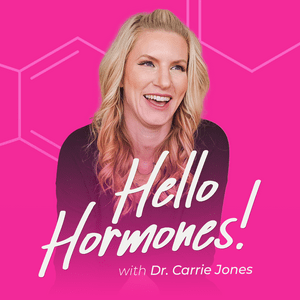
Welcome to Hello Hormones with me, Dr. Carrie Jones! A podcast where we explore how to make friends with our hormones so we can survive—and thrive—through our 30s, 40s, 50s and beyond!
I'm Dr. Carrie Jones—a holistic functional medicine doctor, hormone nerd, and women's health advocate who's spent over 20 years helping women understand their bodies and navigate all the twists and turns of hormone changes. I've seen it all—from the frustrating weight gain and brain fog to the mood swings, low libido, crazy periods, and sleep that just won't cooperate.
Whether you're pre-, peri-, or postmenopausal—or just a woman dealing with the chaos of hormonal imbalances—you're in the right place. Because understanding your hormones doesn't have to feel like herding cats—and your mood swings, fatigue, or weird symptoms? They're not just "in your head." So let's decode the science, ditch the confusion, and help you feel like yourself again.
You bring the symptoms, I'll bring the science—and let's get you the solutions together.
Podcast websiteListen to Hello Hormones with Dr. Carrie Jones, EXPANDED Podcast by To Be Magnetic™ and many other podcasts from around the world with the radio.net app
Get the free radio.net app
- Stations and podcasts to bookmark
- Stream via Wi-Fi or Bluetooth
- Supports Carplay & Android Auto
- Many other app features
Get the free radio.net app
- Stations and podcasts to bookmark
- Stream via Wi-Fi or Bluetooth
- Supports Carplay & Android Auto
- Many other app features
Hello Hormones with Dr. Carrie Jones
Scan code,
download the app,
start listening.
download the app,
start listening.
Hello Hormones with Dr. Carrie Jones: Podcasts in Family
 Canada - english