
Listen to this podcast in the app for free: Download for free in the App Store
radio.net
Sleep timer
Save favourites
63 episodes
PBM Impact on Independent Pharmacy Owners | PBM Reform
2026-10-09 | 46 mins.A patient's copay unexpectedly jumped to nearly $500. Upon investigation, it was discovered his plan design had changed, penalizing him for using our pharmacy.
He was now facing higher costs or needing to switch to a chain or mail-order pharmacy.Patients Rising Rx with Terry Wilcox | PBM Reform with APCI
2026-10-05 | 34 mins.This is part one of a two part conversation with Terry Wilcox, Co-Founder and CEO of Patients Rising. Find out what Patients Rising is doing for advocacy and change to better our patients by visiting https://www.patientsrising.org/about-patients-risingIowa’s PBM Reform Breakthrough: Inside Senate File 383 | PBM Reform with APCI
2026-09-24 | 30 mins.Guest: Iowa State Representative Brett Barker, PharmD — District 51
Guest Host: Todd S. Eury, Pharmacy Podcast Network
Regular Host: Greg Reybold — on special assignment
Sponsored by: American Pharmacy Cooperative, Inc. (APCI)
Iowa has delivered one of the most significant state-level victories in the continuing fight for pharmacy benefit manager reform.
On this episode of the PBM Reform Podcast, guest host Todd S. Eury sits down with Iowa State Representative Brett Barker, PharmD, a practicing pharmacist and representative of Iowa House District 51, for an inside look at the passage of Senate File 383 and what the new law could mean for independent pharmacies, employers, patients and the future of PBM regulation across the country.
Representative Barker brings a rare perspective to the discussion. In addition to serving in the Iowa Legislature, he is a pharmacist and pharmacy executive who understands firsthand the financial pressures facing community pharmacies. Barker served as one of the House floor managers for SF 383 as the legislation moved through the Iowa General Assembly.
The legislation cleared the Iowa House by a 75–15 vote after previously passing the Senate 36–14. Governor Kim Reynolds signed SF 383 into law on June 11, 2025, and its primary provisions became effective July 1, 2025.
SF 383 establishes substantial new requirements governing pharmacy benefit managers and their relationships with pharmacies, health plans and other payors. Among its provisions, the law addresses PBM reimbursement practices, pharmacy contracting, pass-through pricing, pharmacy appeals and disputes, network participation and protections intended to prevent discriminatory treatment of pharmacies.
One of the central themes of the legislation is greater transparency and accountability surrounding the flow of prescription-drug dollars. The law defines and establishes requirements involving pass-through pricing, in which payments made by a third-party payor to a PBM for prescription drugs correspond to payments made to the dispensing pharmacy, including applicable professional dispensing fees.
During the conversation, Todd and Representative Barker explore:
Why PBM reform became such an urgent issue for Iowa pharmacists and patients.
What community pharmacies were experiencing financially before SF 383.
How pharmacists, pharmacy owners and advocacy organizations helped educate Iowa lawmakers.
The political battle surrounding the legislation and what ultimately helped generate bipartisan support.
Why PBM reimbursement methodology is central to pharmacy sustainability.
The importance of giving pharmacies meaningful mechanisms to challenge reimbursement and contractual disputes.
The role Representative Barker's pharmacy background played in explaining PBM economics to fellow legislators.
The opposition lawmakers encountered while attempting to move PBM reform forward.
What other states can learn from Iowa's strategy.
Why pharmacists need greater representation inside state legislatures.
Whether Iowa's legislation could become a model for broader PBM reform nationwide.
Governor Reynolds described the legislation as an effort to bring greater accountability to PBMs and noted when signing the bill that Iowa was joining a growing number of states pursuing similar reforms.
For independent community pharmacists, the Iowa experience demonstrates something increasingly important: PBM reform is no longer simply a pharmacy reimbursement debate. It is becoming a healthcare access, competition and patient-care issue being fought state by state.
Representative Barker's story also highlights another major theme of the PBM Reform Podcast — the importance of pharmacists becoming directly engaged in public policy.
When pharmacists bring their clinical knowledge, business experience and patient relationships into state government, they can help lawmakers understand how policies written hundreds of miles away ultimately affect whether a pharmacy can keep its doors open.
Iowa's passage of SF 383 represents a major milestone in that movement.
About Our Guest
Brett Barker, PharmD, represents Iowa House District 51. He earned his Doctor of Pharmacy degree from the University of Iowa and has worked extensively in community pharmacy. His professional background gives him firsthand insight into pharmacy operations, prescription-drug reimbursement and the challenges facing independent pharmacies.
About the PBM Reform Podcast
The PBM Reform Podcast examines pharmacy benefit manager practices, prescription-drug economics, legislation and public policy affecting pharmacists, employers and patients across the United States.
The program features pharmacists, policymakers, healthcare executives, legislators and advocacy leaders working to create greater transparency, accountability and competition within the prescription-drug marketplace.
Sponsored by American Pharmacy Cooperative, Inc. (APCI).
Guest Host: Todd S. Eury
Regular Host: Greg Reybold — on special assignment
Production: Pharmacy Podcast Network
PBM Reform Podcast — following the legislation, the policymakers and the pharmacists fighting to change the prescription-drug marketplace.Winning Hearts, Minds, and Policy with Strategic Communications | PBM Reform
2026-08-25 | 42 mins.Many pharmacy leaders focus on legislation and lobbying.
Why is strategic communication on social media equally important?
Dr. Maurice PharmD joins Breck Rice on this episode of the PBM Reform Podcast.
eKSsdTHlSWcgEnRjIkQvTRICARE and the Fight for Military Pharmacy Access | PBM Reform with APCI
2026-08-17 | 53 mins.The PBM Reform Podcast, sponsored by APCI, welcomes John Vinson, PharmD, Chief Executive Officer of the Arkansas Pharmacists Association, for a timely conversation with host Greg Reybold about the management of the TRICARE pharmacy benefit.
Express Scripts administers pharmacy benefits for TRICARE, the Department of Defense healthcare program serving more than 9 million active-duty service members, military retirees, and family members. In fiscal year 2023 alone, TRICARE spent more than $8 billion on prescription medications.
Greg and John examine concerns surrounding Express Scripts’ administration of the program, including shrinking pharmacy networks, reduced patient choice, questionable contractor reporting, specialty-drug delivery oversight, and the consequences for independent and rural pharmacies.
A 2025 Government Accountability Office investigation found that:
TRICARE’s minimum network requirement fell from 50,000 to 35,000 pharmacies.
The network had approximately 13,165 fewer pharmacies in late 2024 than in late 2022.
An estimated 380,000 beneficiaries may have been forced to find another pharmacy.
The Defense Health Agency relied heavily on contractor-submitted reports that contained inaccuracies.
DHA had not consistently audited the data used to evaluate beneficiary access.
GAO’s two corrective recommendations remain open as of August 2026, although DHA has begun adding reporting and auditing requirements.
The episode also addresses higher 2026 prescription copayments. For most non-active-duty beneficiaries, home-delivery copays are now $14 for generic formulary drugs, $44 for brand-name drugs, and $85 for non-formulary medications. At retail network pharmacies, the corresponding 30-day copays are $16, $48, and $85.
Greg and John discuss whether PBM-driven network reductions represent true savings—or simply transfer costs, inconvenience, and access barriers to military families and the community pharmacies serving them.
Key discussion points
Express Scripts’ role in administering the TRICARE pharmacy benefit
Pharmacy network contraction and beneficiary disruption
Access challenges facing rural communities and military families
Inaccurate contractor data and insufficient federal oversight
Specialty-pharmacy delivery and monitoring concerns
Rising 2026 copayments and pressure toward mail order
Arkansas’ leadership in challenging PBM vertical integration
The need for transparency, accountability, adequate reimbursement, and patient choice
Important clarification: TRICARE is administered by the Department of Defense and is distinct from healthcare and pharmacy services operated by the Department of Veterans Affairs.
Sponsored by APCI — American Pharmacy Cooperative, Inc.
Sources: U.S. Government Accountability Office, TRICARE’s 2026 pharmacy-benefit update, official 2026–2027 pharmacy costs.
eKSsdTHlSWcgEnRjIkQv
More News podcasts





Trending News podcasts











About PBM Reform Podcast
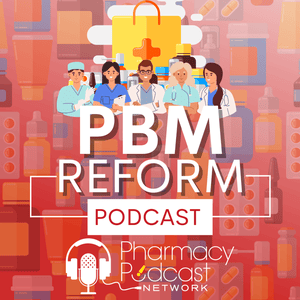
Pharmacy benefit managers were created as middlemen to reduce administrative costs for insurers, validate a patient’s eligibility, administer plan benefits, and negotiate costs between pharmacies and health plans. Over time, PBMs have been allowed to operate virtually unchecked. A lack of transparency in PBM practices has led several states to implement licensure/registration, fair pharmacy audit, or generic drug pricing legislation to try to level the playing field for pharmacies and patients. by the NCPA https://www.ncpanet.org/advocacy/state-advocacy/pbm-reform This Podcast is focusing on discussions & interviews about PBM Reform & those ”Business of Pharmacy” professionals leading this much needed reform.
Podcast websiteListen to PBM Reform Podcast, Pivot and many other podcasts from around the world with the radio.net app
Get the free radio.net app
- Stations and podcasts to bookmark
- Stream via Wi-Fi or Bluetooth
- Supports Carplay & Android Auto
- Many other app features
Get the free radio.net app
- Stations and podcasts to bookmark
- Stream via Wi-Fi or Bluetooth
- Supports Carplay & Android Auto
- Many other app features

PBM Reform Podcast
Scan code,
download the app,
start listening.
download the app,
start listening.
PBM Reform Podcast: Podcasts in Family
 Canada - english

