

Listen to this podcast in the app for free: Download for free in the App Store
radio.net
Sleep timer
Save favourites
20 episodes
The son of Russian spies who fought to be Canadian
2026-10-06 | 35 mins.Sixteen-year-old Alex is a Canadian kid living the American dream. A house with his parents in a leafy suburb, family trips, good schools, and champagne on his brother’s birthday. But when the FBI comes knocking on his door, the high schooler’s world is shattered. His parents are arrested for being Russian secret agents, and the person he thought he was turns out to be a lie.
After winding up in Russia, where he’s never been, and being given the surname Vavilov, which he can’t pronounce, he longs to return to Canada, sparking a legal battle over whether his parents’ role as spies should be grounds for cancelling his Canadian citizenship.
Host Falen Johnson and journalist Catherine Rolfsen tell the story of Canada vs. Vavilov — the family that inspired the FX series The Americans — and how the ensuing court battle over their son’s Canadian citizenship forever changed how administrative government decisions are made.
P.S. Vote for us in the Signal awards! https://vote.signalaward.com/PublicVoting#/2026/limited-series-specials/genre/historyPart 2 | The kid who confronted his abuser at residential school
2026-09-29 | 38 mins.Willie Blackwater’s abuser is in jail, but for him, justice hasn’t been served. Twenty-eight of Arthur Henry Plint’s victims — including Willie — launch a civil suit to seek damages from the federal government and the United Church of Canada. The trial to hold these authorities vicariously liable for the horrors of residential schools is brutal and explosive, and not everyone makes it out alive.
Host Falen Johnson and journalist Jackie McKay trace Willie’s quest for justice as Blackwater vs. Plint heads to the B.C. Supreme Court — a trial that exposes the widespread damage done by residential schools, and sets in motion the creation of the Truth and Reconciliation Commission.
This episode is part two of two. Find part one here.
P.S. Vote for us in the Signal awards! https://vote.signalaward.com/PublicVoting#/2026/limited-series-specials/genre/historyPart 1 | The kid who confronted his abuser at residential school
2026-09-22 | 35 mins.Willie Blackwater is just 13 when he holds a knife to his rapist's throat, demanding an end to his recurring abuse. It’s the first time Willie stands up to his residential school supervisor, but it’s far from the last. Years later, after a fateful encounter with a cop, Willie decides to break his silence — joining a group of survivors that help convict Arthur Henry Plint of 18 counts of sexual assault.
But for Willie and his friends, it’s not enough. And a risky idea starts to form. Can they take on the architects of the residential school system?
Host Falen Johnson and journalist Jackie McKay meet the man behind Blackwater vs. Plint, one of the first court cases where residential school survivors took their abuser to court, eventually paving a legal path for thousands of other Indigenous children forced to attend these schools.
This episode is part one of two. Listen to part two here.
P.S. Vote for us in the Signal awards! https://vote.signalaward.com/PublicVoting#/2026/limited-series-specials/genre/historyThe student who took off her shirt for women's rights
2026-09-15 | 30 mins.Nineteen-year-old Gwen Jacob is just trying to catch a breeze when she goes topless during a 1991 heat wave. But after being cat-called and arrested, her simple attempt to stay cool turns into a statement. And when she refuses to pay her fine, she ends up in a court battle that triggers a nationwide debate about sexism, safety and control over women’s bodies.
Host Falen Johnson and journalist Clare Bonnyman detail the multi-year saga of R. vs. Jacob, a case that challenged and eventually changed how the law treats women who bare their breasts.
P.S. Vote for us in the Signal awards! https://vote.signalaward.com/PublicVoting#/2026/limited-series-specials/genre/historyWe're back! See You in Court returns with Season 2
2026-09-08 | 1 mins.The stories behind the legal battles that changed Canada — and the unlikely people who made it happen. Some were sh*t distributors, some were villains, and some were just regular folks dragged into a fight.
Each week, host Falen Johnson teams up with a journalist to dig into a case that challenges the status quo, and asks: What kind of person takes on the law? What are the costs? And what would our lives look like if these cases never happened? Because let's be real, just because a case is closed doesn't mean the story is over.
Named one of Apple Podcasts' Best Podcasts of 2025.
New episodes drop weekly starting September 15, 2026.
More Society & Culture podcasts
 The Ezra Klein ShowGovernment, News, Society & Culture
 Stuff You Should KnowSociety & Culture
 Freakonomics RadioDocumentary, Society & Culture
 This American LifeArts, News, Politics, Society & Culture
 The Oprah PodcastSociety & Culture
 Revisionist HistoryHistory, Society & Culture, True Crime
 IdeasSociety & Culture
 Modern WisdomHealth & Wellness, Society & Culture
 CriminalDocumentary, Society & Culture, True Crime
 The Shawn Ryan ShowPhilosophy, Society & Culture
Trending Society & Culture podcasts
 Talk Easy with Sam FragosoFilm Interviews, Society & Culture, TV & Film
 Decoder RingDocumentary, History, Society & Culture
 Pinkpill RxSociety & Culture
 So SupernaturalSociety & Culture
 Jack Neel PodcastBusiness, Society & Culture, True Crime
 Dalton Fischer PodcastDocumentary, Education, Self-Improvement, Society & Culture, True Crime
 The Wirecutter ShowEducation, Home & Garden, Leisure, Society & Culture, Tutorials
 What It Was LikeDocumentary, Society & Culture
 A Very British CultDocumentary, Society & Culture, True Crime
 Cleared Hot - Powered By BRCCSociety & Culture
 VeloursRelationships, Society & Culture
 The Gray Area with Sean IllingNews, Philosophy, Politics, Society & Culture
 It's Me, TinxSociety & Culture
 Elles - Le baladoSociety & Culture
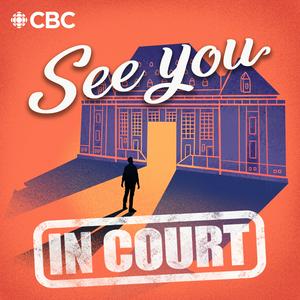
About See You in Court
Named one of Apple Podcasts' Best Podcasts of 2025. The stories behind the legal battles that changed Canada — and the unlikely people who made it happen. Some were sh*t distributors, some were convicts, and some were just regular folks dragged into a fight.Each week, host Falen Johnson teams up with a journalist to dig into a case that challenged the status quo, and asks: what kind of person takes on the law? What are the costs? And what would our lives look like if these cases never happened? Because let's be real, just because a case is closed doesn't mean the story is over.Vote for us in the Signal awards! https://vote.signalaward.com/PublicVoting#/2026/limited-series-specials/genre/history
Podcast websiteListen to See You in Court, The Ezra Klein Show and many other podcasts from around the world with the radio.net app
Get the free radio.net app
- Stations and podcasts to bookmark
- Stream via Wi-Fi or Bluetooth
- Supports Carplay & Android Auto
- Many other app features
Get the free radio.net app
- Stations and podcasts to bookmark
- Stream via Wi-Fi or Bluetooth
- Supports Carplay & Android Auto
- Many other app features

See You in Court
Scan code,
download the app,
start listening.
download the app,
start listening.
See You in Court: Podcasts in Family
 Canada - english