

Listen to this podcast in the app for free: Download for free in the App Store
radio.net
Sleep timer
Save favourites
39 episodes
Season 1, Gen X — Episode 36 — Gen X Wrap Up
2026-09-27 | 1h 7 mins.After a year, your hosts are ready to wrap Gen X. Season One is at a close. What did we learn about the self-professedly forgotten generation? What has Banksy to do with the spirit of the age? And, most importantly we answer the question that started it all: how did the dirty girls end up in the K-Hive?
Please like, rate, and subscribe here on Patreon, Apple Podcasts, Spotify, and wherever podcasts are found!Season 1, Gen X — Episode 35 — American Movie (1999)
2026-09-13 | 49 mins.DPP is back, baby — and this time for an encore. Chase and Sam thought they'd round out the season — find a 'capstone', if you will — for the last year. That pediment takes the form of Chris Smith's fly-on-the-wall documentary American Movie (1999).
What does it mean to aspire towards creative production as a provincial dreamer-cum-slacker? What was left of the American dream as the clock ticked over and a new millennium began?
Find out in today's episode.Summer Break
2026-08-02 | 5 mins.Out of OfficeSeason 1, Gen X — Episode 34 — While We're Young (2014)
2026-07-30 | 56 mins.Fear the coming of the trilby. Yes, that's right — today, in the last episode of our first season, we're looking at Gen X accelerating towards middle age and a crash encounter with those coming up behind them: millennials.
No one captured this dissonant first encounter better than Noah Baumbach in his 2014 feature While We're Young — a spiralling comedy of manners obsessed with subcultures, technology, filmmaking, ethics, and the process of ageing itself.
Were the millennials the horrific spawn of a shallow age? Solopistic, self-involved, far too comfortable with 'selling out?' Or were they a pioneering generation, with enough earnestness and purchasing power to transform cities, fashion, media and art — at least sometimes — for the better?
Find out in today's episode.Season 1, Gen X — Episode 33 — Amores Perros (2000) + Y Tu Mama Tambien (2001)
2026-07-20 | 1h 8 mins.Patreon here.
It's the early 2000s in Mexico — and everyone is feelin' fine. The PRI's uninterrupted one-party 71-year reign of social-democratic, but also neoliberal, authoritarian incompetence is over. The insanity of the drug war proper, unleashed in 2006, is a distant spot on the horizon. A guy with the last name Fox is in charge — he's like George Bush but with even more charisma...and a strange penchant for coke (a cola).
Yes, that's right — today's episode of DPP is covering the defining, break-out films of the Nuevo Cine Mexicano — Alejandro González Iñárritu's Amores Perros and Alfonso Cuarón's Y Tu Mama Tambien. Or as Chase has characterised them — a pairing about female predatory behaviour and animal cruelty.
How was the USA's closest neighbour feeling about the End of History? Dread, joy? The irrepressible need to engage in dog fighting?
Find out in today's episode.
More Government podcasts
 The OShow with Laura BabcockGovernment, News, Politics, Society & Culture
 5-4Government, News, News Commentary
 The DSR NetworkGovernment
 PekingologyGovernment
 Strict ScrutinyGovernment, News, Philosophy, Society & Culture
 Politics Is BrokenGovernment, News, Politics
 Playbook CanadaGovernment, News
 Canadian Army PodcastGovernment, News
 Global Security BriefingGovernment, News, Politics
 The InterviewGovernment, News, Politics
Trending Government podcasts
 The OShow with Laura BabcockGovernment, News, Politics, Society & Culture
 Balade santéGovernment, Health & Wellness, Mental Health
 Hé-coutez bien!Government, Society & Culture
 LondongradDocumentary, Government, News, Society & Culture
 PreAccident Investigation PodcastGovernment
- Death is a PhotographGovernment, History, Society & Culture, TV & Film
 You Might Be RightGovernment, News, Politics
 Civics 101Government, History, Society & Culture
 U.S. Supreme Court Oral ArgumentsGovernment
 Une personne sur cinq : parlons santé mentale avec Florence K - Gouvernement du QuébecGovernment, Health & Wellness, Mental Health
 Congressional DishGovernment, News, Politics
 Audio ArguendoGovernment
 The Debrief with Jon BeckerBusiness, Education, Government, Self-Improvement
 The Trade GuysBusiness, Government, Non-Profit
 CIAJ In All Fairness - ICAJ En toute justiceEducation, Government
 The OShow with Laura BabcockGovernment, News, Politics, Society & Culture
 The MergeGovernment
 Red Eye RadioDaily News, Government, News
 The Week in WestminsterGovernment
 The Tara Palmeri ShowGovernment, News, Politics
 Better Every ShiftGovernment
About Death is a Photograph
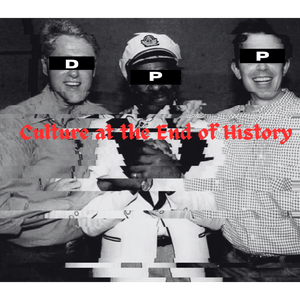
Culture at the End of History [https://www.patreon.com/deathphotopod]
Podcast websiteListen to Death is a Photograph, The OShow with Laura Babcock and many other podcasts from around the world with the radio.net app
Get the free radio.net app
- Stations and podcasts to bookmark
- Stream via Wi-Fi or Bluetooth
- Supports Carplay & Android Auto
- Many other app features
Get the free radio.net app
- Stations and podcasts to bookmark
- Stream via Wi-Fi or Bluetooth
- Supports Carplay & Android Auto
- Many other app features
Death is a Photograph
Scan code,
download the app,
start listening.
download the app,
start listening.
 Canada - english