Listen to this podcast in the app for free: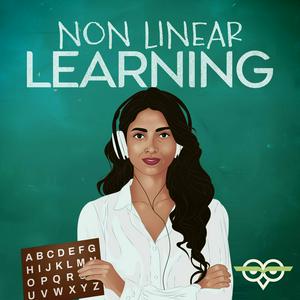 Download for free in the App Store
radio.net
Sleep timer
Save favourites
Non Linear Learning - Rethinking Education for Neurodivergent Learners
Dr. Vaish Sarathy
Latest episode
Available Episodes
5 of 198
- 199 Evidence, Rage, and Relief: A Mom–Son Team on Finding Spelled CommunicationWhen 8-year-old non-speaking autistic Rafael found text-based communication, he didn't just start "answering questions." He started telling the truth about his body, his anxiety, and the frustration of being misunderstood. If you've ever looked at your non-speaking child and thought, "I know there's more in there… I just don't know how to reach it," this conversation is for you. Today I'm joined by Daria and her 8-year-old autistic, non-speaking son Rafael, co-creators of Spelling the Tea on Autism on Substack and Instagram. After discovering text-based communication, they realized how deeply Rafael had been misunderstood - and started documenting both his words and the science that helps explain them. Inside the episode, we talk about: Rafael's "goner mindset" before communication and what typing changed about his sense of the future. How apraxia creates a gap between intention and movement and why that gap gets mislabeled as "low IQ," "behavior," or "non-compliance." The concept of an "interference score" for food! How Rafael would redesign first in schools for non-speakers. Why regulation, communication, and learning are inseparable… and why independence in cognition does not mean independence in motor and sensory systems. This is a humbling, practical, and very human reminder that: We can't keep separating "behavior," "sensory," and "cognitive" boxes. Research on autism that excludes non-speakers cannot be our only compass. And most importantly: sitting still is not a pre-requisite for real thinking or rigorous education. You can find Daria and Rafael at https://www.instagram.com/spelling_the_tea_on_autism/ and https://spellingthetea.substack.com/ You can find Dr. Vaish Sarathy at https://www.instagram.com/drvaishsarathy/ Check out her 6 foundational tips on education at https://www.drvaishsarathy.com/nonlinearlearning--------43:28
- 198 How Understanding Apraxia changes your child's Education - with Dana JohnsonI first spoke with Dana Johnson nearly 4 years ago, and that conversation completely changed how I saw vision and learning. I call it my "ocular motor awakening" when I truly understood that vision has three components, and only one of them is corrected by glasses. Dana is the co-creator of the Spellers Method and the founder of multiple centers dedicated to helping non-speaking individuals communicate and learn with purpose. As both an occupational therapist (OT) and a Spellers Method practitioner, she brings a unique approach to supporting individuals with autism, apraxia, dyspraxia, and sensory-motor differences. In this episode, we talk about the power of purposeful motor skills, breaking down barriers for non-speakers, and what real communication means. Key Takeaways: Vision isn't just about eyesight it's about how the brain processes what we see. Apraxia is a motor planning challenge, not a cognitive one. Communication is possible when we focus on purposeful motor skills. What does right support look like? Get in Touch: 👉 Learn more about Dana Johnson's work at Spellers Method Tampa 👉 Connect with Dr. Vaish Sarathy on Instagram: @drvaishsarathy--------43:03
- 197 Beyond Burnout: GABA Support, Mitochondria, and Realistic Help for Parents of Autistic KidsIf you're parenting an Autistic child and living in a state of constant alert (sensory overwhelm, dysregulation, sleepless nights, meltdowns, and the never-ending to-do list), this episode gives you a concrete biochemical map for how to get back to baseline. In today's conversation,I'm joined by Dr. Scott Sherr board certified internal medicine physician, certified practitioner of Health Optimization Medicine, and COO of Troscriptions, a company making physician formulated, precision-dosed buccal troches for focus, stress, sleep, and immune function. We talk about: What is the "sympathetic spiral of doom." What GABA deficiency actually looks like (and why calming down isn't as simple as "go meditate"). Why mitochondrial dysfunction and chronic inflammation show up so strongly in autistic and disabled kids and how supporting cellular energy can actualy reduce hyper-excitability. The real problem with giving kids 10–20 supplements at once. How targeted support can help caregivers feel better now, while they work the longer game of diet, lifestyle, and environment. Links Mentioned Dr. Scott Sherr's clinical practice: https://drscottsherr.com Troscriptions Products: https://troscriptions.com (Please work with a practitioner before using any product with a child.) If you found this episode helpful: Please share it with a caregiver who feels stuck in stress, burnout, or dysregulation. And grab my free guide: Gut Health Toolkit--------35:49
- 196 Oxytocin, Autism, and how Autism Research worksIn this episode, psychiatrist and researcher Dr. Eric Strobl joins Dr. Vaish Sarathy to talk about a new re-analysis of the SOARS-B trial on oxytocin and autism. While earlier studies found no clear benefit, Dr. Strobl's fine-grained, item-level analysis using machine learning uncovered consistent evidence that oxytocin can enhance social-emotional reciprocity the ability to engage, connect, and respond in social contexts. Together, they discuss: Why most autism drug trials fail to show benefit What "blunt outcome measures" really mean in clinical research How machine learning can extract signal from noise in complex data What oxytocin actually does (and doesn't do) in real life How future studies could use more nuanced, individualized measures Resources and Links Mentioned Study Discussed: Strobl E et al. (2024). "Item-Level Analysis Reveals Oxytocin Improves Social-Emotional Reciprocity in Autism Spectrum Disorder." Preprint Original SOARS-B Trial: Parker KJ et al. (2017). "A Randomized Clinical Trial of Oxytocin in Children and Adolescents with Autism Spectrum Disorder." Journal of the American Medical Association (JAMA Psychiatry) Link Related Reading: Oxytocin and Social Behavior On machine learning in psychiatry: Nature – Machine learning in mental health research Key Takeaways Oxytocin may help but not for everyone. Its most reliable effect seems to be reducing social anxiety and improving comfort in social exchanges. Measurement matters. "Blunt" outcome scales can bury meaningful results under noise. Item-level, data-driven analysis reveals nuance traditional methods miss. Autism heterogeneity is real. The same outward behavior can stem from different root causes - so future trials need precision tools, not averages. Hope through better science. New methods aren't about hype—they're about accuracy, compassion, and smarter research design. About Dr. Eric Strobl Dr. Strobl is a psychiatrist and data scientist at the University of Pittsburgh who develops innovative machine-learning algorithms to uncover hidden structure in medical data. His current work focuses on autism, neurodevelopmental conditions, and the use of AI to improve clinical trial design. About Dr. Vaish Sarathy Dr. Vaish Sarathy is a TEDx speaker, PhD chemist, educator, and mom to a non-speaking autistic teen poet with Down syndrome. She hosts the Non Linear Learning podcast and leads the Non Linear Education course for parents and educators who believe that every brain can learn, given the right way to teach. Stay Connected Instagram: @drvaishsarathy Free Guide: Turn ON Your Child's Learning Switch Join the Non Linear Education Waitlist: Get on the list here →--------33:33
- 195 What's Your Excuse? Lessons on Problem-Solving, Asking for Help, and Doing the Next ThingThis may be the most heartfelt episode I've ever recorded. In this deeply human conversation, Maxwell Ivey: The Blind Blogger, and I talk about what it means to keep moving when life doesn't hand you easy options. Maxwell lost his sight as a child, taught himself to code, built a business, and learned to ask for help without shame. We talk about the quiet power of asking, the courage to act before conditions are perfect, and a rare take on gratitude-not as politeness, but as the willingness to use what's been given. Somewhere along the way, we find ourselves reflecting on The Four Agreements and how "don't take things personally" and "don't make assumptions" become essential mindsets in the world of disability and education. It's unpolished, honest, and full of wisdom that only comes from lived experience. Stay to the end to hear Maxwell sing his original song, Don't Wait on Someday. You can find Maxwell at theblindblogger.net.--------46:06
More Arts podcasts
 Bobby on the BeatArts, Society & Culture, Food
 Film Never Lies with Luke WillsonArts, Leisure, TV & Film
 The Magnus ArchivesArts, Fiction, Drama, Performing Arts, Science Fiction
 ill-advised by Bill NighyArts, Comedy, Music, Books
 99% InvisibleArts, Design
 The MothArts, Performing Arts
 The Jann Arden PodcastArts, Society & Culture, Performing Arts, Personal Journals
 岩中花述Arts
 Fresh AirArts, Society & Culture, TV & Film, Books
 Feu DouxArts, Business, Entrepreneurship, Food
Trending Arts podcasts
 The Food ChainArts, Society & Culture, Food
 Be My Guest with Ina GartenArts, Food
 Ruthie's Table 4Arts, Food
 The Recipe with Kenji and DebArts, Food
 The Week in ArtArts, Visual Arts
 大内密谈
大内密谈 John OliverArts
 Stories in ColourArts, Science, Society & Culture, Visual Arts
 The Jimmy Dore ShowArts, Comedy, News, Performing Arts, Politics
 CBS Radio Mystery Theater | Old Time RadioArts
 Throwing FitsArts, Fashion & Beauty
 En attendant ma lettre de PoudlardArts, TV & Film, Books
- Film Never Lies with Luke WillsonArts, Leisure, TV & Film
 Shoulda BooksArts, Education, Books
 蜜獾吃书Arts, Books
 Talk ArtArts, Visual Arts
 In the Test KitchenArts, Society & Culture, Food
 Currently ReadingArts, Society & Culture, Books
 文化有限Arts, Fiction, TV & Film, Books, Drama, Film Reviews
 Design Matters with Debbie MillmanArts, Design
 Let's Get This Shaw on the RoadArts, Performing Arts
 Poetry UnboundArts, Religion & Spirituality, Society & Culture, Books, Relationships, Spirituality
 Catholic Bible StudyArts, Books
 The Inside Edit PodcastArts, Fashion & Beauty
 Reading Ferdowsi فردوسی خوانیArts, Books
About Non Linear Learning - Rethinking Education for Neurodivergent Learners
Where we raise the bar on Education for children with a disability.
Educating a child with a disability isn't for the faint of heart, and if you're a parent or educator who refuses to give up on your child's potential, you're in the right place.
Hosted by TEDx speaker and Ph.D. Chemist Dr. Vaish Sarathy [mom to a non-speaking Autistic teen with Down syndrome], this podcast offers a bold new way to support your child's learning, regulation, and independence without burnout or arbitrary busy work.
Together we explore how to:
- Break learning barriers so your child with Autism / Down Syndrome / ADHD can learn complex Math and Science
- Make teaching and learning at home a flow state
- Support brain + body health with practical, science-backed tools
- Use Non Linear Education strategies to unlock growth in ways traditional systems never could
Hear from top educators, researchers, and self-advocates. And most importantly, believe again: in your child, and in yourself.
Podcast websiteListen to Non Linear Learning - Rethinking Education for Neurodivergent Learners, Bobby on the Beat and many other podcasts from around the world with the radio.net app
Get the free radio.net app
- Stations and podcasts to bookmark
- Stream via Wi-Fi or Bluetooth
- Supports Carplay & Android Auto
- Many other app features
Get the free radio.net app
- Stations and podcasts to bookmark
- Stream via Wi-Fi or Bluetooth
- Supports Carplay & Android Auto
- Many other app features

Non Linear Learning - Rethinking Education for Neurodivergent Learners
Scan code,
download the app,
start listening.
download the app,
start listening.
 Canada - english