

Listen to this podcast in the app for free: Download for free in the App Store
radio.net
Sleep timer
Save favourites
52 episodes
Episode #52: MMS (Miracle Mineral Solution)
2026-05-27 | 1h 8 mins.In this episode, Hannah & Victoria catch up after a few months away from the podcast, and discuss today’s topic: Miracle Mineral Solution.
They discuss:
* The Genesis II Church of Health and Healing and MMS, their sacrament
* The Guardian article describing MMS and the church that promotes it
* Jim Humble, the man who “discovered” MMS
* Info on Jim Humble’s explorations and how MMS got connected to autism
* Information from the United States Court of Appeals regarding the Grenons, the family behind the Genesis II Church of Health and Healing
* The Grenons were sentenced to 12+ years in federal prison
* “During trial in July 2023, the jury saw photos and video of a dirty rundown shed in Jonathan Grenon’s backyard in Bradenton, Florida, where the defendants were manufacturing their MMS. These photos showed dozens of blue chemical drums containing nearly 10,000 pounds of sodium chlorite powder, thousands of bottles of MMS, and other items used in the manufacture and distribution of MMS.”
* Sodium chlorite supply chain
* Researchers in Poland (Nature) published Antimicrobial properties and toxicity challenges of chlorine dioxide used in alternative medicine
* Some really cool hx of ingesting chlorine dioxide in this study
* Medsafe: potentially fatal adverse effects with Miracle Mineral Solution
* Overview of biofilms in humans
* Other weird miracle cure beliefs throughout history
* Mecury ingestion
* Milk transfusions
* Radium ingestion
* Medical cannibalism - yikes
* Parasites
* Neuroscience of miracles and religious belief
* Dr. Jordan Grafman - Neuroscientist who studies which brain regions are involved in the belief of miracles
* “People who experienced miracles were predominantly educated with college or higher degrees, and people of all genders, ages, and races. With a small number of respondents, it’s hard to draw conclusions from these demographics for now, except that it suggests all kinds of people can believe in miracles, and having a higher level of education doesn’t preclude a person from this belief.”
This is a public episode. If you would like to discuss this with other subscribers or get access to bonus episodes, visit influencedtodeath.substack.comEpisode #51: Placentophagy
2026-05-11 | 58 mins.In this episode, Hannah & Victoria are joined by now-regular podcast guest Sara Russell, PhD, to discuss placentophagy, aka the practice of eating the placenta after birth.
A couple of notes before the show notes:
* We had some tech difficulties, so this episode is audio-only and has some wonky edits near the end. We still think it’s worth publishing b/c Sara is a wealth of knowledge, and this topic is wild AF
* We recorded this in January 2026, so some of our references are now a bit dated. We’ll be releasing new episodes as we can between Hannah’s school schedule and Victoria’s owning two businesses schedule
On to the episode:
* Quick opening discussion about rosacea and integrative ways to address it
* Placentophagy might seem like a crunchy hippy throwback to how humans used to live, but based on what we know, traditional cultures didn’t eat placenta
* What is the placenta, exactly? Sara explains.
* Sara’s personal experience with placentophagy and why she stopped eating it after a short time
* What are the dangers of placentophagy?
* If you’d like, you can supplement with grass-fed beef placenta. 🤷♀️
* We clarify Brian Johnson (Liver King) versus Bryan Johnson (famous biohacker venture capitalist who doesn’t want to die)
* Sara explains the importance of screening for and addressing group B strep in pregnancy and birth
* Do other animals eat their placenta?
* Quick discussion of the new dietary guidelines (published in January 2026)
* Placenta research
* Traditional history of placentophagy and another study here
* Placenta: Worth trying?
* A 2020 review summarizes the controversy: “On the one hand, researchers attribute benefits like increased breast milk, weight gain in newborns, decreased postpartum depression and fatigue, and improved mothers’ mood. In contrast, bacterial or viral infections, hormonal, or trace elements that could become toxic for both the mother and baby are reported as possible health risks. Other reports argue a lack of scientific rigor to support the self-reported benefits of placentophagia. Also, the way the placenta is prepared (raw, cooked, dehydrated, processed, or encapsulated) alters its components, and thus the desired effects.”
* Does placenta consumption happen in nature? Is it natural?
* Placentophagy may be a safety measure to keep the mother and infant safe
* But that hypothesis doesn’t hold water based on other observations. There are situations where mothers retrieve the placenta in spite of the fact that it would be safer to discard it, and situations where mothers consume the placenta even when they could just as easily abandon it and move with their young to a safe location far from where the placenta’s odor might attract the attention of predators.
* Other species actively avoid the placenta altogether
* Possible benefits of placentophagy are discussed here and here
* Read about the forces that drive placentophagy such as genetics, nutrition, and hormones here, here, and here
If you have a specific question, send us an email at influencedtodeath@gmail.com. Sara has eight full pages of citations.
If you’d like to learn more about Sara’s work with pregnancy-specific blood work analysis, click here.
Or visit her website here.
This is a public episode. If you would like to discuss this with other subscribers or get access to bonus episodes, visit influencedtodeath.substack.comEpisode #50: Coffee, Conspiracies, & the Cost of Certainty
2026-01-24 | 1h 2 mins.What started as a casual conversation about tea and coffee preferences quickly evolved into one of our favorite episodes yet…a wide-ranging discussion about science communication, tribalism in wellness spaces, and why being wrong in public might be the most important skill we’re not teaching.
In this spontaneous episode, Hannah, Amanda, and Victoria explore the messy middle ground between absolutism and nuance in health conversations. From the Free Birth Society controversy to emerging research on mRNA vaccines and cancer treatment, they tackle why picking sides often prevents us from finding real solutions and why healthcare providers are increasingly facing hostility for presenting evidence that doesn’t fit predetermined narratives.
This episode covers:
* Why some people react dramatically differently to coffee versus other caffeinated beverages (plus Amanda’s near-death experience in a Mexican church)
* The Free Birth Society investigation and the dangerous psychology of birth influencers
* What it’s really like giving birth in a hospital
* A new Nature study showing mRNA vaccines may boost cancer immunotherapy outcomes, and the hostile response it received
* Why scientists being wrong is actually a feature, not a bug, of the scientific process
* The vaccine-autism debate and why refusing nuance hurts everyone
* How tribalism and emotion override facts in health conversations
* The radicalization of wellness communities and what it means for practitioners
Timestamps & Topics
00:00 - Tea, Coffee & Individual Reactions
07:10 - Cannabis Allergies & Adverse Reactions
09:30 - Cross-Reactive Foods & Celiac Disease
17:56 - The Free Birth Society Investigation
24:13 - Birth Experiences & Hospital Reality
30:32 - The Trad Wife Connection
33:01 - Sarah Ballantine & Being Wrong in Public
33:51 - Science Communication During COVID
39:10 - The Marketing of Health Information
39:29 - Dr. Kara Fitzgerald & the mRNA-Cancer Study
46:58 - When “Functional” Becomes Dysfunctional
52:16 - The Myth of the All-Knowing Expert
54:30 - Healthcare Providers Under Attack
56:39 - The Vaccine-Autism Debate
1:01:56 - The CDC Website Changes
1:04:17 - Radicalization & Tribalism
1:07:47 - AI Healthcare Coaches
Resources & Links
Studies & Articles Mentioned:
* SARS-CoV-2 mRNA Vaccines Sensitized Tumors to Immune Checkpoint Blockade - Nature, October 2025
* The Guardian's investigation into the Free Birth Society
* CDC Page on Autism and Vaccines
A note from the hosts: This spontaneous format felt like some of our best work—let us know if you’d like more episodes like this.
This is a public episode. If you would like to discuss this with other subscribers or get access to bonus episodes, visit influencedtodeath.substack.comEpisode #49: IV Nutrient Therapy
2026-01-09 | 1h 15 mins.We’re back from our December break with a hot-topic episode: a deep look into the research on IV nutrient therapy and whether you should partake in the currently hot trend.
Guest host Amanda Jones and Victoria discuss:
* The history of IV therapy, including its start in conventional medicine and the connection to orthomolecular medicine
* The role of Linus Pauling and Dr. John Myers (more on him here) in promoting the popularity of ingesting large doses of nutrients and the Myers’ IV Cocktail
* The IV torch was passed to Dr. Alan Gaby (author of Nutritional Medicine), who continued the tradition and research of IV nutrient therapy
* Who might benefit most from IV therapy, and possible concerns when nutrients are used as drugs
* Amanda’s experience with IV magnesium therapy during labor when she had pre-eclampsia
* How IV nutrients made their way into spa/aesthetic/influencer culture, and the way these nutrients are spoken about in a way that sounds “medical-y” but won’t attract the ire of the FDA
* Are IV spas safe? Amanda and Victoria discuss possible risks
* Some concerns include a lack of randomized research, the possibility of the placebo effect, contaminants such as heavy metals or microplastics (we found multiple studies on this 😬), bypassing the stomach and first pass metabolism, individual reactions to the nutrients (such as heart arrhythmias), vitamin and antioxidant overload, medication interactions, allergic reactions, etc.
* Situations when the possible benefits of IV nutrients likely outweigh the risks
* The conflation of aesthetics and looking a certain way with being healthy
This is a public episode. If you would like to discuss this with other subscribers or get access to bonus episodes, visit influencedtodeath.substack.comEpisode #48: Urine therapy
2025-11-24 | 1h 13 mins.In this episode, Amanda and Victoria discuss the growing popularity of urine therapy, fueled by social media personalities who use their pee for lotion, sunscreen, mouthwash, and mocktails.
They cover:
* Their own health adventures, including a short stint of urine therapy for Amanda
* The history of urine therapy, including a (highly likely) misinterpretation of the Biblical Proverb 5:15
* The limited mentions of urine therapy in Traditional Chinese Medicine (qiushi) and Vedic texts (Shivambu Kalpa) that have been referenced by modern enthusiasts
* What, exactly, is in pee
* The claim that there are stem cells in urine (referenced studies are here and here)
* Is fermented urine the way to go? Seems not if stem cells are what you’re after. :(
* “Studies suggest that preserved 24 h urine samples provide around 140 viable USCs, while fresh urine offers a significantly higher yield of three to seven USC clones per 100 ml.”
* The inaccurate idea that we’re able to convert the nitrogen or urea in urine into nitric oxide.
* Kidneys’ role as detoxifying organs; they excrete mercury and other toxic metals via…urine
This is a public episode. If you would like to discuss this with other subscribers or get access to bonus episodes, visit influencedtodeath.substack.com
More Comedy podcasts

Trending Comedy podcasts


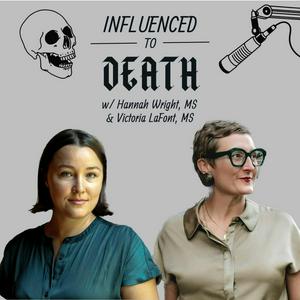
About Influenced to Death
Your guide to surviving the wild world of wellness influencing.
influencedtodeath.substack.com
Podcast websiteListen to Influenced to Death, Two Hot Takes and many other podcasts from around the world with the radio.net app
Get the free radio.net app
- Stations and podcasts to bookmark
- Stream via Wi-Fi or Bluetooth
- Supports Carplay & Android Auto
- Many other app features
Get the free radio.net app
- Stations and podcasts to bookmark
- Stream via Wi-Fi or Bluetooth
- Supports Carplay & Android Auto
- Many other app features
Influenced to Death
Scan code,
download the app,
start listening.
download the app,
start listening.
 Canada - english