
Listen to this podcast in the app for free: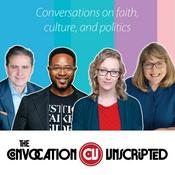 Download for free in the App Store
radio.net
Sleep timer
Save favourites
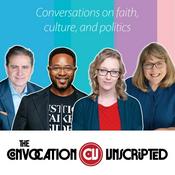
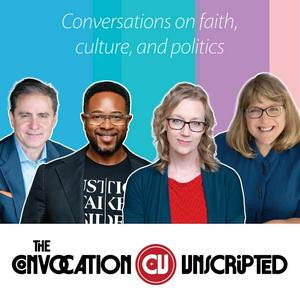
The Convocation Unscripted
Diana Butler Bass, Kristin Du Mez, Robert P. Jones, and Jemar Tisby
Latest episode
88 episodes
TCU+Live: Your Questions on Religion and Politics Answered
2026-10-17 | 1h 3 mins.Follow on BlueSky:
https://bsky.app/profile/jemartisby.b...
https://bsky.app/profile/kkdumez.bsky...
https://bsky.app/profile/dianabutlerb...
https://bsky.app/profile/robertpjones...
Follow on Substack:
The Convocation- convocation.substack.com
Robert P. Jones- www.whitetoolong.net
Diana Butler Bass- dianabutlerbass.substack.com
Kristin Du Mez- kristindumez.substack.com
Jemar Tisby- JemarTisby.Substack.comHegseth’s Disturbing Move to Establish New Office of Religious Affairs at “Department of War”
2026-10-02 | 58 mins.This week, Secretary of Defense Pete Hegseth’s used a newly invented “State of the Force” speech to announcement that he was establishing a new Office of Religious Affairs inside of DOD that would “oversee research, technology, and analytical tools to support and assess spiritual fitness, spiritual readiness, and spiritual resilience’ of soldiers.” TCU team unpacks on this disturbing development by the man who has platformed his mentor and Christian nationalist pastor Doug Wilson at Pentagon events. We also noted that the new office would be overseen by a senior official who would report directly to Hegseth and have direct control over the military chaplaincy program. The order also mentioned funding Christian homeschooling programs for military families, and quoted Bible versese to justify its existence. We also reflect on the upcoming funeral for Pierre Damas Bel, a Haitian college student from Springfield, Ohio, who, his family says, died by suicide weeks after ICE outfitted him with an ankle monitor, noting that he would still likely be alive today were it not for our government’s intentionally cruel and inhumane immigration policies and tactics. we wrap with a shout out to a new PRRI study showing that the opponents of Christian nationalism outnumber its supporters by two to one.Where are the Conservative Patriots?
2026-09-18 | 56 mins.Amid the continued visible destruction of symbolic institutions, the Convocation Unscripted team asks, “Where are the conservative patriots?” You know, those who have so loudly professed a commitment to CONSERVING not only things like our most beloved public spaces like the Kennedy Center and the White House but cherished values like public service, ethics, and respect for the rule of law. There are signs that the facade is cracking—with Karl Rove stating he’s voting for a Democrat in Texas and Rep. Thomas Massie introducing articles of impeachment against Pete Hegseth—but these remain lone voices shouted down by their fellow Republicans. We express some hope that more former Trump supporters will realize the danger in which they’ve put the country and Christianity and then change course; and we note the importance of welcoming them back into the democratic fold when they do. And we close with a reflection on a community based on covenant and care rather than self-serving transactions.
Follow on BlueSky:
https://bsky.app/profile/jemartisby.b...
https://bsky.app/profile/kkdumez.bsky...
https://bsky.app/profile/dianabutlerb...
https://bsky.app/profile/robertpjones...
Follow on Substack:
The Convocation- convocation.substack.com
Robert P. Jones- www.whitetoolong.net
Diana Butler Bass- dianabutlerbass.substack.com
Kristin Du Mez- kristindumez.substack.com
Jemar Tisby- JemarTisby.Substack.comThe Long Shadow of 9/11
2026-09-11 | 51 mins.Twenty-Five Years Later, the Fear Is Still Running the Country
The twin towers fell twenty-five years ago, but the outrage that moment spurred is still shaping life in the U.S. and beyond.
Kristin Du Mez, Diana Butler Bass, and Robert P. Jones sit with the anniversary and ask: What became of this country that morning?
You’ll hear where each of them was, including Kristin standing in a blood donation line that evening that turned out to be unnecessary, because there were almost no survivors.
Then, Robbie brings PRRI’s tracking of American attitudes toward Islam, where the country as a whole has barely moved while the two parties have pulled further and further apart.
Diana argues the goodwill drained the moment the president stood on the rubble and chose revenge over imagination. Robbie points to the creation of the Department of Homeland Security. And the fact that the first community ICE went after was Somali refugees who were Black and Muslim.
As we often do, we end with small signs of hope.
Earlier in the hour you’ll get Wild Goose, book launch season, and the books that changed their lives.
If you have wondered how we ended up in the country we are living in, this conversation is a large part of the answer.
Listen, then send it to someone who still can’t trace the line from the past to the present.
Follow on BlueSky:
https://bsky.app/profile/jemartisby.b...
https://bsky.app/profile/kkdumez.bsky...
https://bsky.app/profile/dianabutlerb...
https://bsky.app/profile/robertpjones...
Follow on Substack:
The Convocation- convocation.substack.com
Robert P. Jones- www.whitetoolong.net
Diana Butler Bass- dianabutlerbass.substack.com
Kristin Du Mez- kristindumez.substack.com
Jemar Tisby- JemarTisby.Substack.comWhat Vance and Thiel's Talk of the Antichrist and End Times Really Reveals
2026-09-04 | 1h 3 mins.This week, TCU came to you live across multiple platforms--via the Convocation Unscripted substack plus our own individual substack platforms. In this episode, we talk about a recent interview given by J.D. Vance in which he discusses his views of the Antichrist and th end times, echoing themes from his tech bro benefactor Peter Thiel. The actual theology is internally inconsistent and somewhat incoherent, but it does reveal a disturbing world of limitless power for the few chosen ones who literally image the possibility of escaping human finitude and even death through wealth and technology. By contrast, we talk about deep biblical stories that warn against such hubris and callous disregard for the impacts of such elite aspirations on the vast majority of the rest of us. We also discussed the new books coming out from Robby (BACKSLIDE) and Kristin (LIVE LAUGH LOVE). And we took questions from the hundreds of you who joined us live, on climate change and extreme weather, the midterm elections in the US, and what these times demand for all of us.
Follow on BlueSky:
https://bsky.app/profile/jemartisby.b...
https://bsky.app/profile/kkdumez.bsky...
https://bsky.app/profile/dianabutlerb...
https://bsky.app/profile/robertpjones...
Follow on Substack:
The Convocation- convocation.substack.com
Robert P. Jones- www.whitetoolong.net
Diana Butler Bass- dianabutlerbass.substack.com
Kristin Du Mez- kristindumez.substack.com
Jemar Tisby- JemarTisby.Substack.com
More Christianity podcasts



Trending Christianity podcasts






About The Convocation Unscripted
Welcome to "The Convocation Unscripted," a free-wheeling conversation between Diana Butler Bass, Kristin Du Mez, Robert P. Jones, and Jemar Tisby. We are each scholars (three historians and one sociologist) who write about religion and its intersection with culture, history, and politics in America. We also each take our own Christian faith seriously and are deeply concerned about the future of both democracy and Christianity in the U.S. Most importantly, over the years, we’ve found ourselves to be not just fellow travelers but friends. This is the video/podcast component of our unique Substack magazine "The Convocation," which you can subscribe to here: https://convocation.substack.com/
Podcast websiteListen to The Convocation Unscripted, BibleProject and many other podcasts from around the world with the radio.net app
Get the free radio.net app
- Stations and podcasts to bookmark
- Stream via Wi-Fi or Bluetooth
- Supports Carplay & Android Auto
- Many other app features
Get the free radio.net app
- Stations and podcasts to bookmark
- Stream via Wi-Fi or Bluetooth
- Supports Carplay & Android Auto
- Many other app features
The Convocation Unscripted
Scan code,
download the app,
start listening.
download the app,
start listening.
 Canada - english