

Listen to this podcast in the app for free: Download for free in the App Store
radio.net
Sleep timer
Save favourites
34 episodes
Rooted
2026-06-16 | 35 mins.In this season two finale of 'The Shadows We Cast', Jenn St. John sits down with Zainib Abdullah, MSW, RSW, somatic trauma psychotherapist, founder of Wellnest, and advocate for collective healing and care, for a conversation about trauma, embodiment, and what it means to come home to ourselves.
Born in Iraq and immigrating to Canada as a child, Zainib shares how her own experiences of migration, grief, identity, and intergenerational trauma shaped both her personal healing journey and her professional work. Together, Jenn and Zainib explore the connection between the body, the nervous system, and emotional healing, challenging the idea that recovery happens through insight alone.
Throughout the conversation, they discuss somatic healing, nervous system regulation, ancestral resilience, collective care, spirituality, community, and the wisdom our bodies carry. They also explore why healing isn't always about becoming someone new, but often about reconnecting with parts of ourselves that have been hidden beneath survival.
Whether you're navigating trauma, burnout, grief, chronic stress, or simply feeling disconnected from yourself, this episode offers a compassionate invitation to slow down, listen inward, and consider what helps you feel grounded, connected, and rooted.
Because healing may not be about finding something outside of ourselves. Sometimes it's about remembering what was there all along.
Connect with Zainib:
Website
Instagram
LinkedIn
If this episode resonates with you, please consider subscribing, leaving a review, or sharing it with someone who may benefit from the conversation.
Host/Producer/Writer/Director: Jenn St John
Editor: Andrew Schiller
Website: www.jennstjohn.ca
Follow along:
Instagram: @jenn_stjohn
LinkedIn: Jenn St John
If this episode spoke to you, share it with someone who might need to hear it too.
Subscribe, leave a review, or just send a little love—your support helps these conversations reach the people who need them most.Undertow
2026-06-09 | 45 mins.Kelly Campbell's life changed forever when her best friend Emma was killed in a car accident in 2007. What followed was years of unprocessed grief, trauma, and pushing forward—building a successful career while quietly struggling beneath the surface.
In this episode of The Shadows We Cast, Jenn sits down with leadership and legacy coach Kelly Campbell for an honest conversation about grief, burnout, identity, and the hidden emotional currents that shape our lives.
Kelly shares how the loss of her best friend, followed by the sudden death of another close friend years later, forced her to confront the grief she had spent years avoiding. Together, Jenn and Kelly explore why grief remains such a difficult topic in our society, how loss can impact our mental health long after the initial event, and what it means to find purpose and meaning after life's hardest transitions.
This conversation is a powerful reminder that grief isn't something to fix or rush through—it is something to honour, navigate, and ultimately integrate into our lives.
In this episode, we discuss:
Grief, trauma, and post-traumatic stress
Burnout and the hidden cost of always pushing forward
Identity loss and major life transitions
The connection between grief and mental health
Meaning-making and honoring those we've lost
Supporting others through loss and difficult seasons of life
Practical ways to create space for healing
About Kelly Campbell
Kelly's journey into mental health advocacy was shaped by profound personal losses. After losing her best friend Emma in a 2007 car accident, and later her good friend Susan in 2024, Kelly discovered her calling in supporting others through life's most challenging transitions.
Following a 16-year career in federal public service, Kelly left government in 2024 to focus on guiding individuals, families, and organizations through personal transformation and lasting change. She currently serves as Senior Manager of Stakeholder and Government Relations for Matthew Perry House while operating her own legacy coaching practice.
As an ICF-Credentialed Leadership and Legacy Coach, Kelly combines executive expertise with deep emotional intelligence, believing that legacy flows through personal, familial, and systemic dimensions—like water carving enduring channels across landscapes. She joined Bereaved Families of Ontario – Ottawa Region first as a volunteer in 2023, then as Board Director in 2025, channeling her experiences into support for others navigating grief.
Connect with Kelly
LinkedIn: Kelly Campbell
Website: kellycampbell.ca
Instagram: @kellycampbell.ca
Host/Producer/Writer/Director: Jenn St John
Editor: Andrew Schiller
Website: www.jennstjohn.ca
Follow along:
Instagram: @jenn_stjohn
LinkedIn: Jenn St John
If this episode spoke to you, share it with someone who might need to hear it too.
Subscribe, leave a review, or just send a little love—your support helps these conversations reach the people who need them most.Belonging
2026-06-02 | 51 mins.In this episode of The Shadows We Cast, I sit down with Nikki Glahn, Founder and Executive Director of Barrie Families Unite, a grassroots organization dedicated to ensuring individuals and families have access to essential needs with dignity, compassion, and respect.
What began as a local Facebook group during the uncertainty of the COVID-19 pandemic has grown into a powerful community-driven movement supporting people experiencing poverty, housing insecurity, illness, trauma, addiction, and other life-altering challenges. Through practical support, community connection, and a commitment to preserving dignity, Barrie Families Unite has become a lifeline for many in the Barrie area.
But this conversation is about more than community services.
It's about the role connection, dignity, and belonging play in our mental wellbeing—and how healing is often supported not only through professional care, but through the communities that surround us.
Together, Nikki and I explore the connection between poverty and mental health, the hidden toll of chronic stress and survival mode, and the ways community care can help restore hope when people feel isolated or overwhelmed. We discuss stigma, systemic gaps, the importance of meeting basic needs, and why belonging is far more than a feeling—it can be a powerful form of healing.
This conversation is a reminder that mental health doesn't exist separately from the conditions people are trying to survive inside of. Safety matters. Stability matters. Dignity matters. And sometimes the most meaningful support comes from knowing you're not alone.
In this episode, we discuss:
• The origins of Barrie Families Unite during the pandemic
• The connection between poverty, chronic stress, and mental health
• Why dignity matters when people are seeking support
• How community care can become a powerful mental health intervention
• The hidden realities of survival mode and financial insecurity
• Reducing stigma around asking for help
• Building sustainable systems of support that strengthen communities
• Why belonging can be a powerful part of healing
About Nikki Glahn
Nikki Glahn is a community-driven leader, creative thinker, and advocate for purpose-led work. Nikki brings clarity, compassion, and strategic vision to projects she leads. She is known for her ability to build meaningful connections, translate big ideas into practical action, and guide teams through growth with integrity and care.
Rooted in a deep belief in equity, sustainability, and community wellbeing, her leadership style is collaborative and people-centred, balancing structure with creativity and accountability with empathy.
Nikki is committed to creating environments where people feel empowered and respected.
She is a proud mom of 2 amazing humans, a wife to one lucky guy and a dog mama to our furry family member. She enjoys travel, camping, curling, skiing, hiking and spending time with people who fill her cup!
Connect with Barrie Families Unite
Website: www.barriefamiliesunite.com
Instagram: https://www.instagram.com/barriefamiliesunite/
LinkedIn: https://www.linkedin.com/in/barrie-families-unite-b752872a1/
YouTube: https://www.youtube.com/@teambfu2939
Host/Producer/Writer/Director: Jenn St John
Editor: Andrew Schiller
Website: www.jennstjohn.ca
Follow along:
Instagram: @jenn_stjohn
LinkedIn: Jenn St John
If this episode spoke to you, share it with someone who might need to hear it too.
Subscribe, leave a review, or just send a little love—your support helps these conversations reach the people who need them most.Release
2026-05-26 | 30 mins.In this episode of 'The Shadows We Cast', Jenn sits down with David Granirer — counselor, stand-up comic, and founder of Stand Up For Mental Health™ — to explore what it means to live for decades without language for what you’re carrying, and how laughter, storytelling, and connection can become unexpected pathways toward healing.
David shares his experience living with bipolar disorder, the shame and isolation that followed his hospitalization as a teenager, and the reality of spending nearly twenty years living with undiagnosed depression before finally understanding what was happening beneath the surface.
Together, Jenn and David explore:
* the normalization of suffering and survival mode
* the emotional exhaustion of pretending to be okay
* the impact of finally being understood
* how shame grows in silence
* and why connection can change the way we carry pain
The conversation also dives into David’s internationally recognized organization, Stand Up For Mental Health™, which teaches stand-up comedy to people living with mental health challenges. Over the past two decades, the program has helped hundreds of people transform some of the hardest moments of their lives into storytelling, confidence, community, and laughter.
This episode is called 'Release' because at its heart, it’s a conversation about what happens when we stop carrying everything alone.
Content note: This episode includes discussion of suicide, depression, and mental health hospitalization.
Connect with David Granirer & Stand Up For Mental Health™
Website: www.standupformentalhealth.com
TikTok: @standupformentalhealth
YouTube: @standupformentalhealth
Instagram: @smhgranirerdavid
Guest Bio:
David Granirer, RPC, M.S.M. is a counselor, stand-up comic, author, and founder of Stand Up For Mental Health™ (SMH), a program teaching stand-up comedy to people with mental health issues. David who himself suffers from bipolar is featured in the VOICE Award winning documentary Cracking Up. He also received a Life Unlimited Award from Depression Bipolar Support Alliance, an Award of Excellence from the National Council of Behavioral Health, a Champion of Mental Health Award, and a Meritorious Service Medal from the Governor General of Canada, and was recognized as one of the 150 Canadian Difference Makers in mental health. A sought after keynote speaker, he has worked with mental health organizations to perform and train SMH groups in over 50 cities in Canada, the U.S., and Australia.
Host/Producer/Writer/Director: Jenn St John
Editor: Andrew Schiller
Website: www.jennstjohn.ca
Follow along:
Instagram: @jenn_stjohn
LinkedIn: Jenn St John
If this episode spoke to you, share it with someone who might need to hear it too.
Subscribe, leave a review, or just send a little love—your support helps these conversations reach the people who need them most.Embedded
2026-05-19 | 54 mins.Misty Pratt, author of All In Her Head: How Gender Bias Harms Women’s Mental Health, joins Jennifer St John for a layered conversation about women’s mental health, systemic bias, emotional inheritance, and the stories that become embedded in our bodies, relationships, and nervous systems over time.
Together, they explore how women’s distress has historically been misunderstood, medicalized, and dismissed — from the legacy of hysteria to modern conversations around burnout, anxiety, mental load, and nervous system overwhelm.
Misty reflects on her grandmother’s late-life psychotic break, her own experiences with panic attacks and anxiety, and the long process of understanding what her body had been trying to say before she had language for it. Jennifer shares reflections from her own family’s journey as the two discuss intergenerational trauma, invisible labor, somatic healing, and the pressure many women feel to “hold it all together.”
This conversation explores:
• Gender bias in medicine and mental health care
• The history and lasting legacy of hysteria
• Burnout, mental load, and invisible labor
• Anxiety, panic attacks, and nervous system dysregulation
• Somatic therapy and body-based healing
• Intergenerational trauma and emotional inheritance
• Rest, boundaries, and adaptive coping
• Why healing is both personal and systemic
This episode is thoughtful, honest, and deeply validating — especially for listeners who have ever felt like their exhaustion, anxiety, or overwhelm was something they simply needed to “fix” within themselves.
Connect with Misty Pratt:
Website: Misty Pratt Official Website
Instagram & Threads: @mistyprattwriter
LinkedIn: mistypratt
Substack: Misty Pratt Substack
Host/Producer/Writer/Director: Jenn St John
Editor: Andrew Schiller
Website: www.jennstjohn.ca
Follow along:
Instagram: @jenn_stjohn
LinkedIn: Jenn St John
If this episode spoke to you, share it with someone who might need to hear it too.
Subscribe, leave a review, or just send a little love—your support helps these conversations reach the people who need them most.
More Education podcasts
 Coffee Break FrenchCourses, Education, Language Learning
 InnerFrenchEducation, Language Learning
 The Daily StoicBusiness, Education, Self-Improvement, Society & Culture
 IMO with Michelle Obama and Craig RobinsonEducation, Self-Improvement, Society & Culture
 Good Life ProjectBusiness, Education, Health & Wellness, Self-Improvement, Tutorials
 Motivation Daily by MotiversityEducation, Health & Wellness, Self-Improvement
 The Jefferson Fisher PodcastEducation, Relationships, Self-Improvement, Society & Culture
 How to Be a Better HumanEducation, Self-Improvement
 Hugo Girard - Sans LimiteEducation, Fitness, Health & Wellness, Hobbies, Leisure, Self-Improvement, Society & Culture
 The Mel Robbins PodcastEducation, Health & Wellness, Mental Health, Relationships, Self-Improvement, Society & Culture
Trending Education podcasts
 The Next Big IdeaArts, Books, Education, Science, Self-Improvement, Social Sciences, Society & Culture
 80,000 Hours PodcastEducation, Technology
 Learning English VocabularyEducation, Language Learning
 Let's Get NakedEducation, Health & Wellness, Mental Health, Relationships, Self-Improvement, Society & Culture
 The Daily Brain: Boost Your MindEducation, Self-Improvement
 Learning Spanish for Beginners PodcastEducation, Language Learning
 English Learning PodcastEducation, Language Learning
 Intermediate Spanish Podcast - Español IntermedioEducation, Language Learning
About The Shadows We Cast
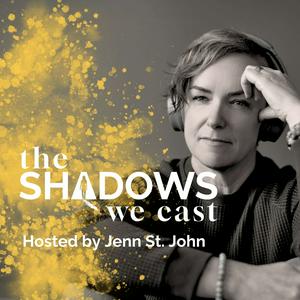
Welcome to The Shadows We Cast—a podcast about the legacies we inherit, the stories we carry, and the light we create in the process.Hosted by mental health advocate, writer, and speaker Jenn St. John, this series opens the door to raw and real conversations about living through, loving through, and learning from mental health challenges.In this short preview, Jenn shares what listeners can expect each week: deeply personal stories, journal readings, candid interviews with guests ranging from family members to public figures, and a commitment to unmasking mental health—one brave conversation at a time.If you've ever felt like you were navigating the dark without a map, this podcast is here to say: you're not alone. Let’s talk about the shadows—and the adaptability that rises from them.New episodes drop every Tuesday.Host & Producer: Jenn St JohnEditor: Andrew SchillerWebsite: www.jennstjohn.caFollow along:Instagram: https://www.instagram.com/jenn_stjohn/TikTok: https://www.tiktok.com/@jenn.st.johnLinkedIn: https://www.linkedin.com/in/jenn-st-john-25b137257/BlueSky: https://bsky.app/profile/jennstjohn.bsky.socialIf this episode spoke to you, share it with someone who might need to hear it too.Subscribe, leave a review, or just send a little love—your support helps these conversations reach the people who need them most.
Podcast websiteListen to The Shadows We Cast, Coffee Break French and many other podcasts from around the world with the radio.net app
Get the free radio.net app
- Stations and podcasts to bookmark
- Stream via Wi-Fi or Bluetooth
- Supports Carplay & Android Auto
- Many other app features
Get the free radio.net app
- Stations and podcasts to bookmark
- Stream via Wi-Fi or Bluetooth
- Supports Carplay & Android Auto
- Many other app features
The Shadows We Cast
Scan code,
download the app,
start listening.
download the app,
start listening.
The Shadows We Cast: Podcasts in Family
 Canada - english