
Listen to this podcast in the app for free: Download for free in the App Store
radio.net
Sleep timer
Save favourites
542 episodes

How to Lead Through AI Anxiety: Insights from Ketan Karkhanis
2026-10-14 | 38 mins.In this episode of AI Today, host Kathleen Walch welcomes Ketan Karkhanis, CEO of ThoughtSpot, to discuss what it takes for organizations to succeed with AI. Drawing on his experience leading an AI-driven analytics company, Ketan shares insights on building trust, driving adoption, and delivering measurable business outcomes.
Kathleen and Ketan explore why AI transformation requires more than technology, highlighting the importance of change management, workforce readiness, and leadership commitment. Ketan explains why organizations should focus on outcomes rather than technology metrics and discusses how governance enables innovation while maintaining accountability.
Key insights include:
Learn why trust is the foundation of successful AI adoption.
Discover how organizations can focus on outcomes instead of technology metrics.
Understand the importance of AI literacy, change management, and workforce readiness.
Explore how governance can accelerate innovation while maintaining accountability and control.
Learn how leaders can create the culture and operating model needed to realize AI's full potential.AI Success Through Leadership: Insights from Samia Waqar
2026-09-30 | 38 mins.In this episode of AI Today, host Kathleen Walch welcomes Samia Waqar, founder of Role Agnostic Project Leadership (RAPL), CEO of SNS Coaching Consulting Services, and PMI Authorized Instructor with nine PMI certifications including PMI-CPMAI. Samia shares her journey from enterprise transformation to AI education, and how her experiences across global projects inspired her vision of the Leadership Economy.
Kathleen and Samia discuss why many AI initiatives fail when managed like traditional software projects, and how the CPMAI methodology helps leaders avoid costly mistakes. Samia reflects on her first AI project misstep—skipping data readiness—and explains how sequence, governance, and leadership accountability drive success.
They highlight how role-agnostic leadership equips professionals across roles to define work, govern it, protect investments, and deliver value. Samia emphasizes the importance of active executive sponsorship, trustworthy AI controls, and continuous monitoring, stressing that AI is not “set it and forget it” but a business transformation requiring oversight.
Key insights include:
Learn why AI success is a leadership challenge, not just a technology problem.
Discover how data readiness and governance determine whether AI initiatives succeed or fail.
Understand why executive sponsorship must be active, visible, and engaged.
Explore Samia’s four guiding questions: define the work, govern the work, protect the investment, and land the value.
This episode is sponsored by SnS Coaching Consulting Services, a PMI Authorized Training Partner.
Samia Waqar, CEO of SnS Coaching Consulting Services, is the founder of Role Agnostic Project Leadership™ (RAPL) and author of the upcoming book The Leadership Economy.
She is also a PMI Authorized Instructor holding nine major PMI certifications, including PMI‑CPMAI. Samia helps professionals move beyond exam preparation toward workplace performance, career advancement, and future‑ready leadership.
To learn more about her work, visit snsccs.com, raplleadership.com, samiawaqar.com, and Samia Waqar on LinkedInAI Creativity and the Future of Work: Insights from Bryan McAnulty
2026-09-16 | 27 mins.In this episode of AI Today, host Kathleen Walch welcomes Bryan McAnulty, founder of Latchloop and host of the Creators Adventure podcast. Bryan shares his entrepreneurial journey from design agency work to building SaaS products like Heights Platform, and now Latchloop, an AI agent platform designed to accelerate product development and collaboration.
Kathleen and Bryan explore how AI is reshaping entrepreneurship, content creation, and community building. Bryan explains why execution is no longer the differentiator and how it’s unique ideas and human perspective now set creators apart. Communities, whether PMI’s global volunteer network or creator-driven platforms, remain the strongest moat in an era of abundant AI-generated content.
They highlight how small businesses can adopt AI faster than large organizations, but caution against treating it as a simple checkbox. Bryan introduces a framework of automation loops, goal loops, and feedback loops to help teams rethink workflows and deliver better outcomes. Kathleen connects this to project management practices, stressing the importance of documenting processes and building scalable collaboration models.
Key insights include:
Learn how AI shifts value from execution to ideas, and why human perspective drives differentiation.
Discover how authentic communities provide a moat in an AI‑saturated world.
Understand how small businesses can move faster than large organizations to rethink customer outcomes.
Explore how automation, goal, and feedback loops create effective AI collaboration.
Recognize why documenting processes and SOPs are essential to harness AI agents successfully.
Bryan concludes with optimism about the future of AI, predicting that individuals and organizations alike will soon solve problems once thought unimaginable.AI Adoption Challenges and Leadership: Insights from Jennifer Tharp
2026-09-02 | 41 mins.In this episode of AI Today, host Kathleen Walch welcomes Jennifer Tharp, president of Mastodon Consulting, former PMI Board chair, PMI Fellow, and also PMP and PMI-CPMAI certified. Jennifer discusses how AI is transforming project management, not just as a tool but by reshaping the work itself.
She highlights three forces as the new bottleneck: collapsed estimation, distributed authorship, and quality assurance. Traditional artifacts like Gantt charts and risk registers risk irrelevance, requiring project managers to evolve into decision governors who make choices visible, accountable, and aligned with organizational goals.
Key insights include:
Learn how AI makes delivery unpredictable and how PMs can adapt estimation practices.
Discover how responsibility for AI‑driven decisions is moving, and how PMs can claim it to stay relevant.
Grasp how human review lags behind machine speed, and how new QA approaches can close the gap.
Explore how PMs move beyond artifacts to frameworks that make choices visible and auditable.
Learn how skills such as critical thinking, judgment, and communication keep PMs indispensable in the AI age.
Jennifer stresses that passive observers who do not embrace AI risk losing relevance and why PMs must claim accountability before it shifts elsewhere. She emphasizes that AI will soon be embedded in projects by default, but success depends on durable frameworks, rigorous governance, and enduring leadership to ensure ethical, measurable outcomes.Critical Thinking and Trust in AI Projects: Insights from Cheryl Howard
2026-08-19 | 21 mins.In this episode of AI Today, host Kathleen Walch welcomes Cheryl Howard, principal consultant at Howard Consulting, PMI standards volunteer, and PMI‑CPMAI certified. Cheryl shares how CPMAI’s structured, iterative framework, combining CRISP‑DM and Agile, helps organizations move beyond hype to deliver governed, human-centered AI outcomes.
She explains that AI project success starts with business understanding and clean, well-prepared data, not rushing into model development. Together, Kathleen and Cheryl highlight how CPMAI ensures ethical, explainable, and auditable outcomes, especially in regulated industries. Cheryl emphasizes enduring human skills such as critical thinking, governance, trust, and accountability are essential for project leaders navigating AI adoption.
Key insights include:
AI success requires data that is clean, accessible, and properly prepared.
Progress depends on clear accountability to prevent stalled pilots.
Leaders must ask not only what AI can do but whether it should be done at all.
Adoption fails when fatigue and overload outweigh readiness.
Confidence grows when stakeholders are involved early, and outputs are explainable.
Cheryl discusses how AI will soon be embedded in projects by default, but readiness requires durable frameworks like CPMAI and enduring human leadership to ensure measurable, ethical outcomes.
More Technology podcasts









Trending Technology podcasts

















About AI Today Podcast
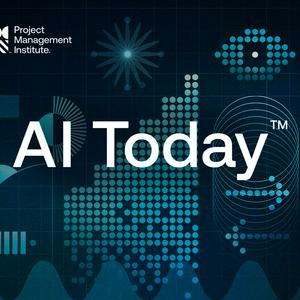
The top podcast for those wanting no-hype, practical, real-world insight into what enterprises, public sector agencies, thought leaders, leading technology companies, pundits, and experts are doing with AI today.
Podcast websiteListen to AI Today Podcast, The AI Daily Brief: Artificial Intelligence News and Analysis and many other podcasts from around the world with the radio.net app
Get the free radio.net app
- Stations and podcasts to bookmark
- Stream via Wi-Fi or Bluetooth
- Supports Carplay & Android Auto
- Many other app features
Get the free radio.net app
- Stations and podcasts to bookmark
- Stream via Wi-Fi or Bluetooth
- Supports Carplay & Android Auto
- Many other app features

AI Today Podcast
Scan code,
download the app,
start listening.
download the app,
start listening.
 Canada - english