
Listen to this podcast in the app for free: Download for free in the App Store
radio.net
Sleep timer
Save favourites
529 episodes
Why Younger Generations Are Convinced They Are Falling Behind | Philipp Carlsson-Szlezak
2026-10-22 | 1h 18 mins.Episode 504 of Hidden Forces is the thirteenth episode in the Hundred Year Pivot podcast series. In it, Demetri Kofinas and co-host Grant Williams speak with Philipp Carlsson-Szlezak, global chief economist at Boston Consulting Group and co-author of "The Kids Are Alright: The Timeless Angst Over Young People and Money," about why the dominant narrative of Gen Z and Millennials falling financially behind Gen X and Boomers doesn't hold up against the data, and how exalted expectations, flawed benchmarks, and misguided narratives have fueled record pessimism among the young.
The conversation pressure-tests Philipp's research and probes where the data might be missing the full picture. It covers how Gen Z and Millennial incomes and balance sheets compare with those of prior generations, why their incomes and wealth are outpacing those of earlier cohorts at comparable ages, and why homeownership is delayed rather than denied. It also examines how consumption patterns among younger cohorts differ from the common narrative, and the role that social media, inflated expectations, and a post-financial-crisis cultural shift have played in distorting perceptions of success despite broad-based economic progress.
Demetri and Grant also dig into the narrative of the K-shaped economy and whether it holds up under scrutiny. They challenge the paper's analysis where it may be weakest, particularly regarding family formation, the cost of raising children, and developments in the middle of the income distribution.
Subscribe to our premium content—including our premium feed, episode transcripts, and Intelligence Reports—by visiting HiddenForces.io/subscribe.
If you'd like to join the conversation and become a member of the Hidden Forces Genius community—with benefits like Q&A calls with guests, exclusive research and analysis, in-person events, and dinners—you can also sign up on our subscriber page at HiddenForces.io/subscribe.
If you enjoyed today's episode of Hidden Forces, please support the show by:
Subscribing on Apple Podcasts, YouTube, Spotify, Stitcher, SoundCloud, CastBox, or via our RSS Feed
Writing us a review on Apple Podcasts & Spotify
Join our mailing list at https://hiddenforces.io/newsletter/
Producer & Host: Demetri Kofinas
Editor & Engineer: Stylianos Nicolaou
Subscribe and support the podcast at https://hiddenforces.io.
Join the conversation on Facebook, Instagram, and Twitter at @hiddenforcespod
Follow Demetri on Twitter at @Kofinas
Episode Recorded on 10/15/2026Are We Verging on Another Escalation in the Middle East? | Ali Vaez
2026-10-19 | 47 mins.In Episode 503 of Hidden Forces, Demetri Kofinas speaks with Ali Vaez, deputy program director for the Middle East and North Africa at the Crisis Group and a closely watched analyst of Iran's foreign and nuclear policy, about where the war between Iran and the United States stands eight months after the start of Operation Epic Fury, how Iran has turned its control of the Strait of Hormuz into a tool for pressuring the global economy, what the conflict has cost Washington, Tehran, and their allies, and why the window for a durable diplomatic resolution may be closing.
The first hour establishes the state of play eight months into the war, including:
How the war has metastasized into a wider regional confrontation involving the Houthis in Yemen and attacks on Saudi Arabia.
What the fighting has cost the United States militarily, from a significant depletion of its missile interceptor stockpiles to the loss of several regional bases.
How the war has reshaped Iran's internal politics, economy, and society.
Why coordination between Washington and Tel Aviv appears to be breaking down.
The second hour examines:
How the US and its Gulf allies have kept oil flowing through the Strait of Hormuz despite Iran's blockade.
How Iran's national security doctrine has shifted since the war began.
The state of the Islamic Republic's nuclear ambitions.
The degradation of Western intelligence networks inside Iran and its consequences.
What a durable security architecture for the Middle East will require.
Whether the Trump administration has the credibility to end the war or if it will be left up to a future administration.
Subscribe to our premium content—including our premium feed, episode transcripts, and Intelligence Reports—by visiting HiddenForces.io/subscribe.
If you'd like to join the conversation and become a member of the Hidden Forces Genius community—with benefits like Q&A calls with guests, exclusive research and analysis, in-person events, and dinners—you can also sign up on our subscriber page at HiddenForces.io/subscribe.
If you enjoyed today's episode of Hidden Forces, please support the show by:
Subscribing on Apple Podcasts, YouTube, Spotify, Stitcher, SoundCloud, CastBox, or via our RSS Feed
Writing us a review on Apple Podcasts & Spotify
Join our mailing list at https://hiddenforces.io/newsletter/
Producer & Host: Demetri Kofinas
Editor & Engineer: Stylianos Nicolaou
Subscribe and support the podcast at https://hiddenforces.io.
Join the conversation on Facebook, Instagram, and Twitter at @hiddenforcespod
Follow Demetri on Twitter at @Kofinas
Episode Recorded on 10/14/2026Is It Time to Start Buying Bonds? | Jim Bianco
2026-10-12 | 55 mins.In Episode 502 of Hidden Forces, Demetri Kofinas speaks with Jim Bianco, founder of Bianco Research and Bianco Advisors, about why he has turned bullish on bonds after six years of warning they were overvalued, what the K-shaped economy and the dominance of AI-related stocks mean for markets, and how mounting fiscal pressures in Washington, Paris, London, and Tokyo could reshape the investment landscape over the next three to five years.
The first hour covers Jim's thesis on the bond market, the K-shaped economy, and why asset ownership and capital gains, rather than wages, now drive both consumer spending and the public's sense of how the economy is doing. They also discuss the growing concentration of US stock market gains in a small group of AI-related companies, the valuations of those companies, and how agentic AI is already reshaping the economy, including the financial research and continuing education businesses that Demetri and Jim operate.
The second hour turns to the fiscal constraints facing the United States and other major developed economies. They take a close look at France and the warning signs emerging in its bond market, and what a dislocation in French yields and funding stress for the Fifth Republic could mean for the sustainability of the European Monetary Union. They also examine the competing risks of financial repression versus a balance sheet recession triggered by the enormous AI-related capex boom, the case for allocating to gold, the Fed's retreat from forward guidance, and how the midterm elections and populist movements abroad could shape the direction of fiscal and monetary policy over the next ten to twenty years.
Subscribe to our premium content—including our premium feed, episode transcripts, and Intelligence Reports—by visiting HiddenForces.io/subscribe.
If you'd like to join the conversation and become a member of the Hidden Forces Genius community—with benefits like Q&A calls with guests, exclusive research and analysis, in-person events, and dinners—you can also sign up on our subscriber page at HiddenForces.io/subscribe.
If you enjoyed today's episode of Hidden Forces, please support the show by:
Subscribing on Apple Podcasts, YouTube, Spotify, Stitcher, SoundCloud, CastBox, or via our RSS Feed
Writing us a review on Apple Podcasts & Spotify
Join our mailing list at https://hiddenforces.io/newsletter/
Producer & Host: Demetri Kofinas
Editor & Engineer: Stylianos Nicolaou
Subscribe and support the podcast at https://hiddenforces.io.
Join the conversation on Facebook, Instagram, and Twitter at @hiddenforcespod
Follow Demetri on Twitter at @Kofinas
Episode Recorded on 10/08/2026How Melting Ice Is Redrawing the Global Order | Rana Foroohar
2026-10-05 | 59 mins.In Episode 501 of Hidden Forces, Demetri Kofinas speaks with Rana Foroohar about her book, Sea Change, and her argument that, as polar ice melts and new sea routes open, the Arctic has become the most consequential and least understood geopolitical theater in the world, with the great powers competing over trade routes, resources, and military dominance.
They discuss:
The strategic logic behind agreements like the Icebreaker Collaboration Effort between the US, Finland, and Canada
Why China has spent two decades quietly ring-fencing the world's maritime chokepoints
The Trump administration's approach to Greenland, NATO, and the Western Hemisphere
The reversal of forty years of market-knows-best trade economics in favor of more state-directed, national security-focused trade and industrial policy
They close with a conversation about domestic politics, including the fight over the future of economic nationalism, the populist backlash against AI and corporate concentration, and what, if anything, could rebuild a shared sense of civic responsibility and shared sacrifice in America.
Subscribe to our premium content—including our premium feed, episode transcripts, and Intelligence Reports—by visiting HiddenForces.io/subscribe.
If you'd like to join the conversation and become a member of the Hidden Forces Genius community—with benefits like Q&A calls with guests, exclusive research and analysis, in-person events, and dinners—you can also sign up on our subscriber page at HiddenForces.io/subscribe.
If you enjoyed today's episode of Hidden Forces, please support the show by:
Subscribing on Apple Podcasts, YouTube, Spotify, Stitcher, SoundCloud, CastBox, or via our RSS Feed
Writing us a review on Apple Podcasts & Spotify
Join our mailing list at https://hiddenforces.io/newsletter/
Producer & Host: Demetri Kofinas
Editor & Engineer: Stylianos Nicolaou
Subscribe and support the podcast at https://hiddenforces.io.
Join the conversation on Facebook, Instagram, and Twitter at @hiddenforcespod
Follow Demetri on Twitter at @KofinasWhy the China Threat Is Overblown | Logan Wright
2026-09-28 | 55 mins.In Episode 500 of Hidden Forces, Demetri Kofinas speaks with Logan Wright, director of China macro and financial sector research at the Rhodium Group and author of Broken China, about why China's economic troubles are structural rather than cyclical, the product of the largest single-country credit expansion in history, how Beijing's official GDP figures obscure what is actually happening to Chinese households, local governments, and the property market, why the renminbi is overvalued and capital flight out of China is likely to persist, and what it means for the West to treat the PRC not as a rising power to be managed, but as a declining one.
The first hour focuses on Wright's central argument that China's economy is in structural decline, not because its leaders chose austerity or an unwavering commitment to running chronic trade surpluses, but because the largest single-country credit expansion in over a century has exhausted the financial system's capacity to generate growth, leaving it unable to ignite the domestic demand needed to rebalance both the Chinese and global economies. They discuss why optimism about Beijing's reform prospects was once rational, how China's official GDP data obscures what is actually happening on the ground, and why the prevailing narrative that Chinese policymakers retain the capacity to engineer a recovery is, in Wright's view, fundamentally mistaken.
The second hour turns to the consequences of China's credit bubble and property market collapse for ordinary households and local governments, the similarities and critical differences between China's predicament and Japan's in the 1990s and early 2000s, and the striking historical parallel between the CCP's political choices and those of Soviet leaders during the USSR's era of stagnation under Brezhnev. They also discuss the structural demographic headwinds compounding the collapse in Chinese demand, why Wright believes the renminbi is overvalued and poses no credible threat to the dollar's international role, the implications for America's strategic competition with the PRC when viewed through the lens of a declining rather than a rising power, and why Wright argues that the threats China poses are deterrable and require coordinated allied action to address.
Subscribe to our premium content—including our premium feed, episode transcripts, and Intelligence Reports—by visiting HiddenForces.io/subscribe.
If you'd like to join the conversation and become a member of the Hidden Forces Genius community—with benefits like Q&A calls with guests, exclusive research and analysis, in-person events, and dinners—you can also sign up on our subscriber page at HiddenForces.io/subscribe.
If you enjoyed today's episode of Hidden Forces, please support the show by:
Subscribing on Apple Podcasts, YouTube, Spotify, Stitcher, SoundCloud, CastBox, or via our RSS Feed
Writing us a review on Apple Podcasts & Spotify
Join our mailing list at https://hiddenforces.io/newsletter/
Producer & Host: Demetri Kofinas
Editor & Engineer: Stylianos Nicolaou
Subscribe and support the podcast at https://hiddenforces.io.
Join the conversation on Facebook, Instagram, and Twitter at @hiddenforcespod
Follow Demetri on Twitter at @Kofinas
Episode Recorded on 09/23/2026
More Business podcasts








Trending Business podcasts
















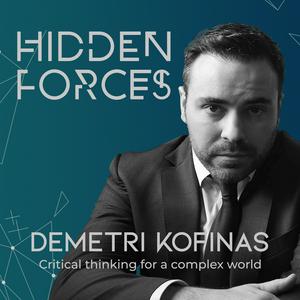
About Hidden Forces
Get the edge with Hidden Forces where media entrepreneur and financial analyst Demetri Kofinas gives you access to the people and ideas that matter, so you can build financial security and always stay ahead of the curve.
Podcast websiteListen to Hidden Forces, The Prof G Pod with Scott Galloway and many other podcasts from around the world with the radio.net app
Get the free radio.net app
- Stations and podcasts to bookmark
- Stream via Wi-Fi or Bluetooth
- Supports Carplay & Android Auto
- Many other app features
Get the free radio.net app
- Stations and podcasts to bookmark
- Stream via Wi-Fi or Bluetooth
- Supports Carplay & Android Auto
- Many other app features

Hidden Forces
Scan code,
download the app,
start listening.
download the app,
start listening.
 Canada - english