
Listen to this podcast in the app for free: Download for free in the App Store
radio.net
Sleep timer
Save favourites
56 episodes

Anorexia Nervosa: When Thin Becomes Dangerous
2026-10-27 | 27 mins.What happens when the desire to be healthy becomes a dangerous obsession with weight, food, and body image? How can someone who appears successful and confident be fighting a serious psychological disorder that nobody sees?
In this episode of Off the Couch Psychology, Dr. Jerry Cunningham takes you inside the complicated world of anorexia nervosa, exploring how self-esteem, family expectations, social pressure, and distorted body image can influence someone's relationship with food.
Through the story of Evie, you'll discover how anorexia can develop, why recognizing the warning signs matters, and what recovery can involve. You'll also hear about legendary singer Karen Carpenter, whose tragic struggle brought national attention to eating disorders.
Key Takeaways
Recognize the psychological and physical warning signs of anorexia nervosa.
Understand how body image and self-worth become connected.
Explore the influence of family, peers, and social expectations.
Learn about hospitalization, therapy, and nutritional treatment.
Discover why early intervention and professional support matter.
For more episodes and resources, visit www.Quest-Success.com.
Suggested Reading and Additional Resources
American Psychiatric Association — Treatment of Patients With Eating Disorders (2023). Evidence-based recommendations for diagnosis and treatment.
NICE — Eating Disorders: Recognition and Treatment. Information on CBT, MANTRA, family therapy, and medical care.
National Institute of Mental Health — Eating Disorders. An overview of symptoms, risk factors, and treatment.
The Karen Carpenter Story (1989). A dramatization of Karen Carpenter's life and her struggle with anorexia nervosa.
People, Movies, and Music Mentioned
#KarenCarpenter #RichardCarpenter #TheCarpenters #TheKarenCarpenterStory #CloseToYou #WeveOnlyJustBegun #RainyDaysAndMondaysWhen Your Body Screams for Help
2026-10-23 | 32 mins.What happens when your body tells you something is wrong, but medical tests don't provide a clear answer? The pain is real, the symptoms are frightening, and the search for answers can begin taking over your life.
In this episode of Off the Couch Psychology, Dr. Jerry Cunningham explores Somatic Symptom Disorder and the complicated relationship between physical symptoms, anxiety, and the mind.
You'll discover why physical symptoms can become overwhelming, how this disorder differs from Factitious Disorder, and what treatments can help people regain control of their lives. We'll also explore the psychological thriller Nocebo and what it reveals about the power of expectations.
If you or someone you love struggles with unexplained physical symptoms or constant health-related worry, this episode offers insight, understanding, and hope.
Key Takeaways
Understand what Somatic Symptom Disorder really is.
Recognize how anxiety can intensify physical suffering.
Learn how CBT and other treatments can help.
Discover why consistent medical care matters.
Understand the nocebo effect and the power of expectations.
Learn more and explore additional episodes at www.Quest-Success.com.
Suggested Reading & References
American Psychiatric Association (2022). Diagnostic and Statistical Manual of Mental Disorders, Fifth Edition, Text Revision (DSM-5-TR). Official diagnostic criteria for Somatic Symptom Disorder. American Psychiatric Association
National Library of Medicine. Somatic Symptom Disorder — MedlinePlus. Overview of symptoms, diagnosis, and treatment. MedlinePlus
Henningsen, P. (2018). Management of Somatic Symptom Disorder. Dialogues in Clinical Neuroscience, 20(1), 23–31. Research on psychological treatment and coordinated medical care. Read Article
Colloca, L., & Barsky, A. J. (2020). Placebo and Nocebo Effects. New England Journal of Medicine, 382, 554–561. Research explaining how expectations influence physical symptoms. Read Article
Nocebo (2022). Directed by Lorcan Finnegan, starring Eva Green. A psychological thriller exploring guilt, fear, and physical suffering through supernatural storytelling.
Movies, People & Topics Mentioned
#Nocebo #EvaGreen #LorcanFinnegan #SomaticSymptomDisorder #FactitiousDisorder #NoceboEffect #CognitiveBehavioralTherapy #MentalHealthAwarenessWhen Being Sick Becomes the Goal
2026-10-20 | 33 mins.What happens when someone deliberately creates an illness to receive medical attention? And what happens when an innocent child becomes the patient?
In this episode of Off the Couch Psychology, Dr. Jerry Cunningham explores the disturbing world of factitious disorder, once commonly associated with Munchausen syndrome, and its dangerous counterpart, factitious disorder imposed on another, historically known as Munchausen syndrome by proxy.
You'll discover why some individuals manufacture medical symptoms, how professionals recognize the warning signs, and what treatments may help break the cycle. We'll also examine Munchausen by Internet and the tragic real-life story of Gypsy Rose Blanchard.
This episode will challenge how you think about illness, attention, deception, and the need for care.
Key Takeaways
Understand the difference between factitious disorder and malingering.
Recognize warning signs without jumping to conclusions.
Learn why someone might deliberately create medical symptoms.
Discover treatment approaches and their limitations.
Understand the dangers of factitious disorder imposed on another.
Visit www.Quest-Success.com for more episodes and resources.
Suggested Reading & References
1. Richard Asher (1951). Munchausen's Syndrome — The Lancet. The original medical article introducing the term discussed in this episode.
2. American Psychiatric Association (2022). Diagnostic and Statistical Manual of Mental Disorders, Fifth Edition, Text Revision (DSM-5-TR). Overview of Somatic Symptom and Related Disorders.
3. Merck Manual (2026). Factitious Disorder Imposed on Self — Symptoms, diagnosis, and treatment.
4. Merck Manual (2026). Factitious Disorder Imposed on Another — Medical deception involving children and dependent individuals.
5. American Psychological Association (2023). Medical Deception: Understanding Munchausen Syndrome/Factitious Disorder — Discussion with Dr. Marc Feldman and Dr. Janet Cahill, including Munchausen by Internet.
People & Topics Mentioned — Hashtags
#GypsyRoseBlanchard #DeeDeeBlanchard #NicholasGodejohn #BaronMunchausen #RichardAsher #FactitiousDisorder #MunchausenSyndrome #MunchausenByProxy #MunchausenByInternetHow Cults Take Control of You
2026-10-16 | 35 mins.How does an ordinary person become so devoted to a leader that they surrender their money, relationships, freedom, and sometimes even their life? Could someone you love be under the influence of a destructive group without realizing it?
In this episode of Off the Couch Psychology, Dr. Jerry Cunningham explores the disturbing psychology of cults, beginning with the tragic story of Jim Jones and the Peoples Temple.
You'll discover how cults recruit members, why intelligent people become trapped, and how manipulation, isolation, and fear can gradually replace independent thinking. More importantly, you'll learn how to recognize warning signs, protect yourself, and help someone you care about find a way out.
The most frightening part? Cults don't always look like cults, and their leaders rarely look dangerous in the beginning.
Key Takeaways
Recognize five warning signs of destructive cults.
Understand how psychological manipulation and thought control work.
Discover why intelligent people join and remain in cults.
Learn how to approach someone caught in a controlling group.
Understand practical steps toward leaving safely and rebuilding independence.
Visit www.Quest-Success.com for more episodes and resources to help you better understand your mind and take control of your life.
Suggested Reading and References
— Jeff Guinn (2017). A detailed investigation of Jim Jones, the Peoples Temple, and the events leading to Jonestown.
— Robert Jay Lifton (1961). A foundational examination of psychological control and thought reform.
— Steven Hassan (1988; revised editions). Explores destructive influence and strategies for recovery.
— Robert B. Cialdini (1984; expanded edition 2021). Explains psychological principles behind persuasion and compliance.
— Margaret Thaler Singer with Janja Lalich (1995). Examines cult recruitment, manipulation, and recovery.
People, Books, and Historical References
#JimJones #PeoplesTemple #Jonestown #JeffGuinn #TheRoadToJonestown #RobertJayLifton #ThoughtReformAndThePsychologyOfTotalism #SolomonAsch #StanleyMilgram #LeoRyan #StevenHassan #CombatingCultMindControl #RobertCialdini #InfluenceThePsychologyOfPersuasion #MargaretThalerSinger #JanjaLalich #CultsInOurMidstWhen Grief Won't Let Go
2026-10-13 | 28 mins.Everyone says time heals all wounds, but what happens when the world keeps moving and you feel trapped in the moment someone you love died?
In this episode of Off the Couch Psychology, Dr. Jerry Cunningham explores Prolonged Grief Disorder, a condition where the pain of losing someone becomes so overwhelming that moving forward feels almost impossible.
You'll discover how prolonged grief differs from normal grieving, why some people struggle to reconnect with life, and what psychology tells us about finding a way forward. We'll also explore treatments that can help you honor someone you've lost while learning to live again.
And through a touching story about a heart kept inside a bottle, you'll discover why protecting yourself from pain can sometimes keep you from experiencing life.
Key Takeaways
Understand prolonged grief disorder and its warning signs.
Learn how prolonged grief differs from depression and normal grieving.
Discover evidence-based treatments that can help.
Explore practical ways to reconnect with life.
Learn how to honor your loved one while moving forward.
Visit www.Quest-Success.com for more episodes and resources.
Suggested Reading & References
American Psychiatric Association (2022). Diagnostic and Statistical Manual of Mental Disorders, Fifth Edition, Text Revision (DSM-5-TR). Diagnostic criteria for prolonged grief disorder.
Szuhany, K. L., Malgaroli, M., Miron, C. D., & Simon, N. M. (2021). Prolonged Grief Disorder: Course, Diagnosis, Assessment, and Treatment. Focus, 19(2), 161–172.
Shear, M. K., et al. (2016). Optimizing Treatment of Complicated Grief: A Randomized Clinical Trial. JAMA Psychiatry, 73(7), 685–694.
Jeffers, Oliver. (2010). The Heart and the Bottle. Philomel Books. A moving illustrated story about loss, emotional protection, and rediscovering life.
Columbia University Center for Prolonged Grief. Educational resources about prolonged grief disorder and grief-focused treatment. prolongedgrief.columbia.edu
People, Books & Topics Mentioned
#OliverJeffers #TheHeartAndTheBottle #AdamAndEve #CainAndAbel #DSM5TR #ProlongedGriefDisorder #ComplicatedGriefTreatment
More Education podcasts










Trending Education podcasts




















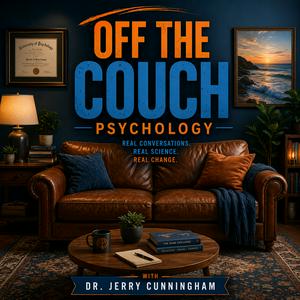
About Off the Couch Psychology
Off the Couch Psychology Podcast is your go-to source for understanding mental health, breaking the stigma around mental illness, and learning how to take control of your mind and your life.
Hosted by Dr. Jerry Cunningham, psychologist, author, and podcast host, this show breaks down complex psychological topics into real, practical conversations you can actually use in your everyday life.
Each episode explores mental health in a way that is clear, relatable, and grounded in real science. From anxiety, depression, ADHD, trauma, and burnout to cutting-edge psychological research and treatment approaches, you'll gain a deeper understanding of what's really going on in your mind—and what you can do about it.
This isn't therapy—but it might be the closest thing you can get in your car, at the gym, or sitting on your couch.
If you've ever struggled with stress, overthinking, emotional exhaustion, or just found yourself wondering, "What is going on in my mind?"—this podcast is for you.
You'll learn:
• How anxiety, depression, and other mental health disorders actually work
• Evidence-based therapy approaches that professional use and coping strategies you can use
• How to manage stress, overthinking, and emotional overwhelm
• Information about mental health medications and treatment options
• Practical tools to improve your mental health and daily life
This podcast is designed to educate, motivate, and empower you to take action—because understanding your mind is the first step to changing your life.
Podcast websiteListen to Off the Couch Psychology, The Jefferson Fisher Podcast and many other podcasts from around the world with the radio.net app
Get the free radio.net app
- Stations and podcasts to bookmark
- Stream via Wi-Fi or Bluetooth
- Supports Carplay & Android Auto
- Many other app features
Get the free radio.net app
- Stations and podcasts to bookmark
- Stream via Wi-Fi or Bluetooth
- Supports Carplay & Android Auto
- Many other app features

Off the Couch Psychology
Scan code,
download the app,
start listening.
download the app,
start listening.
 Canada - english

