

Listen to this podcast in the app for free: Download for free in the App Store
radio.net
Sleep timer
Save favourites
26 episodes
Everything Is Changing at Fishwives of Paris
2026-08-04 | 23 mins.Season 2 is almost here, and we're making some big changes.
In this bonus episode, we explain why we're moving to weekly episodes, introducing new formats, becoming more responsive to food news, inviting more guests, and building a closer relationship with our listeners.
We also look back at our first year, share some behind-the-scenes stories—including filming the entire season while Caroline was pregnant—and explain the mission behind everything we do at Fishwives of Paris.
Podcast Show Notes
In this episode:
Why Fishwives is moving to weekly episodes
Why we're introducing webcam episodes alongside studio episodes
Our philosophy on admitting mistakes and publishing corrections
How listener feedback will shape future episodes
Why we're expanding our guest lineup
Behind the scenes of filming Season 1
Caroline's IVF, pregnancy and maternity leave during production
Emily's journalism career and constant travel
Why living in France changed our approach to work
The Fishwives mission
How you can help shape Season 2
Key Takeaways
Fishwives is becoming a weekly podcast.
The show will combine studio and webcam episodes.
Listener corrections will become part of future episodes.
Audience participation will play a much bigger role.
More international guests are coming.
The show's editorial mission remains the same while the format evolves.How Provence Rosé Took Over the World
2026-07-21 | 41 mins.Provençal rosé is one of the world's most recognizable wines, but its rise was anything but inevitable.
This episode explores how rosé evolved from a low-status byproduct into a global luxury phenomenon. Caroline and Emily trace the history of pink wine from Antiquity to modern Provence, uncover the innovations that created today's pale rosé style, and examine how branding, celebrity culture, and lifestyle marketing transformed an inexpensive regional wine into an international success story.
Podcast Show Notes
In this episode:
Why rosé was once considered a cheap byproduct
How rosé was made in Ancient Greece
The difference between traditional rosé and Provençal rosé
The impact of phylloxera on French wine
Marcel Ott's role in refining the modern style
Why Provence became synonymous with rosé
The rise of Whispering Angel
Brad Pitt, Miraval, and celebrity wine brands
The history of rosé piscine
Why ice in rosé is more French than many people realize
Key Takeaways
Rosé was historically a low-status wine.
Modern Provence rosé is a relatively recent innovation.
Marcel Ott helped transform rosé from a byproduct into a premium category.
Celebrity culture played a major role in rosé's global success.
Whispering Angel helped establish rosé as a luxury lifestyle product.
Rosé piscine has deeper roots than many wine drinkers realize.
Branding often contributes as much to rosé's value as winemaking.Tarte Tropézienne: From Polish Immigrant to French Icon
2026-07-07 | 23 mins.The Tarte Tropézienne is one of the most famous desserts on the French Riviera, but it wasn't invented by a French pastry chef.
In this episode, Emily and Caroline uncover the surprising story behind Saint-Tropez's signature pastry. From Polish immigrant baker Alexandre Micka to Brigitte Bardot's unexpected role in naming the dessert, they explore how a family recipe became a French icon.
Along the way, they dive into the history of brioche, French pastry cream, celebrity influence, trademarks, and the transformation of Saint-Tropez from a fishing village into a global luxury destination.
Podcast Show Notes
In this episode:
Why the Tarte Tropézienne isn't actually a tart
The Polish origins of Saint-Tropez's most famous dessert
How Brigitte Bardot helped create the brand
The movie that transformed Saint-Tropez forever
Alexandre Micka's original bakery story
Why the dessert became a trademarked product
The history of brioche in France
The different creams used in a Tarte Tropézienne
How modern pastry chefs reinvent the classic recipe
Why France often embraces foods with foreign origins
Key Takeaways
The Tarte Tropézienne was invented by Polish immigrant Alexandre Micka.
Brigitte Bardot gave the pastry its famous name during the filming of And God Created Woman.
Saint-Tropez was a relatively unknown fishing village before the 1950s, and now has been ruined by rich Americans.
The dessert is actually a brioche filled with cream, not a tart.
American buttercream sucks.
The name "Tarte Tropézienne" is trademarked, but the dessert itself is widely recreated.
The pastry's success mirrors the rise of Saint-Tropez as an international luxury destination.
Modern pastry chefs continue to reinterpret the dessert with new flavors and techniques.Why Rotting Grapes Make Some of the World's Most Expensive Wines
2026-06-23 | 34 mins.Did you know some of the world's most sought-after wines are made with mold?
In this episode of Fishwives of Paris, Emily Monaco and Caroline Fazeli explore the fascinating world of Botrytis cinerea, the fungus known as "noble rot." While this mold can devastate vineyards when conditions are wrong, under the right circumstances it transforms grapes into some of the world's most celebrated sweet wines.
Join us as we uncover the science behind noble rot, the centuries-old legends surrounding its discovery, and the unique conditions required to produce wines like Sauternes, Tokaji, and noble rot Rieslings. Along the way, we'll discuss the challenges of harvesting these wines, the flavors that make them so distinctive, and why bottles from producers like Château d'Yquem command such extraordinary prices.
From Bordeaux to Hungary, from fungal genetics to food pairings, this episode reveals how one of nature's most destructive forces became one of winemaking's greatest gifts.
Wines Discussed
Sauternes (Bordeaux, France)
The most famous French wine made with noble rot. Produced in Bordeaux's Sauternes region, where morning fog and afternoon sunshine create ideal conditions for Botrytis cinerea.
Château d'Yquem
Widely regarded as the most prestigious producer of Sauternes and one of the greatest sweet wines in the world. The hosts examine a bottle of 2013 Château d'Yquem during the episode.
Tokaji Aszú (Hungary)
One of the world's oldest and most celebrated sweet wines. The episode explores the legend that noble rot winemaking originated in Hungary during the 17th century after a delayed harvest caused by the Ottoman-Turkish wars.
Noble Rot Riesling (Germany)
Certain German Rieslings benefit from noble rot, producing intensely aromatic sweet wines with remarkable balance between sweetness and acidity.
Chenin Blanc Dessert Wines (Loire Valley, France)
Chenin Blanc is highlighted as one of the grape varieties particularly well suited to noble rot production.
Ice Wine (Eiswein)
Discussed as an alternative method of producing sweet wine, using grapes that freeze naturally on the vine before harvest.
Vin de Paille
A traditional sweet wine made from grapes dried on straw mats before pressing, another technique used to concentrate sugars without noble rot.
Grape Varieties Discussed
Sémillon (the principal grape of Sauternes)
Chenin Blanc
Riesling
Food Pairings Mentioned
Roquefort and other blue cheeses
Foie gras
Fruit-based desserts, particularly peach and apple desserts
Watch full episodes in 4k on Youtube
Follow us on Instagram, TikTok, Facebook, and join our Facebook group.The Croque Monsieur: Was it Really Named After Human Meat?
2026-06-09 | 26 mins.The croque monsieur may look like nothing more than a fancy grilled ham and cheese, but Paris' favorite café sandwich has a surprisingly strange history.
This week, Emily and Caroline trace the origins of the croque monsieur from Belle Époque cafés and the bustling markets of Les Halles to modern Parisian versions topped with truffle, caviar, and artisanal cheeses. Along the way, they unpack the bizarre cannibal rumor that may have inspired its name, debate whether the croque madame is actually superior, and ask an important question: is the classic croque monsieur genuinely delicious, or are we all just nostalgic for melted cheese?
Expect Paris ham, Emmental slander, Marcel Proust, Prince de Paris, and plenty of opinions about what makes a truly great crunchy mister.
Fishwives of Paris is a French gastronomy podcast. We tell the real story behind the culture the world is obsessed with.
Watch full episodes in 4k on Youtube
Follow us on Instagram, TikTok, Facebook, and join our Facebook group.
More Arts podcasts
 The Munk Debates PodcastArts, Business, Business News, History, News
 99% InvisibleArts, Design
 The Jann Arden PodcastArts, Performing Arts, Personal Journals, Society & Culture
 ill-advised by Bill NighyArts, Books, Comedy, Music
 Articles of InterestArts, Fashion & Beauty
 Fresh AirArts, Books, Society & Culture, TV & Film
 The MothArts, Performing Arts
 The Magnus ArchivesArts, Drama, Fiction, Performing Arts, Science Fiction
Trending Arts podcasts
 The New Yorker: The Writer's Voice - New Fiction from The New YorkerArts
 NPR's Book of the DayArts, Books
 HomingArts, Design, Personal Journals, Society & Culture
 Dragons in the Details: A Crescent City & Maasverse Deep Dive PodcastArts, Books
 Work in Progress with Sophia BushArts, Comedy, Music
 Glamorous Trash: A Celebrity Memoir PodcastArts, Books, Society & Culture
 The Horror! (Old Time Radio)Arts, Performing Arts
 Home CookingArts, Food
 Writers on WritingArts, Books
 Poetry UnboundArts, Books, Relationships, Religion & Spirituality, Society & Culture, Spirituality
 Suspense | Old Time RadioArts
 Breaking Bread with Tom PapaArts, Comedy, Comedy Interviews, Food
 Close ReadingsArts, Books, Courses, Education
 Design Matters with Debbie MillmanArts, Design
 داستان شبArts, Books
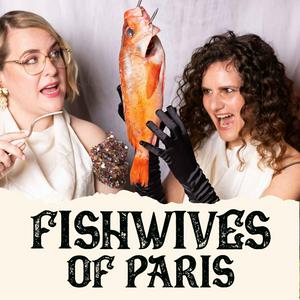
- Fishwives of ParisArts, Food, History, Places & Travel, Society & Culture
About Fishwives of Paris
Flipping the table on French food mythology and serving the real stories behind your favorite cuisine, with culinary journalist Emily Monaco and wine expert Caroline Fazeli.
Want to watch us in 4k? Head over to https://youtube.com/@fishwivesofparis
Podcast websiteListen to Fishwives of Paris, The Munk Debates Podcast and many other podcasts from around the world with the radio.net app
Get the free radio.net app
- Stations and podcasts to bookmark
- Stream via Wi-Fi or Bluetooth
- Supports Carplay & Android Auto
- Many other app features
Get the free radio.net app
- Stations and podcasts to bookmark
- Stream via Wi-Fi or Bluetooth
- Supports Carplay & Android Auto
- Many other app features

Fishwives of Paris
Scan code,
download the app,
start listening.
download the app,
start listening.
 Canada - english