Listen to this podcast in the app for free: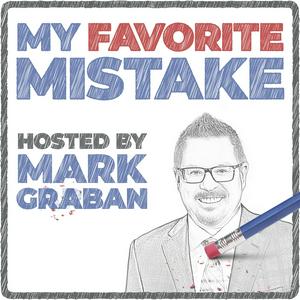 Download for free in the App Store
radio.net
Sleep timer
Save favourites
My Favorite Mistake: Business Lessons from Failures and Success
Mark Graban
Latest episode
Available Episodes
5 of 369
- From Medicare Fraud to Military Leadership: Dr. Josh McConkey’s Hard-Won Wisdom on Mistakes and CourageIn Episode #332 of My Favorite Mistake, Mark Graban talks with Dr. Josh McConkey — emergency physician, Air Force Reserve Commander, combat-deployed medevac leader, and Pulitzer Prize–nominated author. Known as the “MacGyver Doc,” Josh has spent his career solving problems in high-pressure environments where you rarely get a second chance. Episode page with links, video, transcript, and more Josh shares the most painful mistake of his professional life: entering a business partnership without doing the proper due diligence. What followed was a cascade of red flags — Medicare violations, skimming, financial misconduct, and even a $3.4 million bribe offer he refused. The ordeal ultimately cost him nearly $5 million and forced him to rebuild his career and life with integrity front and center. In our discussion, Josh explains how this experience reshaped his understanding of leadership, accountability, and courage — especially in systems where incentives can push good people toward dangerous choices. He also reflects on two decades in emergency medicine, including the structural failures that helped fuel the opioid crisis and the pressures physicians faced to prescribe narcotics. Josh shares why he wrote Be the Weight Behind the Spear and his new children’s leadership book The Heart of a Leader, and why he believes character development must start far earlier than most of us realize. We close with his decision to run for Lieutenant Governor of North Carolina in 2028 — a move grounded in service, accountability, and a desire to strengthen public leadership. This episode explores integrity, systemic failure, resilience, and the lessons we carry forward after a mistake that changes everything.--------42:16
- The Lab Mix-Up That Led to an Unnecessary Surgery - Mistake of the WeekA 32-year-old woman in Switzerland underwent an unnecessary surgery after her lab sample was mixed up at Basel University Hospital. Doctors believed she had cervical cancer. She didn’t — but the procedure went ahead anyway, potentially affecting her ability to carry a pregnancy in the future. In this Mistake of the Week, Mark Graban unpacks how such devastating but preventable errors happen — and why “being careful” isn’t a real safeguard. Drawing on past lab mix-ups he’s written about, Mark explores how system design, workload pressure, and weak error-proofing make these tragedies almost inevitable. This isn’t about bad people or careless workers. It’s about fragile systems — and how hospitals can build processes that catch mistakes before they reach the patient. Because real safety starts with learning, not blaming.--------4:21
- Recovering from Bullying at Work: Insights from TV Executive Andy RegalMy guest for Episode #331 of My Favorite Mistake is Andy Regal, a longtime media executive whose career has included leadership roles at The Wall Street Journal, MSNBC, Consumer Reports, Court TV, and CBS College Sports. He is also the author of the forthcoming book, “Surviving Bully Culture: A Career Spent Navigating Workplace Bullying and a Guide for Healing.” Episode page with transcript, video, and more Andy shares a remarkable early-career mistake from his time producing NBC News war coverage with Lester Holt. A young staffer accidentally loaded last week’s script into the teleprompter, and Holt began reading it live on air. Andy, brand new to this type of broadcast, immediately assumed he’d face humiliation or even get fired. Instead, Holt responded with total calm, poise, and kindness—transforming what could have been a career-ending disaster into a lasting lesson on leadership. That moment stands in sharp contrast to the bully bosses Andy encountered throughout his media career. We talk about how bullying shows up in subtle and overt ways, why high performers are often targeted, and how toxic leadership harms morale, performance, and even physical and mental health. Andy explains what recovery looks like and why his book is dedicated to helping people cope with, heal from, and navigate workplaces where bullying is tolerated or ignored. In This Episode: • The wrong-script live TV moment with Lester Holt • Why calm leadership builds psychological safety • The emotional impact of bully bosses • Why bullying thrives in high-pressure environments • How bullying follows people home and affects well-being • What recovery looks like for targets of workplace bullying • Why Andy wrote Surviving Bully Culture Learn More Andy Regal’s website & book pre-order: https://www.andyregal.com--------57:28
- “Configured in the Appropriate Manner?” — The Landing Gear That Almost Stayed Up - Mistake of the WeekIn this Mistake of the Week, Mark Graban breaks down an incident involving an American Airlines A319 on final approach to Phoenix — captured on video with its landing gear still up. A cockpit alert sounded, the crew realized what was missing, and the pilots executed a safe go-around. Their explanation to air traffic control? A perfectly understated: “It wasn’t configured in the appropriate manner.” Mark explores why these near-misses are less about individual oversight and more about systems built to detect — and correct — human error. From checklists to cockpit warnings to the decision to go around instead of pushing forward, this episode highlights why safety depends on catching mistakes early, not pretending they don't happen.--------4:36
- Why Curiosity Drives Better Leadership: Debra Clary on Avoiding Assumptions and Unlocking PerformanceMy guest for Episode #330 of the My Favorite Mistake podcast is Debra Clary, a leadership strategist, researcher, and executive coach with more than four decades of experience at organizations including Frito-Lay, Coca-Cola, Jack Daniel’s, and Humana. Episode page with video, transcript, and more She’s also a TEDx speaker, former off-Broadway performer, and the author of the new book The Curiosity Curve: A Leader’s Guide to Growth and Transformation Through Bold Questions. In this episode, Debra shares one of her favorite mistakes—an unexpected wrong train stop in Italy that turned into a memorable discovery—and how that happy accident helped shape her approach to curiosity, flexibility, and exploring the unexpected. That theme carries through the conversation as Debra and I discuss how curiosity shows up in leadership, why assumptions can derail teams, and why “having the answers” is often the wrong place to start. Debra walks us through the research behind The Curiosity Curve, including how her team developed a validated diagnostic for measuring curiosity and what they learned about its connection to engagement, retention, innovation, and decision speed. She shares practical examples of how leaders unintentionally shut down curiosity and how small shifts in inquiry can unlock better thinking and stronger team performance. We also explore how curiosity interacts with psychological safety, how leaders can avoid the trap of reflexive certainty, and why curiosity becomes even more important in high-pressure or high-uncertainty situations. Debra closes by discussing the role curiosity plays in an AI-driven world—why it remains uniquely human, and how tools like AI can actually help people deepen their inquiry rather than replace it. If you’re interested in how leaders can cultivate better questions, better conversations, and better outcomes, this episode will spark ideas you can put to use right away. Questions and Topics: What’s your favorite mistake? Were there similar moments in your career where a “missed stop” led to an unexpected opportunity? Was starting as a Frito-Lay route driver a deliberate development path, or was that unusual? Where did your passion for curiosity begin? Is there a way to gauge curiosity in a team or organization? How do you measure something like curiosity in a meaningful way? How do you help leaders learn to be more curious instead of just telling people to “be curious”? When hiring, is it better to select already-curious people or rely on the culture to develop curiosity? Is there such a thing as too much curiosity—can it slow execution or decision-making? From your research or coaching, what’s an example of curiosity being missing and causing problems? How do you help leaders understand that curiosity and psychological safety are building blocks for innovation—not optional extras? Do you see leaders struggle with the difference between knowing, assuming, and figuring things out? In urgent or high-pressure situations, does stress make it harder for people to stay curious? Do you have examples where curiosity helped prevent a small mistake from turning into a big one? Have you seen situations where people used questions in unhelpful or critical ways while claiming they were being “curious”? How do you think about Ed Schein’s idea of humble inquiry? Can AI replace curiosity—or does curiosity still give humans a unique advantage? Can interacting with AI actually help people strengthen their curiosity?--------40:47
More Business podcasts
 Planet MoneyBusiness, News
 Odd LotsBusiness, News, Investing, News Commentary
 The Diary Of A CEO with Steven BartlettBusiness, Education, Society & Culture
 The Dwayne Kerrigan PodcastBusiness, Careers, Entrepreneurship
 The Prof G Pod with Scott GallowayBusiness, Entrepreneurship
 The Canadian InvestorBusiness, Investing
 A Bit of OptimismBusiness, Education, Careers, Self-Improvement
 Prof G MarketsBusiness, Investing
 The Ramsey ShowBusiness, Education, Investing, Self-Improvement
 The Wealthy Barber PodcastBusiness, Education, Investing
Trending Business podcasts
 商业就是这样Business, Investing, Management, Marketing
 Business English from All Ears EnglishBusiness, Education, Language Learning
 Moms at Work: The PodcastBusiness, Careers
 Closing BellBusiness, News
 Full CircleBusiness
 Networth and Chill with Your Rich BFFBusiness, News, Business News, Entrepreneurship
 The Pomp PodcastBusiness, Investing
 Halftime ReportBusiness, News, Business News, Investing
 The Goal Digger Podcast | Top Business and Marketing Podcast for Creatives, Entrepreneurs, and Women in BusinessBusiness, Marketing
 Financial FeministBusiness, Education, Tutorials
 Reuters Morning BidBusiness, News, Business News, Investing
- The Dwayne Kerrigan PodcastBusiness, Careers, Entrepreneurship
 Build with Leila HormoziBusiness, Education, Entrepreneurship, Tutorials, Management
 Money For Couples with Ramit SethiBusiness, Society & Culture, Investing, Relationships
 CNBC's "Fast Money"Business, News, Investing
 Entrepreneurs, Executives, and EccentricsBusiness, Entrepreneurship
About My Favorite Mistake: Business Lessons from Failures and Success
Unlock Leadership Excellence: Tune into “My Favorite Mistake” with Mark GrabanAre you a leader aiming to boost effectiveness, insight, and innovation? Join Mark Graban on ”My Favorite Mistake” (and no, it’s not the Sheryl Crow song), where top business minds, C-suite executives, and industry innovators share their pivotal mistakes and the powerful lessons they’ve learned.The ConceptEmbrace the transformative power of mistakes. Discover how errors can fuel leadership growth and creative problem-solving, turning each misstep into a masterclass in improvement and innovation.The StoriesDive into captivating interviews with international entrepreneurs, tech pioneers, accomplished athletes and entertainers, healthcare leaders, and award-winning authors. Each guest reveals how their significant mistakes shaped their careers and led to groundbreaking insights.The BreadthExplore a wide range of topics, from leadership psychology and organizational culture to process innovation and sustainability. Gain valuable perspectives to navigate the ever-changing business landscape.The ApproachGuided by Mark Graban, an author and seasoned consultant, each episode delves into Lean Management (based on the Toyota Production System) and psychological safety, uncovering strategies for individuals and organizations to learn from their mistakes.Why Subscribe?Engage with Thought-Provoking Dialogues: Challenge conventional wisdom and explore new perspectives.Access Tools and Frameworks: Gain actionable insights for a competitive edge.Discover Innovative Opportunities: Learn how to turn mistakes into catalysts for innovation.Develop Emotional Intelligence and Resilience: Enhance your leadership skills and agile thinking.Transform your approach to leadership and success. Subscribe to “My Favorite Mistake” today and embark on a journey of relentless improvement through the power of learning from mistakes.
Podcast websiteListen to My Favorite Mistake: Business Lessons from Failures and Success, Planet Money and many other podcasts from around the world with the radio.net app
Get the free radio.net app
- Stations and podcasts to bookmark
- Stream via Wi-Fi or Bluetooth
- Supports Carplay & Android Auto
- Many other app features
Get the free radio.net app
- Stations and podcasts to bookmark
- Stream via Wi-Fi or Bluetooth
- Supports Carplay & Android Auto
- Many other app features

My Favorite Mistake: Business Lessons from Failures and Success
Scan code,
download the app,
start listening.
download the app,
start listening.
 Canada - english