Listen to this podcast in the app for free: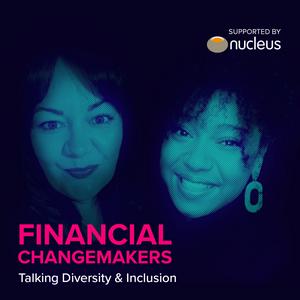 Download for free in the App Store
radio.net
Sleep timer
Save favourites
Available Episodes
5 of 18
- Financial Changemakers, Series 2 - ConclusionWelcome to the Financial Changemakers podcast with Gretchen Betts – Managing Director at Magenta Financial Planning and Olivia Parnell – Coach, New Horizons, Voluntary Norfolk. This podcast series is for you if you are interested in learning about diversity and inclusion and are keen to embrace and make positive change in your life, business, management style or company ethos. In this concluding episode, hosts Gretchen and Olivia, discuss the key takeaways from Series 2. This podcast series is about creating a safe place for discussion and ultimately enabling you, our listener, to be a Changemaker. Let’s listen. Let’s Discuss. Let’s Learn. Let’s Implement Positive Change.--------33:56
- Financial Changemakers, Series 2 - Practicality & LanguageWelcome to the Financial Changemakers podcast with Gretchen Betts – Managing Director at Magenta Financial Planning and Olivia Parnell – Coach, New Horizons, Voluntary Norfolk. This podcast series is for you if you are interested in learning about diversity and inclusion and are keen to embrace and make positive change in your life, business, management style or company ethos. In this eighth episode, hosts Gretchen and Olivia, discuss Practicality and Language with their guest Anj Handa - Founder of Inspiring Women Changemakers. Anj supports organisations by working with them to keep their policies and practices up to date in relation to inclusive communications, diversity, and good governance. Diversity underpins everything. Anj talks to us about how businesses need to be aware of what’s really going on in their working environment. Staff turnover Grievances Exit interviews Staff Absences Lack of Participation If we collect the information, provide a healthy workspace, and provide the training to facilitate this this will lead to better diversity and inclusion outcomes. If people in roles of leadership aren’t diverse. What difference will the changes truly make? Key Take Aways from this episode: Corporate policies can only go so far. It is about people. Workplaces are shaped by the way people interact with each other. Take the time to think about how you can have more positively influence the way people within your workplace are interacting with each other. Get comfortable with being uncomfortable. Don’t be complicit. If you see something is wrong, say something. This podcast series is about creating a safe place for discussion and ultimately enabling you, our listener, to be a Changemaker. Let’s listen. Let’s Discuss. Let’s Learn. Let’s Implement Positive Change.--------36:21
- Financial Changemakers, Series 2 - Hormonal HealthWelcome to the Financial Changemakers podcast with Gretchen Betts – Managing Director at Magenta Financial Planning and Olivia Parnell – Coach, New Horizons, Voluntary Norfolk. This podcast series is for you if you are interested in learning about diversity and inclusion and are keen to embrace and make positive change in your life, business, management style or company ethos. In this eighth episode, hosts Gretchen and Olivia, discuss Hormonal Health with their guests Julie Flynn – Founder and Financial Coach Ebb and Flow and Cathy Brennan – Associate Financial Planning Director at Investec Wealth & Investment UK. Hormonal Health is an invisible condition which people can experience in their lifetime. In this episode we discuss a variety, including: Endometriosis PMDD (Pre-Menstrual Dysphoric Disorder) PCOS (Polycystic Ovary Syndrome) Menopause Some statistics around these topics are: 1 in 20 people are diagnosed with PMDD. 30% of those will attempt suicide. 1 in 10 people of reproductive age are diagnosed with Endometriosis. A recent BBC study of 13,000 people reported that half of these considered suicide. 1 in 4 women with menopause symptoms are concerned about their ability to cope with life. 60% experiencing symptoms which lead to behavioural changes. We speak about how normalising conversations about hormal health is vital for Businesses and employees and for financial advisers a knowledge and level of understanding is vital for when advising women. We talk about as businesses how can we create adaptable, safe working environments to get the best of people, but also to support people and let them know they are still valued. This is relevent to people we work with every day - at least 50% of the population will go through hormonal health issues in their lifetime. Conversations need to happen openly, without any shame. This podcast series is about creating a safe place for discussion and ultimately enabling you, our listener, to be a Changemaker. Let’s listen. Let’s Discuss. Let’s Learn. Let’s Implement Positive Change.--------54:34
- Financial Changemakers, Series 2 - Class, Wealth & Social DeprivationWelcome to the Financial Changemakers podcast with Gretchen Betts – Managing Director at Magenta Financial Planning and Olivia Parnell – Coach, New Horizons, Voluntary Norfolk This podcast series is for you if you are interested in learning about diversity and inclusion and are keen to embrace and make positive change in your life, business, management style or company ethos. In this seventh episode, hosts Gretchen and Olivia, discuss Class Wealth and Social Deprivation with their guests · Steve Chatterton - Head of Relationships at Citywire · Laurie Frankland - New Horizons Project There is a deep societal problem. A tacit agreement that continues to be an approach that it’s ok to have those who have and those who have nots. This needs to change. It’s wrapped up in the historical narrative of our country. Opportunities are not equal, but they should be, shouldn’t they? We don’t inspire potential in the young people. There’s no American Dream in this country. We’re just happy to let young people work it out for themselves. And that is NOT ok. Young people need to be educated to know that no one is going to do it for you. But you can do anything that you put your mind to in this world. Social Mobility is in decline in this country, we are ranked 21st globally, and we are the lowest performing country in the G7 Nations. Culturally we don’t talk about money. Many people are not able to take advantage of financial planning opportunities. People perceive it as elitist, something for rich people, to make them richer. Talking to people about debt can be emotional and an extremely vulnerable conversation to have. There needs to be a level of trust. There needs to be a better understanding of low incomes meaning high outgoings. The less you have, the more things cost. If you can’t afford to live where you work, you must pay for travel, and extra childcare to allow for travel times. You can’t take advantage of online deals if you don’t have access to the internet – of which many people don’t. If you are financially secure you can invest, save, and insure, making yourself more financially secure. There is an opportunity in the financial world to mentor young children, to educate them and inspire them about money and be the male role model, of which many may not have had. There are resources out there which can help. Citizens Advice are extremely helpful and have a section on their website in relation to Financial Planning. There’s also a government scheme called Money Helper. There may be opportunities for the financial profession to work alongside these organisations, which have already developed trust within society. The profession should look to become allies with third sector support that already exist. When organisations get together, it can lead to innovation and problem solving, through combining expertise. There’s so much potential to do more. Key Take Aways from this episode It is easier to build strong children, than it is to repair broken men. Find out more about reasons why people are in low-income situation. Raise awareness of initiatives which can help. If we don’t give people and young people, the skills they need to address the situations that they are in (that they didn’t choose) then how can we expect them to get out of it? We should all ask ourselves, can we do more, individually? If you’re listening to this podcast, get involved! Reach out to your local schools and see how you may be able to help. When we look back on our lives, do we want to say that we were on the right side of our own personal history? Get comfortable with being uncomfortable. Don’t be complicit. If you see something is wrong, say something. This podcast series is about creating a safe place for discussion and ultimately enabling you, our listener, to be a Changemaker. Let’s listen. Let’s Discuss. Let’s Learn. Let’s Implement Positive Change.--------45:51
- Financial Changemakers, Series 2 - Social Mobility & Conscious InclusionWelcome to the Financial Changemakers podcast with Gretchen Betts – Managing Director at Magenta Financial Planning and Olivia Parnell – Coach, New Horizons, Voluntary Norfolk. This podcast series is for you if you are interested in learning about diversity and inclusion and are keen to embrace and make positive change in your life, business, management style or company ethos. In this sixth episode, hosts Gretchen and Olivia, discuss Social Mobility and Positive Inclusion with their guest Ben Sampson – Head of Employment & Skills at Voluntary Norfolk. What social mobility means is to ensure that the circumstances of which people are born into, don’t dictate what they achieve in their life. We’d all like to live in a country where people born into low-income families, have the same opportunities as those born into more privileged circumstances. Unfortunately, in the UK this isn’t the case, we have one of the poorest levels of social mobility in the developed world. Something as a country we need to reflect on. Nearly 1 in 3 children in the UK currently live in poverty. By the age of 5, children from more deprived areas are only achieving 75% of their key stage 2 expected levels, compared to those of privileged areas achieving 97%. Social mobility affects us from birth, through early years childhood to education. Meaning if you’re behind at 5 years old, chances are you going to be behind and have less career opportunities, and less social opportunities to pull yourself out of that social area when you’re old enough to make your own decisions and choices. We are all born into a society, and we grow up in it. As we grow we develop biases, unconsciously. Positive and negative. We happen to like people who are the same as us. It can lead to biases about people who are different to us. Gender, race, sexuality, geography. Awareness isn’t enough, but it is the first step. Do you know your workforce? Do you know their backgrounds? By having that information, you can provide a more inclusive environment. It enables you to get more out of your staff. It’s a great place to start. You can then alter your recruitment process to encourage getting more diversity through the doors. If businesses start to focus less on experience and qualifications and more on what applicants include in the personal statement, they will open a huge portfolio of incredibly talented individuals who have great ideas and who would be huge assets to a company. Give people a chance to talk about themselves, and you will uncover all sorts of people who haven’t come through the standard system. Key Take Aways from this episode Awareness and being self-aware is the first step. Being social aware is the same as being physically active, check yourself like you check your smart watch. Be aware of how big the problem is in this country. We’re in an affluent Country, but the statistics are terrible and heading south. Inequality is getting wider; we are not closing the gap. The average life expectancy of someone living in more affluent county of Berkshire is 16.5 years higher than someone living a the more deprived area of South Wales. That 16.5-year difference is roughly the same, as the difference between the UK as a whole and Sudan as a whole. Re-read the last sentence and think about it. Get comfortable with being uncomfortable. Don’t be complicit. If you see something is wrong, say something. This podcast series is about creating a safe place for discussion and ultimately enabling you, our listener, to be a Changemaker. Let’s listen. Let’s Discuss. Let’s Learn. Let’s Implement Positive Change.--------39:53
More Business podcasts
 The Wealthy Barber PodcastBusiness, Education, Investing
 The Diary Of A CEO with Steven BartlettBusiness, Education, Society & Culture
 Aspire with Emma GredeBusiness, Society & Culture, Entrepreneurship
 Odd LotsBusiness, News, Investing, News Commentary
 PBD PodcastBusiness
 Prof G MarketsBusiness, Investing
 The Prof G Pod with Scott GallowayBusiness, Entrepreneurship
 The Ramsey ShowBusiness, Education, Investing, Self-Improvement
 Planet MoneyBusiness, News
 The Dwayne Kerrigan PodcastBusiness, Careers, Entrepreneurship
Trending Business podcasts
 商业就是这样Business, Investing, Management, Marketing
 Business English from All Ears EnglishBusiness, Education, Language Learning
 Moms at Work: The PodcastBusiness, Careers
 Closing BellBusiness, News
 Full CircleBusiness
 Networth and Chill with Your Rich BFFBusiness, News, Business News, Entrepreneurship
 The Pomp PodcastBusiness, Investing
 Halftime ReportBusiness, News, Business News, Investing
 The Goal Digger Podcast | Top Business and Marketing Podcast for Creatives, Entrepreneurs, and Women in BusinessBusiness, Marketing
 Financial FeministBusiness, Education, Tutorials
 Reuters Morning BidBusiness, News, Business News, Investing
- The Dwayne Kerrigan PodcastBusiness, Careers, Entrepreneurship
 Build with Leila HormoziBusiness, Education, Entrepreneurship, Tutorials, Management
 Money For Couples with Ramit SethiBusiness, Society & Culture, Investing, Relationships
 CNBC's "Fast Money"Business, News, Investing
 Entrepreneurs, Executives, and EccentricsBusiness, Entrepreneurship
About Financial Changemakers
Welcome to the Financial Changemakers podcast with Gretchen Betts – Managing Director at Magenta Financial Planning and Olivia Parnell – Trainee Financial Planner, Ascot Lloyd.
This podcast series is for you if you are interested in learning about diversity and inclusion and are keen to embrace and make positive change in your life, business, management style or company ethos.
This podcast series is about creating a safe place for discussion and ultimately enabling you, our listener, to be a Changemaker.
Let’s listen. Let’s Discuss. Let’s Learn. Let’s Implement Positive Change.
This podcast series is supported by Nucleus Financial.
Podcast websiteListen to Financial Changemakers, The Wealthy Barber Podcast and many other podcasts from around the world with the radio.net app
Get the free radio.net app
- Stations and podcasts to bookmark
- Stream via Wi-Fi or Bluetooth
- Supports Carplay & Android Auto
- Many other app features
Get the free radio.net app
- Stations and podcasts to bookmark
- Stream via Wi-Fi or Bluetooth
- Supports Carplay & Android Auto
- Many other app features

Financial Changemakers
Scan code,
download the app,
start listening.
download the app,
start listening.
 Canada - english