
Listen to this podcast in the app for free: Download for free in the App Store
radio.net
Sleep timer
Save favourites
395 episodes
#390 | Tongue Ties, Airway Health & the Long-Term Effects of Poor Oral Development with Hilary Fritch, DMD
2026-10-21 | 50 mins.What if a tongue tie is about much more than breastfeeding? Biological and airway dentist Dr. Hilary Fritch, DMD, joins us to explain how tongue function, jaw development, nasal breathing, and sleep are interconnected, and why problems that begin in infancy can have effects that extend well into adulthood.
We discuss how the tongue helps shape the palate and jaw, why breastfeeding plays such an important role in facial development, what a high or narrow palate can mean for breathing and feeding, and why so many children today have crowded mouths and insufficient room for their wisdom teeth. Hilary explains the relationship between mouth breathing, fragmented sleep, snoring, and symptoms that can look like ADHD, as well as the signs parents can watch for in their own children.
We also get into tongue-tie releases in babies, children, and adults; when a frenulum actually needs to be treated; myofunctional therapy; airway expansion; mouth breathing and mouth taping; the connection between the tongue and fascia throughout the body; and why correcting oral function early can change the way a child's face, jaw, and airway develop.
Plus, we discuss why tongue ties can be both overdiagnosed and undertreated, what parents should look for when evaluating their child's airway, and why an airway dentist may see things that a conventional dental exam does not.
**********
Send us Fan Mail
Support the show
Access our workshops: Have a Physiologic Birth in the Hospital and Ultrasound: The Research vs Rhetoric
Needed <-- for 20% off
DrinkLMNT <-- for FREE 8-day supply
Primally Pure Skincare: Use code DOWNTOBIRTH
Postpartum Soothe: Use code DOWNTOBIRTH
ENERGYBits Superfood<--for 20% off
Join Patreon here
IG @downtobirthshow
Call 802-GET-DOWN.
Watch us on YouTube! Please note we don’t provide medical advice.#389 | October Breastfeeding Q&A: Colic, Getting Pregnant & Breastfeeding “Rules”
2026-10-14 | 43 mins.Welcome to another Breastfeeding Q&A episode. Today, we start with a conversation about breastfeeding advice on social media and ask our community which breastfeeding “rules” they wish they had never heard.
For today's questions, Trisha responds to these listener topics:
Getting your period back while breastfeeding and whether you need to wean to conceive
Night nursing at 14 months and how prolactin can affect the return of ovulation
Colic, gas, high-pitched crying, and a baby who suddenly struggles at the breast
What else to consider when a three-month-old is having difficulty nursing
Taking a week-long trip without your 16-month-old and whether time apart could lead to weaning
Maintaining milk supply while traveling and returning to breastfeeding after separation
For quickies, we tackle waking newborns to feed, infant breast preferences, uneven milk production, when supply regulates, hospital lactation consultants, nipple shields, weaning age, letdown, mastitis and clogged ducts, night sweats, collecting colostrum during pregnancy, and whether a painless, effective latch ever needs fixing.
**********
Send us Fan Mail
Support the show
Access our workshops: Have a Physiologic Birth in the Hospital and Ultrasound: The Research vs Rhetoric
Needed <-- for 20% off
DrinkLMNT <-- for FREE 8-day supply
Primally Pure Skincare: Use code DOWNTOBIRTH
Postpartum Soothe: Use code DOWNTOBIRTH
ENERGYBits Superfood<--for 20% off
Join Patreon here
IG @downtobirthshow
Call 802-GET-DOWN.
Watch us on YouTube! Please note we don’t provide medical advice.#388 | Twin Home Birth at 38 Weeks: Leaving High-Risk Care and Choosing a Midwife
2026-10-07 | 28 mins.When Victoria learned at 10 weeks that she was carrying MoDi twins, she was immediately placed in high-risk care and told to expect frequent monitoring, an operating-room birth, and potentially a C-section. But as her pregnancy progressed, the fear and anxiety she felt at every appointment led her to reconsider the model of care she had accepted.
Victoria joins us to share how she left her OB and maternal-fetal medicine team midway through pregnancy and found a home birth midwife experienced with twins and vaginal breech birth. She takes us through the pressure she faced when leaving the practice, the surprising moment during labor when she went from one to nine centimeters, and the births of her two healthy boys at home at 38 weeks and one day.
We also discuss preparing nutritionally for a twin pregnancy, the Brewer diet and her focus on protein, navigating fears planted during pregnancy, giving birth to a second baby just minutes after the first, tandem breastfeeding twins while also nursing a toddler, and the role prayer and faith played throughout her pregnancy and birth.
**********
Send us Fan Mail
Support the show
Access our workshops: Have a Physiologic Birth in the Hospital and Ultrasound: The Research vs Rhetoric
Needed <-- for 20% off
DrinkLMNT <-- for FREE 8-day supply
Primally Pure Skincare: Use code DOWNTOBIRTH
Postpartum Soothe: Use code DOWNTOBIRTH
ENERGYBits Superfood<--for 20% off
Join Patreon here
IG @downtobirthshow
Call 802-GET-DOWN.
Watch us on YouTube! Please note we don’t provide medical advice.#387 | September Q&A: Home Birth Reactions, Miscarriage Prevention, Short Umbilical Cords, Stalled Pushing, Postpartum Anxiety, Tandem Breastfeeding
2026-10-01 | 55 mins.Welcome to the September Q&A! Today we kick things off with your answers to the question, “What did people say when they found out you were planning a home birth?” From being told you’re putting your baby in danger and that you’ll end up in the ER to family members questioning your midwife, calling you brave, or even threatening to tell your husband not to let you, you had a lot to say.
Then we get into your questions. One mother is seven weeks pregnant after a 12-week miscarriage earlier this year that resulted in significant hemorrhage and an ambulance transfer. Her midwife has recommended a miscarriage prevention protocol that includes baby aspirin, progesterone cream, and supplements. Is there evidence that these interventions prevent miscarriage after a single loss, and are there additional considerations when there’s a history of hemorrhage?
Next, a mother who recently had her first baby at home noticed that her baby’s umbilical cord was quite short, making it difficult to bring her baby fully up to her chest during her water birth. She’s considering a free birth in the future and wants to know whether having a short cord once makes it more likely to happen again, what determines cord length, and whether a short cord poses any particular risks during birth.
Then, a listener asks about a home birth she recently attended where the mother pushed for two to two and a half hours, her contractions eventually stopped, and the baby was not descending. The mother ultimately transferred to the hospital, but could rest have been another option? We discuss what it means when contractions stop during pushing, when a long second stage becomes concerning, and what might help labor get going again.
Quickies this month include suddenly resenting your pets after having a baby, homeschooling, tandem breastfeeding a newborn and three-year-old, normal pumping output, pacifier use while breastfeeding, C-section after a traumatic shoulder dystocia, measuring three days behind on an early ultrasound, trying again after miscarriage, weaning from exclusive pumping, showering and self-care postpartum, postpartum anxiety improving around nine months, postpartum care after stillbirth, sleep versus exercise versus sunlight, postpartum depression and anxiety in fathers, grounding yourself during anxiety, and whether postpartum depression is more likely to recur with subsequent babies.
Call us with your questions, comments or stories at 802-GET-DOWN!
#385 | The Lindsay Clancy Case: Postpartum Psychosis or Psychiatric Drug Reaction? with Dr. Roger McFillin
Postpartum Psychosis: The Signs, Risks, Symptoms and Recovery
Livestream: Should we homeschool? Ask a Mom whose family thrived.
**********
Send us Fan Mail
Support the show
Access our workshops: Have a Physiologic Birth in the Hospital and Ultrasound: The Research vs Rhetoric
Needed <-- for 20% off
DrinkLMNT <-- for FREE 8-day supply
Primally Pure Skincare: Use code DOWNTOBIRTH
Postpartum Soothe: Use code DOWNTOBIRTH
ENERGYBits Superfood<--for 20% off
Join Patreon here
IG @downtobirthshow
Call 802-GET-DOWN.
Watch us on YouTube! Please note we don’t provide medical advice.#386 | Why Home Birth: A Father's Perspective on Choosing Birth Outside the System
2026-09-23 | 42 mins.When Marine Corps officer Jacob Dubois's wife, Madison, told him she wanted a home birth, he was skeptical. He assumed the hospital was the safest place to have a baby until he began asking questions, researching, and meeting midwives.
That journey inspired Jacob to write Why Home Birth?, a book written for fathers who want to better understand birth and confidently support the women they love in chooseing birth outside of the medical system.
In this conversation, we discuss why birth experiences shape women long after the baby is born, how our culture has normalized traumatic birth, why fathers often see birth differently than mothers, and how couples can approach birth as a shared experience that strengthens their family for years to come.
If you enjoyed today's episode, you may be interested in these Down to Birth streaming workshops:
Birth Trauma: Recognizing & Overcoming It
Home Birth: Women's Round Table
Jake Dubois on Instagram
**********
Send us Fan Mail
Support the show
Access our workshops: Have a Physiologic Birth in the Hospital and Ultrasound: The Research vs Rhetoric
Needed <-- for 20% off
DrinkLMNT <-- for FREE 8-day supply
Primally Pure Skincare: Use code DOWNTOBIRTH
Postpartum Soothe: Use code DOWNTOBIRTH
ENERGYBits Superfood<--for 20% off
Join Patreon here
IG @downtobirthshow
Call 802-GET-DOWN.
Watch us on YouTube! Please note we don’t provide medical advice.
More Alternative Health podcasts





Trending Alternative Health podcasts



About Down to Birth
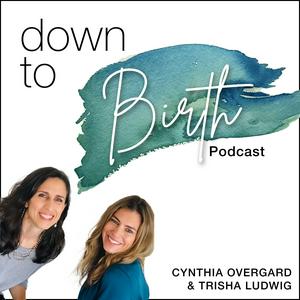
Join Cynthia Overgard and Trisha Ludwig once per week for evidence-based straight talk on pregnancy, birth and postpartum --- beyond the clichés and beyond the system. With 40 years' combined experience in midwifery, childbirth education and advocacy, publishing, research and postpartum care, we've guided thousands of families toward safer, more empowered choices. Down to Birth is all about safe childbirth, while recognizing a safe outcome isn't all that matters. We challenge the status quo, explore women's rights in childbirth, and feature women from all over the world, shining shine light on the policies, culture, and systemic forces that shape our most intimate and transformative of life experiences. You'll hear the birth stories of our clients, listeners and numerous celebrities. You'll benefit from our expert-interviews, and at any time you can submit your questions for our monthly Q&A episodes by calling us at 802-GET-DOWN. With millions of downloads and listeners in 90 countries, our worldwide community of parents and birth professionals coms together to learn, question and create change, personally and societally. We're on Instagram at @downtobirthshow and at Patreon.com/downtobirthshow, where we offer live ongoing events multiple times per month. Become informed, feel empowered, and join the movement toward better maternity care in the United States and worldwide. As always, hear everyone, listen to yourself.
Podcast websiteListen to Down to Birth, Get Sleepy: stories for sleep and many other podcasts from around the world with the radio.net app
Get the free radio.net app
- Stations and podcasts to bookmark
- Stream via Wi-Fi or Bluetooth
- Supports Carplay & Android Auto
- Many other app features
Get the free radio.net app
- Stations and podcasts to bookmark
- Stream via Wi-Fi or Bluetooth
- Supports Carplay & Android Auto
- Many other app features

Down to Birth
Scan code,
download the app,
start listening.
download the app,
start listening.
 Canada - english