
Listen to this podcast in the app for free: Download for free in the App Store
radio.net
Sleep timer
Save favourites
220 episodes
The Intersection that Matters Now: AI Alignment and Partnership at the Top
2026-09-11 | 38 mins.Welcome back to The HX Podcast. In this episode, we're wrapping up our series on the intersection of human experience, technology, and AI with a guest I've wanted to bring on for a long time: Anita Grantham, former HR leader at BambooHR, Pluralsight, and Infusionsoft, and now a fractional partner to top CEOs. We tackle the real reality of AI leadership: why true AI adoption requires eliminating your job so you can build, and how CEOs and CHROs must partner to elevate organizational proficiency without falling into fear or self-preservation.
We also get very real about the emotional weight of leadership—from navigating layoffs to practical self-care tools like Martha Beck's five-senses grounding technique. Plus, Anita leaves us with an unforgettable challenge for Monday: If you had to start your company from scratch today in the current tech landscape, how would you build it? Whether you're in the C-suite or leading on the front lines, this conversation is packed with wisdom on adaptability, trust, and driving change.
Stacie
For More About Our Amazing Guest:
Anita Grantham: LinkedIn Profile
Culture Creators Podcast: Culture Creators Website
For more episodes, visit StacieBaird.com.Closing the AI Gap: The 90-Day Roadmap to Capturing Real ROI
2026-09-04 | 12 mins.We're wrapping up our three-part series on how AI is shaping the human experience, and today we are talking about the real magic: closing the gap. We all know that simply buying an AI tool isn't a competitive advantage anymore—everyone has access to them. The real winners are the organizations that capture the ROI by building deliberate systems, processes, and governance over 90 days. If you're a leader, a CFO, or a manager wondering how to turn AI adoption into a serious, repeatable return on investment (we're talking north of 150% within seven months!), this episode is your wake-up call.
In this episode, I'm laying out the exact, concrete 90-day sequence to transform how your team functions—from running our capture gap scorecard to training your high-usage teams and measuring output. But it's about more than just numbers; it's about trust. Did you know a huge chunk of younger employees trust AI more than their managers? We need to change that narrative by becoming credible co-pilots who lead with trust and make AI feel like support rather than a mandate. Grab our Compounding Advantage Roadmap, tune in, and let's go—your competitors aren't waiting, and neither should you!
Stacie
To find the tools and resources mentioned in each episode, head over to www.thehxcoach.com and start closing the capture gap in your organization today.
For more episodes, visit StacieBaird.com.Beyond the "Work Slop": Closing the AI Training Gap
2026-08-28 | 11 mins.Welcome back to the HX Podcast, where we are diving deep, deep into the intersection of human experience and AI. Today, I'm reporting as your on-the-street reporter on a silent productivity killer creeping into our teams: "work slop"—AI output that looks finished on the surface but is actually riddled with mistakes. Workers are losing a massive chunk of their time savings, up to two hours of rework per incident, trying to fix these AI-generated blunders. But let's be clear—this isn't a character issue with your staff; it's a design issue. With only 13% to 26% of organizations providing formal AI training, we've handed our teams powerful tools without a manual, forcing them to build exhausting, hidden workarounds just to get the job done.
In this episode, we're reframing that hidden tax of rework as the training investment you simply haven't made yet. I'm sharing a simple, three-step handoff protocol that any team can adopt by Monday to close this proficiency gap and make AI speed sustainable. We will walk through why an AI draft is never the final artifact, how a named human reviewer can utilize a quick checklist, and why logging AI misses is the key to sharpening your training over time. Don't let AI run loose like an unsupervised intern. Tune in, grab our one-page protocol PDF in the link below, and let's explore how humans help humans do better, faster, and smarter work every single day!
Stacie
To find the tools and resources mentioned in each episode, head over to www.thehxcoach.com and start closing the capture gap in your organization today.
For more episodes, visit StacieBaird.com.Closing the Capture Gap: Why Individual AI Wins Aren't Hitting the P&L
2026-08-21 | 9 mins.Hey beautiful humans, welcome back to the show! In this episode, we are diving deep into a massive disconnect that is hiding in plain sight across organizations today: what I call the "capture gap". Did you know that 97% of executives say they personally benefit from AI, yet only 29% say their organization sees significant, measurable ROI at the company-wide level? That is a staggering sixty-eight-point gap between individual wins and bottom-line organizational success. Individual performance and task-level productivity are undeniably lifting by double digits, but when you zoom all the way out to the enterprise level, eighty-nine percent of firms report zero measurable impact. If you've been wondering why a company full of individually productive people doesn't automatically add up to a more productive, high-revenue enterprise, you are not alone—and AI itself is absolutely not the problem.
The truth is, this isn't a technical blocker; it's a people-and-process issue, which means it belongs squarely on the desks of our HR and people strategy teams. This is the first episode in a brand-new three-part series where we break down exactly who is positioned to close the knowing-doing gap and how senior leadership can actively step into AI governance to capture real value. Closing this gap is the single highest-leverage growth project sitting on your desk right now, and to get you started, we've built a ten-question capture gap scorecard that your executive team can sit down and answer together. Listen in, grab something worth stealing for Monday, and let's figure out how to turn a thousand individual wins into an organizational triumph!
Stacie
To find the tools and resources mentioned in each episode, head over to www.thehxcoach.com and start closing the capture gap in your organization today.
For more episodes, visit StacieBaird.com.Encore Episode: The Superwoman Myth — Dr. Nikia Smith on Burnout and Soft Strength
2026-08-14 | 36 mins.We are revisiting one of our most resonant conversations today—a topic that continues to hit home for so many of you who feel like you're constantly juggling 85 balls while "performing normal." In this encore episode with the incredible Dr. Nikia Smith, we explore the high cost of the "Superwoman" persona.
Dr. Smith, a board-certified anesthesiologist, shares her journey of reaching the top of her field only to burn out—not once, but twice. We peel back the layers on the physiological and psychological toll of always being the one who handles everything. We dive into the structural features of healthcare and corporate culture that silently demand women take on the "invisible labor" of committees, note-taking, and emotional de-escalation.
From the "allostatic load" caused by microaggressions in high-stakes environments to the revolutionary power of "soft strength," this episode is a vital reminder that it's okay to pause, reset, and reimagine what thriving actually looks like. If you missed it the first time, or if you need a reminder that you don't have to carry it all, this episode is your permission to reset.
Stacie
For more episodes, visit StacieBaird.com.
More Education podcasts






Trending Education podcasts














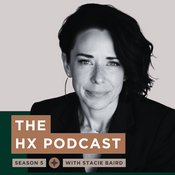
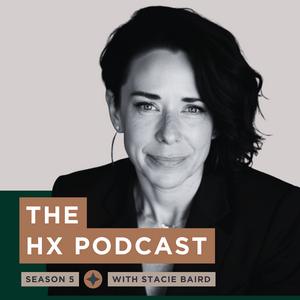
About The HX Podcast with Stacie Baird
A weekly podcast focused on stories that demonstrate how defining our own human experience (HX) leads to elevating the same across teams, organizations, families and communities. Each week
Podcast websiteListen to The HX Podcast with Stacie Baird, The Mel Robbins Podcast and many other podcasts from around the world with the radio.net app
Get the free radio.net app
- Stations and podcasts to bookmark
- Stream via Wi-Fi or Bluetooth
- Supports Carplay & Android Auto
- Many other app features
Get the free radio.net app
- Stations and podcasts to bookmark
- Stream via Wi-Fi or Bluetooth
- Supports Carplay & Android Auto
- Many other app features
The HX Podcast with Stacie Baird
Scan code,
download the app,
start listening.
download the app,
start listening.
 Canada - english