
Listen to this podcast in the app for free: Download for free in the App Store
radio.net
Sleep timer
Save favourites
437 episodes
Top Flow Researcher: How to Get 5 Days of Work Done in 1 Day | Steven Kotler
2026-09-29 | 1h 35 mins.Steven Kotler has spent 30 years studying the state that makes people 500% more productive, and he has a problem with the book everyone on your feed is quoting. In this conversation he explains what flow actually is, how to train it, and why "The Body Keeps the Score" got trauma wrong.
In this episode, Louisa sits down with the flow researcher and Flow Research Collective founder to go through the neurobiology underneath peak performance. He walks through the six characteristics psychologists use to define flow, the McKinsey study that found top leaders were 500% more productive in it, the DARPA experiment that cut skill acquisition time in half, and the data from 15,000 people who went through his eight-week training: a 73.4% increase in time spent in flow, anxiety down 41%, motivation up 40%.
Then he gets practical. Flow follows focus, so he lays out the triggers that drive it: why you should give your hardest task 90 to 110 minutes first thing, why task focus beats ego focus, why darkness amplifies divergent thinking and light amplifies convergent, and why the average leader now has 17 incoming channels instead of three. He explains why the two biggest blockers aren't neurological at all, why there are no "three things you can do Monday morning," and why grit should be the last tool you reach for, not the first.
They also get into AI, where Kotler is working on a paper arguing these products need warning stickers. He explains why working with AI produces a fake group flow, complete with the dopamine and the fast feedback loops, but missing the one thing real group flow gives you: someone to error-correct you.
Finally, the argument that will annoy your Instagram feed. Kotler's paper with Karl Friston, "The Body Does Not Keep the Score," makes the case that trauma isn't stored in your hips or your jaw. It's a prediction problem, not a storage problem. He explains the research showing roughly 70% of people return to baseline within 18 months, why a victim mindset locks you out of flow entirely, why body-based therapies sometimes work for reasons that have nothing to do with stored trauma, and what he learned about grief from running an animal sanctuary.
🤝 Sponsor The Neuro Experience:
https://open.substack.com/pub/neuroathletics/p/sponsor-tne
Reduce your risk of Alzheimer's with my science-backed protocol for women 30+:
https://go.neuroathletics.com.au/youtube-sales-page
Subscribe to The Neuro Experience for evidence-based conversations at the intersection of brain science, longevity, and performance.
Chapters:
00:00 Flow, AI, trauma and peak performance
01:03 What flow actually is
05:35 The six characteristics of flow
09:09 How long a flow state can last
11:29 Can you train yourself to enter flow?
15:57 Expertise, learning and pattern recognition
21:22 Why modern life makes flow harder
23:01 The triggers that create flow
26:01 Building a 90-minute focus window
30:07 Batch communication and protect your attention
35:12 Why Kotler dedicated his life to flow
38:46 How AI creates fake group flow
48:04 Sex differences, hormones and flow
53:59 Does the body keep the score?
59:41 Trauma as a prediction problem
1:11:20 Why peak performance has no shortcuts
1:13:20 Flow, grief and creating new memories
1:20:57 Measuring group flow
1:23:43 Does prayer help you enter flow?
1:27:30 First principles for getting into flow
Thank you to our sponsors:
Nuropod: 5% off https://nuropod.com/neuro
Timeline (Mitopure): https://timeline.com/NEURO - Get 20% off when you subscribe and save
Solius: https://solius.com - Use code NEURO for 10% off
I'm Louisa Nicola — clinical neurophysiologist, Alzheimer's prevention specialist, and founder of Neuro Athletics. My mission is to translate cutting-edge neuroscience into actionable strategies for cognitive longevity, peak performance, and brain disease prevention. If you're committed to optimizing your brain, reducing Alzheimer's risk, and staying mentally sharp for life, you're in the right place. Stay sharp. Stay informed. Join thousands who subscribe to the Neuro Athletics
Newsletter → https://bit.ly/3ewI5P0
Instagram: https://www.instagram.com/louisanicola_/
Twitter: https://twitter.com/louisanicola_Surgeon Exposes How Health Insurance Tricks You Into Overpaying | Dr. Elisabeth Potter
2026-09-22 | 57 mins.When Dr. Elisabeth Potter scrubbed out of surgery to take a call from UnitedHealthcare, she had no idea it would change her life. The patient in question was already under anesthesia, mid-mastectomy, and the insurer wanted her to justify an overnight hospital stay on the spot. They denied it anyway, and the patient was billed $100,000. Potter's video about that moment was watched by more than 26 million people, and it was followed by a cease-and-desist letter from a powerful Washington, D.C. law firm demanding she retract everything.
In this episode, Louisa sits down with the Austin-based reconstructive microsurgeon to unpack what really happens between a diagnosis and the care patients actually receive. She explains why she believes denial is a strategy, how prior authorizations, peer-to-peer calls, and appeals work in practice, and why roughly 1 in 5 in-network recommendations on some Affordable Care Act plans are rejected. She shares why a procedure she has performed for 14 years is still labelled "experimental," the year-long fight to get one young woman a mastectomy, and why a single billing code values a muscle-sacrificing TRAM flap the same as the muscle-sparing DIEP flap she specializes in.
You'll also hear what DIEP flap reconstruction involves and why she prefers it to implants for many patients, the personal cost of standing up to an insurance giant, including draining her savings and risking bankruptcy to keep her practice open, and the advocacy that followed, from a rally in Washington, D.C. to the Speak Free Act and the Patients Deserve Price Tags Act. She reveals how one hospital quoted a patient $240,000 for a surgery she could perform for $17,000, and lays out exactly what patients can do right now: record every appointment, demand an itemized estimate, and appeal everything.
Finally, she delivers the truth she feels morally obligated to tell every American: insurance isn't what you think it is, and you don't actually need it to get good care.
🤝 Sponsor The Neuro Experience:
https://open.substack.com/pub/neuroathletics/p/sponsor-tne
Reduce your risk of Alzheimer's with my science-backed protocol for women 30+:
https://go.neuroathletics.com.au/youtube-sales-page
Subscribe to The Neuro Experience for evidence-based conversations at the intersection of brain science, longevity, and performance.
Thank you to our sponsors:
Rho Nutrition: https://rhonutrition.com - Use code NEURO for 20% off liposomal glutathione
Timeline (Mitopure): https://timeline.com/NEURO - Get 20% off when you subscribe and save
I'm Louisa Nicola — clinical neurophysiologist, Alzheimer's prevention specialist, and founder of Neuro Athletics.
My mission is to translate cutting-edge neuroscience into actionable strategies for cognitive longevity, peak performance, and brain disease prevention. If you're committed to optimizing your brain, reducing Alzheimer's risk, and staying mentally sharp for life, you're in the right place.
Stay sharp. Stay informed. Join thousands who subscribe to the Neuro Athletics Newsletter → https://bit.ly/3ewI5P0
Instagram: https://www.instagram.com/louisanicola_/
Twitter: https://twitter.com/louisaNo, AI Isn’t Rotting Your Brain, It’s Actully Far Worse | Jim Kwik
2026-08-12 | 1h 4 mins.AI can write the essay, calculate the answer, summarize the book, and solve the problem before you have really had to think. Jim Kwik's concern is not just cognitive offloading. It's cognitive surrender. After 34 years teaching people how to learn, remember, read, and focus, he believes the real risk of AI is that technology starts doing so much of the mental work that we stop building the abilities we need most.
In this episode, Louisa sits down with Jim to unpack what happens when we outsource memory, judgment, creativity, and critical thinking. He explains why learning requires effort, why the brain follows a "use it or lose it" principle, and what research comparing students using ChatGPT, search engines, or no assistance suggests about cognitive engagement and recall. They also explore cognitive reserve, metacognition, attention, reading, sleep, and why doing difficult things may be one of the best ways to protect the brain.
Jim also shares the brain injury that shaped his life, the period when severe sleep apnea left him sleeping around 90 minutes a night, and the habits he now uses to protect his cognition. You'll hear why he says "mind before media," why reading is exercise for the brain, and how to use AI as augmented intelligence without giving up your own. The goal isn't to reject technology. It's to stay the pilot of your brain, not the passenger.
🤝 Sponsor The Neuro Experience:
https://open.substack.com/pub/neuroat...
Reduce your risk of Alzheimer's with my science-backed protocol for women 30+:
https://go.neuroathletics.com.au/yout...
Subscribe to The Neuro Experience for evidence-based conversations at the intersection of brain science, longevity, and performance.
TOPICS DISCUSSED
00:00 Are We Raising the Dumbest Generation Because of AI?
01:06 What Happens When Technology Thinks for Us?
02:03 The ChatGPT Study: What Happened to Memory and Recall
03:00 Cognitive Offloading vs Cognitive Surrender
05:01 Brain Rot, Doomscrolling, and the Attention Crisis
08:19 Why Reading Is Training for Your Brain
09:30 Neuroplasticity and the London Taxi Driver Study
12:20 “Natural Intelligence Is Becoming Artificial”
13:06 Why Asking Good Questions Matters More Than Ever
16:50 How Weak Critical Thinking Makes You Easier to Manipulate
19:31 Cognitive Reserve: Your Brain’s Savings Account
22:52 Cognitive Antifragility: Why the Brain Needs Challenge
25:34 How to Stay Human in the Age of AI
29:15 Metacognition: Thinking About Your Thinking
34:46 Why High Performers Protect Their Attention
40:46 Jim Kwik’s Childhood Brain Injury
45:27 Five Years of Severe Sleep Apnea
49:48 What You Do First Thing in the Morning Matters
52:47 Jim’s 3 + 3 Morning Exercise
54:00 “Mind Before Media”
57:22 Where AI Is Going Next
58:31 Artificial Intelligence vs Augmented Intelligence
60:19 The AI Risk Nobody Talks About: Losing Purpose
62:15 Be the Pilot of Your Brain, Not the Passenger
Thank you to our sponsors:
Kinsyn: https://KINSYN.com/neuro and promo code neuro for 20% off
Qualia Life: https://qualialife.com/NEURO - Get 50% off
Jones Road Beauty: https://jonesroadbeauty.com - Use code LOUISA to get a free gift with your first purchase
Timeline (Mitopure): https://timeline.com/NEURO
I’m Louisa Nicola - clinical neurophysiologist - Alzheimer’s prevention specialist - founder of Neuro Athletics.
My mission is to translate cutting-edge neuroscience into actionable strategies for cognitive longevity, peak performance, and brain disease prevention.
If you're committed to optimizing your brain- reducing Alzheimer’s risk - and staying mentally sharp for life, you’re in the right place.
Stay sharp. Stay informed. Join thousands who subscribe to the Neuro Athletics Newsletter → https://bit.ly/3ewI5P0
Instagram: https://www.instagram.com/louisanicola_/
Twitter : https://twitter.com/louisanicola_
Learn more about your ad choices. Visit megaphone.fm/adchoicesKeith Rabois: This One Number Predicts How Long You’ll Live! Why Stress Makes You More Successful & The “No Days Off” Rule!
2026-08-04 | 1h 7 mins.Keith Rabois has built companies, backed some of Silicon Valley's biggest successes, and earned a reputation as one of the sharpest strategic minds in venture capital. But when Louisa sat down with him, they barely spoke about investing. Instead, they explored the system behind his decision-making: the daily habits he believes keep his brain performing at an elite level. From treating himself like a professional athlete to measuring every workout for more than two decades, Rabois argues that the strongest predictor of longevity isn't genetics or supplements, it's VO₂ max.
He explains why every ambitious person should know their VO₂ max, why he believes improving it may have a greater impact than many of the world's biggest public health campaigns, and why he asks founders the same question before asking about their company. You'll hear why he wears a fitness tracker every day, why he hasn't missed more than seven workouts in seven years, and why he believes consistency, not intensity, is what compounds into extraordinary performance.
The conversation then moves beyond fitness into the psychology of excellence. Keith explains why he reads for an hour every day, how reading the encyclopedia as a child shaped the way he thinks, and why nearly every world-class founder, politician, and investor he admires shares one habit: relentless curiosity. He reveals how he learned to assess people within minutes, what he looks for on a LinkedIn profile before an interview, why preparation matters far more than talent, and the invisible work that most people mistake for luck.
They also dive into his longevity protocol: why creatine became a non-negotiable after reading the cognitive research, how he approaches blood work differently from traditional medicine, why he uses red light therapy and cryotherapy, the supplements he actually believes are worth taking, and why he refuses to use anything that could unnecessarily affect his brain. He explains why he would invest in brain-computer interfaces but never electively implant one himself, and why protecting the unique quirks of your brain may be more valuable than enhancing them.
Finally, they unpack one of his most controversial beliefs: stress isn't something to eliminate, it's something to embrace. Drawing on the research behind *The Upside of Stress*, Keith explains why people who reframe stress consistently outperform those who fear it, why challenge drives growth from the cellular level to leadership, and how high-performing teams balance obsession, accountability, and psychological safety.
🤝 Sponsor The Neuro Experience:
https://open.substack.com/pub/neuroat...
Reduce your risk of Alzheimer's with my science-backed protocol for women 30+:
https://go.neuroathletics.com.au/yout...
Subscribe to The Neuro Experience for evidence-based conversations at the intersection of brain science, longevity, and performance.
TOPICS DISCUSSED
00:00 Intro: Stress, VO₂ Max, and the Traits of Elite Performers
00:35 Why Keith Rabois Treats Himself Like a Professional Athlete
03:18 Why VO₂ Max Predicts How Long You'll Live
05:06 Performance Medicine vs Traditional Medicine
08:34 The Biomarker Every Founder Should Track
09:52 Creatine, Omega-3s, and the Supplements That Actually Matter
12:02 Red Light Therapy, Cryotherapy, and Recovery
13:45 Why Better Health Makes Better Investors
15:35 The Habits Shared by Elite Performers
18:15 Sleep, Resistance Training, and Cognitive Performance
22:44 Reading the Encyclopedia Cover to Cover
26:00 Why Every Successful Person Makes Time to Read
27:42 How Keith Evaluates Talent
29:30 Learning to Assess People in Minutes
33:02 Spotting the DoorDash Founder Early
36:15 What Makes Someone a "Barrel"
39:02 Why Exercise Improves Decision Making
42:04 The "No Days Off" Philosophy
43:46 Why Keith Refuses Elective Brain Implants
50:28 The Science Behind Embracing Stress
54:36 Building High-Performance Teams
57:08 Why Criticism Should Sometimes Be Public
59:00 Optimizing Time by Combining Work and Relationships
01:01:24 The Habit That Finally Made Him Quit Diet Coke
01:03:03 Why Luck Is Really Preparation Meeting Opportunity
Thank you to our sponsors:
Kinsyn: https://KINSYN.com/neuro and promo code neuro for 20% off
BASED Bodyworks: https://basedbodyworks.com/ Use code NEURO for 20% off
Learn more about your ad choices. Visit megaphone.fm/adchoicesWorld’s #1 Brain Surgeon: The Truth About Protecting Your Brain After 40
2026-07-30 | 59 mins.Ask most people what a brain chip does and they will tell you it reads your mind. Dr. Michael Lawton implants these devices, and he says that is not what comes off them. He is President and CEO of Barrow Neurological Institute in Phoenix, the hospital where Neuralink's first human implant was performed, and he has completed more than 10,000 brain operations and clipped around 5,500 aneurysms. Louisa sat down with him inside Barrow to find out what the electrodes actually pick up, how far the technology has come, and where it stops.
He walks through the surgery itself. The device goes into the hand knob, one small lobule of the motor cortex, where 64 electrodes have already become 108. The threads carrying them are about a tenth the thickness of a hair, so a robot inserts them while avoiding every arteriole on the surface. You'll hear what Nolan Arbaugh, Neuralink's first patient, can now do with a cursor at world record speed, and why Lawton can't keep up with him in a head to head. Then the correction. The data coming off these electrodes is a train of spikes, the same electrical language every neuron in your head is already using, and decoding it tells you whether a person meant to move a cursor left or right. Reading an emotion, or what someone thinks of you, is nowhere close.
The second half turns to the brain Lawton has spent 29 years operating inside. He describes cooling a patient to 15 degrees Celsius and stopping their circulation completely, which shrivels a giant aneurysm like a raisin and opens a short window to repair it. He explains why the hardest cases will still need a pair of human hands, and what he tells trainees who think their craft is disappearing. On brain aging he is direct about what works. He predicts alcohol will be viewed in 20 years the way cigarettes were viewed in the 60s, he takes zero supplements and no peptides, and he says exactly what he can and cannot see when he looks at a living brain on the table.
You'll also hear about Barrow's Mindgenuity Labs and its six mysteries of the mind, why he ranks movement as the first one to fall and consciousness as the one that may never be solved, what he believes consciousness physically is inside 86 billion neurons, and the ground underneath all of it. His sister died of a brain tumor. Louisa's father had a stroke in 2019. Both of them have watched this from the other side of the table.
*Reduce your risk of Alzheimer's with my science-backed protocol for women 30+:* https://go.neuroathletics.com.au/youtube-sales-page
Subscribe to The Neuro Experience for evidence-based conversations at the intersection of brain science, longevity, and performance.
_____
*TOPICS DISCUSSED*
00:00 Intro: The Brain Surgeon at Neuralink's First Hospital
00:39 The Guy Who Does the Cases Nobody Else Wants
02:17 A Day in the Life: 5:30am Starts and Three Surgeries
03:20 "Game Tape": Reviewing Every Operation Like an Athlete
04:24 The Surgeon Athlete and Why Surgery Is a Physical Skill
05:32 Fifty Years From Now: What Happens to Neurosurgery
06:11 The ROSA Robot and Mapping a Seizure Focus
08:16 Deep Brain Stimulation and Hitting an Exact Target
08:52 Will We All Be Operated On by Robots?
10:02 The Brain AVM: The One Case a Robot Can't Take
11:18 Why Bleeding Breaks a Robot: The Waymo Problem
13:15 What a Brain-Computer Interface Actually Does
14:49 The Hand Knob: 108 Electrodes in One Small Spot
15:50 Cursor Control at World Record Speed
16:31 Inside the Implant: Threads a Tenth the Width of a Hair
17:27 "No, the Chip Cannot Read Your Thoughts"
17:58 What the Device Really Reads: A Train of Spikes
19:18 From Movement to Sensation: What Comes Next
19:48 Why Restoring Sight Is So Much Harder
20:58 The 1943 Paper That Predicted All of This
22:37 Elon, Telepathy, and What's Actually Possible
23:00 Boosting Creativity and Intelligence in 50 Years
25:10 "When I Retire, We'll Be Treating Depression and Addiction"
26:04 Alzheimer's: Light Therapy and the Blood-Brain Barrier
27:11 Treating the Disease vs Preventing It
28:25 10,000 Operations: How He Feels About Robots Taking Over
29:54 Neuroplasticity: How Nolan's Brain Learned the Device
31:34 What Actually Changes at the Neuron Level
32:04 Patient Two and the Robotic Arm
32:42 5,500 Aneurysms: The Cases That Stay With Him
33:16 Cardiac Standstill: Cooling a Brain to 15 Degrees
35:46 What Separates a Great Surgeon From an Average One
36:17 Traits of Greatness: The Formula Nobody Has Cracked
37:21 The Phone Call in the Middle of a 16-Hour Surgery
39:35 "I Must Have Been Born for This"
41:26 Can You Tell How Old a Brain Is Just by Looking?
43:12 Why Alzheimer's Is Invisible in a Living Brain
44:14 What a Neurosurgeon Does to Protect His Own Brain
44:40 "Alcohol Will Be Viewed Like Cigarettes in the 60s"
45:13 Peptides, Injectables, and Zero Supplements
46:52 The Last Generation to Operate With Open Hands
48:10 How Louisa Found Him on Twitter in 2021
48:53 The Six Mysteries of the Mind
49:14 Which One Gets Solved First, and Which May Never
50:03 Is Consciousness in the Tissue?
51:39 Memory: The Circuitry We Still Can't Explain
53:18 Why Consciousness Is Harder Than Memory
55:12 Louisa's Father's Stroke
56:02 Advice for Anyone Watching a Parent Decline
56:21 His Sister's Brain Tumor and How He Carries It
57:38 A World Where Stroke Is an Outpatient Repair
58:40 Forty Years On, Finally at the Dawn
_______
*Thank you to our sponsors*
Timeline (Mitopure): https://timeline.com/neuro Mitopure now starts at $79
Ogee: https://ogee.com Use code XXXXX for a discount on the Crystal Contour Collection
Kion (Kion Aminos): https://getkion.com/neuro Use code XXXXX for a discount
Function Health: https://functionhealth.com/LouisaNicola Use code NEURO25 for a $25 credit
_______
I'm Louisa Nicola - clinical neurophysiologist - Alzheimer's prevention specialist - founder of Neuro Athletics.
My mission is to translate cutting-edge neuroscience into actionable strategies for cognitive longevity, peak performance, and brain disease prevention. If you're committed to optimizing your brain- reducing Alzheimer's risk - and staying mentally sharp for life, you're in the right place.
Stay sharp. Stay informed. Join thousands who subscribe to the Neuro Athletics Newsletter → https://bit.ly/3ewI5P0
Instagram: https://www.instagram.com/louisanicola_/
Twitter : https://twitter.com/louisanicola_
Learn more about your ad choices. Visit megaphone.fm/adchoices
More Education podcasts



Trending Education podcasts








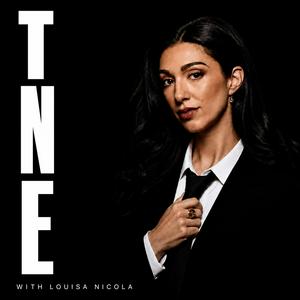
About The Neuro Experience
The Neuro Experience. Conversations with the greatest minds in Brain Science.
Podcast websiteListen to The Neuro Experience, How to Be a Better Human and many other podcasts from around the world with the radio.net app
Get the free radio.net app
- Stations and podcasts to bookmark
- Stream via Wi-Fi or Bluetooth
- Supports Carplay & Android Auto
- Many other app features
Get the free radio.net app
- Stations and podcasts to bookmark
- Stream via Wi-Fi or Bluetooth
- Supports Carplay & Android Auto
- Many other app features
The Neuro Experience
Scan code,
download the app,
start listening.
download the app,
start listening.
The Neuro Experience: Podcasts in Family
 Canada - english