PodcastsEducationPractical Stoicism

Practical Stoicism

Tanner Campbell
Practical Stoicism
Latest episode

325 episodes

  • Practical Stoicism

    Is Sex Work Un-Stoic?

    2026-2-01 | 19 mins.
    I am a public philosopher, it is my only job. I am enabled to do this job, in large part, thanks to support from my listeners and readers. You can support my work, keep it independent and online, at https://stoicismpod.com/members

    Looking for more Stoic content? Consider my 3x/week newsletter "Stoic Brekkie": https://stoicbrekkie.com

    Musonius Rufus Discourse 12: https://archive.org/details/MUSONIUSRUFUSSTOICFRAGMENTS

    In this episode, I respond to a candid listener email asking about the Stoic position on sex work. The question is not framed with hostility or judgment, and for that reason I take it seriously. This is not an episode condemning women, sex workers, or anyone’s personal choices. It is an attempt to think clearly and Stoically about consent, justice, harm, and choice.

    I begin by clarifying what the listener is actually asking. He is not asking whether men are wrong to engage sex workers, but whether women selling sex is unjust from a Stoic perspective. That distinction matters. Stoicism is not interested in purity rules or guilt. It is interested in whether actions are chosen rationally, freely, and without injustice.

    I then address my own bias. I do not like sex work as a practice, largely because I am skeptical that it is ever entirely free from coercion, manipulation, or long-term harm. I make that bias explicit so it can be accounted for rather than hidden. A Stoic answer requires setting personal discomfort aside and asking whether something is unjust, not whether it feels distasteful.

    To explore the classical position, I turn to Musonius Rufus and his extremely restrictive views on sex. Musonius argues that sex is only justified within marriage and only for procreation. I explain why I find this position impractical, overly rigid, and inconsistent with the rest of Stoic ethics. Stoicism is about rational choice, not outcome fixation, and reducing sex to reproduction ignores human health, intimacy, and context.

    From there, I outline what Stoicism actually cares about. Sex is unjust only when it involves harm, coercion, deception, addiction, or unfair leverage. If a sex worker is freely choosing her work, has the power to refuse clients, is not being forced by circumstance or threat, and if the client is acting honestly and without deception, then no injustice is clearly present. In that case, there is no Stoic violation simply because money is exchanged.

    I also stress that moral clarity does not end with permissibility. Just because something is not unjust does not mean it is automatically wise, healthy, or worth repeating. Stoicism asks us to remain attentive to who we are becoming through our choices. Avoiding injustice does not excuse us from remaining pro-social, reflective, and responsible for our future character.

    I conclude by emphasizing that Stoicism offers very little in the way of sexual rules, but a great deal in the way of ethical reasoning. The question is not whether sex work is “unstoic” in the abstract. The question is always whether a choice is rational, just, non-harmful, and aligned with the kind of person we are trying to become.

    Listening on Spotify? Leave a comment! Share your thoughts.

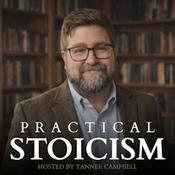
    Podcast artwork by Original Randy: https://www.originalrandy.com
    Learn more about your ad choices. Visit megaphone.fm/adchoices
  • Practical Stoicism

    🥳 Practical Stoicism's 5th Year! Plus: a Vinyl Edition?

    2026-1-30 | 8 mins.
    Interested in the Vinyl? Fill out this form please! https://stoicismpod.com/vinyl

    50% off the journaling program us the code 5YEARS50 at checkout: https://stoicjournaling.com

    50% off the daily practice app, use this link: https://studio.com/tanner/stoicism?c=Wu7tsqpP
    Learn more about your ad choices. Visit megaphone.fm/adchoices
  • Practical Stoicism

    Stoicism Is Not Compliance Nor Blind Obedience

    2026-1-25 | 22 mins.
    I am a public philosopher, it is my only job. I am enabled to do this job, in large part, thanks to support from my listeners and readers. You can support my work, keep it independent and online, at https://stoicismpod.com/members

    Looking for more Stoic content? Consider my 3x/week newsletter "Stoic Brekkie": https://stoicbrekkie.com

    The Iris Council: https://iriscouncil.com

    In this episode, I focus on the Stoic virtue of Justice and why it matters so urgently right now. Justice, in Stoicism, is not about legality or compliance with the law. It is about fairness. When we confuse what is legal with what is just, we risk excusing serious wrongdoing simply because it has been ratified by those in power.

    I explain why laws themselves can be unjust, especially when they are created or enforced by leaders who are not acting as protectors and benefactors of their people. If a law is out of alignment with what is fair, then the injustice lies with the law, not with those who recognize its unfairness. This is where Stoicism demands courage rather than passive acceptance.

    To ground this discussion, I turn to Musonius Rufus and his lecture On That Kings Too Should Practice Philosophy. Musonius argues that rulers must study philosophy because only philosophy teaches justice, self-control, courage, and rational judgment. A good king must be a good person, and a good person, by necessity, is a philosopher. Leadership without moral wisdom is not merely flawed; it is dangerous.

    I then broaden the lens to our responsibility as Stoics. Stoicism is not withdrawal or indifference. It is rational engagement with the world. The Cardinal Virtues work together: courage enables just action, temperance guides when to act, justice clarifies what is fair, and wisdom grounds us in our role as social beings. Leaders who divide humanity into “our kind” and “not our kind” fail this test of justice, regardless of what the law permits.

    Finally, I argue that our response to unjust leadership must itself be just. That requires self-examination. Before judging leaders, we must be capable of judging ourselves. A society that does not understand goodness cannot expect just leaders, and leaders drawn from such a society will reflect that confusion. What we need is not blind obedience or reckless outrage, but a serious moral recalibration rooted in Stoic philosophy.

    Listening on Spotify? Leave a comment! Share your thoughts.

    Podcast artwork by Original Randy: https://www.originalrandy.com
    Learn more about your ad choices. Visit megaphone.fm/adchoices

  • Practical Stoicism

    Toxic Soil

    2026-1-19 | 10 mins.
    I am a public philosopher, it is my only job. I am enabled to do this job, in large part, thanks to support from my listeners and readers. You can support my work, keep it independent and online, at https://stoicismpod.com/members

    Looking for more Stoic content? Consider my 3x/week newsletter "Stoic Brekkie": https://stoicbrekkie.com

    In this episode, I respond to a listener question prompted by the loss of a long-lived orchid. The plant did not die from neglect, but from care that was given in ignorance. What was meant to nurture it slowly caused harm. From that story comes a serious Stoic question: when does patience become self-abandonment? When does non-reactivity turn into tolerating conditions that prevent growth?

    I address a common misunderstanding of Stoicism that treats emotional detachment as a virtue in itself. Stoicism does not teach that we should endure all conditions indefinitely, nor that thriving means being comfortable, happy, or externally successful. To thrive, in the Stoic sense, is to pursue moral excellence. Health, wealth, and calm are not the measure. Character is.

    I make a distinction between the Stoic sage and the rest of us. A sage could flourish in any environment, but most of us are not sages. Environments shape the range of choices available to us. While our surroundings cannot force us to act viciously, they can limit what just and reasonable options are open to us. Poor environments narrow choice. Better environments expand it.

    From that, I argue that changing your environment can be a Stoic obligation, not a failure of resilience. If a situation consistently restricts your ability to live out your roles well, whether as a parent, partner, or moral agent, then leaving or changing that environment may be the just choice, provided it is done without abandoning responsibilities or harming others.

    Stoic endurance is not passive tolerance of harm. It is rational engagement with reality, including the reality that sometimes the right move is to change the soil, not blame the plant.

    Listening on Spotify? Leave a comment! Share your thoughts.

    Podcast artwork by Original Randy: https://www.originalrandy.com
    Learn more about your ad choices. Visit megaphone.fm/adchoices

  • Practical Stoicism

    Seneca: Avoiding Crowds and Group Think

    2026-1-11 | 22 mins.
    I am a public philosopher, it is my only job. I am enabled to do this job, in large part, thanks to support from my listeners and readers. You can support my work, keep it independent and online, at https://stoicismpod.com/members

    Looking for more Stoic content? Consider my 3x/week newsletter "Stoic Brekkie": https://stoicbrekkie.com

    In this episode, I revisit Seneca, a Stoic who often gets dismissed because of his wealth and his close relationship with Nero. I argue that these compromises do not disqualify him as a Stoic, and that he may, in fact, have been one of the most Stoic Roman thinkers precisely because he was aware of his flaws and struggled against them.

    I introduce and reflect on Seneca’s letter On Crowds, focusing on his warning that being around the wrong people can quietly undo our moral progress. Seneca admits that he often returns home worse than when he left, more indulgent, more ambitious, and more cruel, simply because he has been among others. I connect this to modern experiences of habit, addiction, and relapse, especially how difficult it is to maintain self-control when surrounded by people who excuse or celebrate the very behaviors we are trying to leave behind.

    I discuss how habits are formed through repetition, how crowds can weaken our resolve by offering permission and comfort, and why leaving unhealthy environments often comes at the cost of strained relationships. I also emphasize that anyone who has successfully changed a destructive habit deserves real admiration, because reversing habituated behavior requires extraordinary effort.

    Finally, I qualify Seneca’s position. While crowds driven by vice and groupthink are dangerous, not all crowds are. What we should avoid are antisocial and unjust groups, not communities of people sincerely trying to improve. The goal is to surround ourselves with those who want our moral progress and to be that person for others who are earlier on the path.

    Listening on Spotify? Leave a comment! Share your thoughts.

    Voice actor used was Sarah Kempton, her portfolio can be found here: https://www.sarahkempton.com

    Podcast artwork by Original Randy: https://www.originalrandy.com
    Learn more about your ad choices. Visit megaphone.fm/adchoices

More Education podcasts

About Practical Stoicism

Stoicism is the pursuit of Virtue (Aretê), which was defined by the Ancient Greeks as "the knowledge of how to live excellently," Stoicism is a holistic life philosophy meant to guide us towards the attainment of this knowledge through the development of our character. While many other Stoicism podcasts focus on explaining Ancient Stoicism in an academic or historical context, Practical Stoicism strives to port the ancient wisdom of this 2300-plus-year-old Greek Philosophy into contemporary times to provide practical advice for living today, not two millennia ago. Join American philosopher of Stoicism Tanner Campbell, every Monday and Friday, for new episodes.
Podcast website

Listen to Practical Stoicism, Something For Everybody and many other podcasts from around the world with the radio.net app

Get the free radio.net app

  • Stations and podcasts to bookmark
  • Stream via Wi-Fi or Bluetooth
  • Supports Carplay & Android Auto
  • Many other app features

Practical Stoicism: Podcasts in Family

Social
v8.3.1 | © 2007-2026 radio.de GmbH
Generated: 2/2/2026 - 10:40:22 AM