
Listen to this podcast in the app for free: Download for free in the App Store
radio.net
Sleep timer
Save favourites
57 episodes
S5E10: How To Maximize Student Learning with Dr. Zach Groshell
2026-08-31 | 42 mins.In the Season 5 finale of Reading Road Trip, Kate welcomes Dr. Zach Groshell, teacher, researcher, and author of Just Tell Them, for a practical, energizing conversation about explicit instruction. They unpack why novices need structured teaching, how classroom setup and routines support attention, and the power of techniques like choral response, turn‑and‑talk, and well‑chosen examples. It’s a clear, actionable episode for anyone committed to evidence‑aligned instruction and stronger learning outcomes.
Resources Mentioned in This Episode
An Indian Residential School Story — Written and illustrated by Joanne Robertson with Shirley Fletcher Horn
Just Tell Them: The Power of Explanations and Explicit Teaching — Dr. Zach Groshell
Progressively Incorrect Podcast — Hosted by Dr. Zach Groshell
ER Education — Dr. Groshell’s research‑aligned professional learning consultancyS5E9: How To Intensify Reading Intervention with Dr. Jon Potter
2026-08-24 | 1hIn this episode of Reading Road Trip, Kate welcomes Dr. Jon Potter, an expert in MTSS, literacy intervention, and data-based decision making, for an insightful conversation about the Taxonomy of Intervention Intensity. They explore seven evidence-based dimensions educators can use to intensify reading interventions, including strength, dosage, alignment, attention to transfer, and behavioral support. Dr. Potter shares practical examples and actionable guidance for using assessment and progress-monitoring data to make informed instructional decisions, helping educators intensify support in ways that truly meet students' needs. Whether you're a classroom teacher, interventionist, or school leader, this episode offers valuable tools for supporting struggling readers and improving literacy outcomes for all students.
Resources Mentioned in This Episode
The Touch of the Frog by Joseph Dandurand, illustrated by Eleanor Atkins
National Center on Intensive Intervention (NCII)
Taxonomy of Intervention Intensity (NCII)
Data-Based Individualization (DBI)
Center on Multi-Tiered System of Supports (MTSS Center)
Untangling Data-Based Decision Making: A Problem-Solving Model to Enhance MTSS, co-authored by Jason Harlacher, Jon Potter, and Adam Collins
Free Reproducibles and Resources for Untangling Data-Based Decision Making
Original Article: "The Taxonomy of Intervention Intensity" - Foundational article by Lynn Fuchs, Douglas Fuchs, and Amelia Malone describing the framework discussed throughout the episode.S5E8: Real Talk About Literacy with Nellie Caruso and Leigh Fettes
2026-08-17 | 56 mins.Kate is joined by literacy leaders and longtime collaborators Nellie Caruso and Leigh Fettes for a conversation packed with practical classroom ideas, evidence-based literacy strategies, and reflections on the current state of literacy education. From phonics and vocabulary instruction to data-driven decision making, French immersion, and system-level change, this episode offers actionable insights and inspiration for educators at every stage of their literacy journey.
Resources Mentioned in this Episode:
Cedar Mother by Brett D. Hewson illustrated by Natasha Donovan
Literacy & Learning Conference by IDA Ontario featuring Dr. Louisa Moats in April 2027!
ONlit
Son-au-graphe
Acadience PELI
The Art and Science of Teaching Primary Reading by Christopher Such
Shifting the Balance, Grades 3-5 by Katie Cunningham, Jan Burkins & Kari Yates
Explicit Instruction: Effective and Efficient Teaching by Anita Archer & Charles Hughes
Just Tell Them: The Power of Explanations and Explicit Teaching by Zach Groshell
Teaching Reading Sourcebook (3rd Edition) by Bill Honig, Linda Diamond, Linda Gutlohn, et al.
Effective Universal Instruction by Gibbons, Brown & Neebling
The Reading League Journal
IDA Perspectives on Language and LiteracyS5E7: Leading Literacy Change with Melissa Flynn & Kayla Abrams
2026-08-10 | 53 mins.In this episode, Kate welcomes Melissa Flynn, Executive Director of the First Nations School Board (FNSB) in the Yukon, and literacy coach Kayla Abrams to discuss how authentic relationships, community partnership, and evidence-based literacy instruction are driving meaningful change for learners. Melissa and Kayla share FNSB’s journey from balanced literacy to structured literacy, the importance of screening and assessment data, transparent communication with families, and the ways local cultures, languages, and communities are reflected in literacy learning. They also highlight encouraging signs of progress, including improved attendance, stronger reading outcomes, and growing learner confidence and engagement.
Our work at IDA Ontario, which is a registered charity, depends on the generosity of people like you. If you find the podcast helpful, please consider supporting our organization.
Resources Mentioned in This Episode
Just a Walk by Jordan Wheeler, illustrated by Christopher Auchter
First Nations School Board (FNSB), Yukon
UFLI Foundations (University of Florida Literacy Institute)
UFLI Toolbox - Free lesson resources, decodable passages, slide decks, and implementation supports.
IDA Ontario's Literacy and Learning Educator Conference (LitLearn) Annual conference featuring evidence-based literacy research and practice.
ONlit Free bilingual literacy resource hub created in partnership with Dyslexia Canada, IDA Ontario, and the Ontario Ministry of Education.
Reading Assessment Done Right by Kate Winn & Dr. Stephanie Stollar
Science of Reading with Nathaniel Swain Referenced as a source of learning and professional knowledge around evidence-based literacy instruction.S5E6: The Power of Oral Language with Dr. Charles Hulme
2026-08-03 | 40 mins.What role does oral language play in learning to read and in learning, period? In this episode of Reading Road Trip, Kate Winn welcomes Dr. Charles Hulme. Dr. Hulme explains why oral language is far more than a contributor to reading comprehension. Drawing on decades of research, he describes how children's early language skills provide the foundation for phonological awareness, decoding, and later literacy success. He also discusses the critical role language plays as the "medium of instruction" across all areas of education.
Listeners will learn about practical ways educators can assess and support oral language development, the importance of rich conversations and structured language instruction, and the connections between oral language difficulties and dyslexia. Dr. Hulme also shares insights from his research on effective language interventions and why their benefits can last for years.
Our work at IDA Ontario, which is a registered charity, depends on the generosity of people like you. If you find the podcast helpful, please consider supporting our organization.
Resources Mentioned in This Episode
Storyteller Skye: Teachings from My Ojibway Grandfather by Lindsay Christina King, illustrated by Carolyn Frank
OxEd & Assessment (Dr. Hulme's company)
LanguageScreen (oral language assessment tool discussed by Dr. Hulme) An evidence-based oral language screener for children ages 3.5–11 that assesses expressive vocabulary, receptive vocabulary, listening comprehension, and sentence repetition.
Nuffield Early Language Intervention (NELI) Dr. Hulme referenced the structured oral language intervention programs he and colleagues have developed; NELI is one of the best-known early language interventions emerging from this work.
Charles Hulme – Google Scholar
Book Display at Perth & District Union Public Library - Thank you Susan!
More Arts podcasts


Trending Arts podcasts



About Reading Road Trip
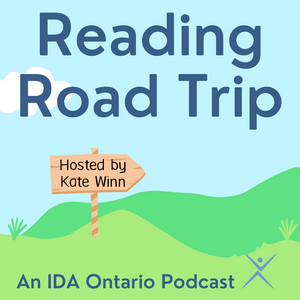
In each episode of Reading Road Trip from IDA Ontario, host and classroom teacher Kate Winn explores evidence-based literacy instruction with a fabulous guest. From researchers and authors to educators and advocates, they're all sharing practical ideas that can be implemented now in your class, school or district!
Support our podcast by making a donation on our website: https://www.idaontario.com/donate/
Podcast websiteListen to Reading Road Trip, Stories of Art and many other podcasts from around the world with the radio.net app
Get the free radio.net app
- Stations and podcasts to bookmark
- Stream via Wi-Fi or Bluetooth
- Supports Carplay & Android Auto
- Many other app features
Get the free radio.net app
- Stations and podcasts to bookmark
- Stream via Wi-Fi or Bluetooth
- Supports Carplay & Android Auto
- Many other app features
Reading Road Trip
Scan code,
download the app,
start listening.
download the app,
start listening.
 Canada - english