
Listen to this podcast in the app for free: Download for free in the App Store
radio.net
Sleep timer
Save favourites
40 episodes
How ADHD can shape obesity care with Dr. Lisa Ma
2026-10-22 | 46 mins.🎙️This episode is sponsored by an unrestricted education grant from Eli Lilly Canada
Advice like “prep your meals,” “build a routine” or “just be consistent” can sound straightforward in a clinical setting. But for someone living with ADHD and obesity, that advice may carry a much higher cognitive cost than it appears to on the surface.
Dr. Lisa Ma joins us on the podcast to explore how ADHD can intersect with obesity care through attention, executive function, reward processing, impulsivity and emotional regulation. We talk about what can happen when difficulties with execution are mistaken for a lack of knowledge or motivation, and how clinicians can make treatment plans more realistic for the person in front of them.
In this episode
What clinicians should understand about the relationship between ADHD and obesity
How executive function, attention and reward processing can affect everyday health behaviours
How ADHD stigma and weight stigma can compound shame and self-blame
Practical ways to make behaviour-change strategies more doable
How ACT, CBT, mindful eating and other tools can fit into clinical care
What to consider when ADHD treatment and obesity pharmacotherapy are both part of the care plan
Why sleep, mood and anxiety deserve attention alongside ADHD and obesity
How curiosity and collaboration can help clinicians adapt a plan when it is not working
Additional resources
Dr. Ma’s YouTube channel: https://utm.guru/utGV3
Written resources from Dr. Ma: https://utm.guru/utGV9
Canadian Adult Obesity Clinical Practice Guidelines: https://utm.guru/utGWf
Chapter: Effective psychological and behavioural interventions in obesity management: https://utm.guru/utGWj
Free course: Introduction to Behaviour Change Counselling for Obesity: https://utm.guru/utGWl
Become a Certified Bariatric Educator
Today’s conversation is a good reminder that obesity care takes knowledge, compassion and a commitment to reducing stigma. For healthcare professionals with experience in obesity care, Obesity Canada’s Certified Bariatric Educator exam is one way to have that knowledge recognized and stand out in the field.
The next CBE exam takes place on November 28, 2026 and applications must be submitted by November 2 to be eligible to write.
Learn more and apply: https://utm.guru/utGWo
Learning objectives
Analyze the intersection of ADHD, neurodivergence, and executive dysfunction in weight management, shifting focus from diagnostic labels to an individual's functional profile.
Apply personalized psychological and behavioral interventions (including ACT, CBT, and mindfulness-based strategies) to tailor behavior change for neurodivergent patients while mitigating weight bias and self-blame.
Evaluate the role of pharmacotherapy as a vital tool in the clinical toolbox to support executive function, impulse control, and appetite regulation.
Enjoying the podcast?
Support Scale Up Your Practice by:
Sharing this episode with a colleague or team member
Subscribing on your favourite podcast platform
Leaving a review to help more listeners find the show
Have a question or a topic you’d like us to cover?
Email us at scaleuppod@obesitycanada.ca
Disclosures
This episode script was developed using NotebookLM to synthesize complex source materials into a structured educational format. The tool was used to analyze the Canadian Obesity Education Competencies (COECs), the Obesity Canada Strategic Plan, and guest-specific research. Specific prompts were utilized to extract relevant learning objectives, map them to CanMEDS roles, and generate competency-based interview questions.
While NotebookLM assisted in drafting the narrative arc and educational framework, all content has been reviewed, fact-checked, and refined by the podcast hosts and Obesity Canada's clinical experts. This ensures the script aligns with current Clinical Practice Guidelines and authentically represents the lived experience perspective.The State of Obesity Care in Canada Report with Ian Patton & Jennifer Brown
2026-10-08 | 44 mins.What happens when healthcare professionals know what evidence-informed obesity care should look like, but the system makes that care difficult to deliver?
Ian Patton and Jennifer Brown join us on the podcast to unpack findings from The State of Obesity Care in Canada report and connect them to what clinicians and patients experience every day: limited referral pathways, uneven treatment coverage, gaps in psychological support, inconsistent access to metabolic bariatric surgery and the effects of weight bias at the system level.
In this episode
Why access to primary care does not necessarily mean access to evidence-informed obesity care
How gaps in medication coverage and psychological support affect both patients and clinical teams
Why access to metabolic bariatric surgery can look very different across Canada
How weight bias can shape the way obesity care is organized, funded and prioritized
What system barriers can look like in everyday primary care practice Pasted markdown
Practical ways healthcare professionals can use the report to support change within their own teams, organizations and communities
How clinicians can add their real-world experience to broader advocacy for better obesity care
Additional resources
Read The State of Obesity Care in Canada report: https://utm.guru/utelC
Send a letter to your elected officials asking them to support policies that help close the gaps in evidence-informed obesity care across Canada: https://utm.guru/utelC
Learning objectives
Analyze the core system gaps identified in the State of Obesity Care in Canada report and how structural barriers—such as uneven coverage, long wait times, and fragmented referral pathways—directly impact daily clinical practice.
Evaluate how systemic weight bias and the lack of public funding for two of the three core pillars of treatment (pharmacotherapy and psychological interventions) undermine chronic disease management and burden both patients and healthcare teams.
Apply clinician advocacy tools and evidence-based frameworks to partner with patients, challenge administrative hurdles, and drive provincial and federal systems-level change.
Enjoying the podcast?
Support Scale Up Your Practice by:
Sharing this episode with a colleague or team member
Subscribing on your favourite podcast platform
Leaving a review to help more listeners find the show
Have a question or a topic you’d like us to cover?
Email us at scaleuppod@obesitycanada.ca
Disclosures
This episode script was developed using NotebookLM to synthesize complex source materials into a structured educational format. The tool was used to analyze the Canadian Obesity Education Competencies (COECs), the Obesity Canada Strategic Plan, and guest-specific research. Specific prompts were utilized to extract relevant learning objectives, map them to CanMEDS roles, and generate competency-based interview questions.
While NotebookLM assisted in drafting the narrative arc and educational framework, all content has been reviewed, fact-checked, and refined by the podcast hosts and Obesity Canada's clinical experts. This ensures the script aligns with current Clinical Practice Guidelines and authentically represents the lived experience perspective.What patients may be thinking but not saying
2026-09-24 | 1h🎙️This episode is sponsored by an unrestricted education grant from Eli Lilly Canada
What a patient says in an obesity care conversation may not tell the whole story.
In this episode, Dr. Roshan Abraham and Michelle McMillan explore what can sit beneath silence, hesitation or agreement, especially after past experiences with weight bias or stigma. They share practical ways clinicians can build trust, ask better questions and make follow-up feel safer.
In this episode
Why silence or hesitation may reflect mistrust, not disinterest
How past weight bias can shape the next clinical conversation
Why asking permission can help build trust
How curiosity can uncover barriers a patient is experiencing
Why agreement does not always mean a plan feels realistic
How to make follow-up feel safer when treatment does not go as expected
Why health, function and patient goals matter beyond the number on the scale
Additional resources
Canadian Adult Obesity Clinical Practice Guidelines https://utm.guru/us5rk
Free course: Words Matter: The Consequences of Weight Bias and Stigmatizing Language https://utm.guru/us5rm
Free course: Obesity Assessment Essentials https://utm.guru/us5rp
Become a Certified Bariatric Educator
Today’s conversation is a good reminder that obesity care takes knowledge, compassion and a commitment to reducing stigma. For healthcare professionals with experience in obesity care, Obesity Canada’s Certified Bariatric Educator exam is one way to have that knowledge recognized and stand out in the field.
The next CBE exam takes place on November 28, 2026 and applications must be submitted by November 2 to be eligible to write.
Learn more and apply: https://utm.guru/us5rG
Enjoying the podcast?
Support Scale Up Your Practice by:
Sharing this episode with a colleague or team member
Subscribing on your favourite podcast platform
Leaving a review to help more listeners find the show
Have a question or a topic you’d like us to cover?
Email us at scaleuppod@obesitycanada.ca
Disclosures
This episode script was developed using NotebookLM to synthesize complex source materials into a structured educational format. The tool was used to analyze the Canadian Obesity Education Competencies (COECs), the Obesity Canada Strategic Plan, and guest-specific research. Specific prompts were utilized to extract relevant learning objectives, map them to CanMEDS roles, and generate competency-based interview questions.
While NotebookLM assisted in drafting the narrative arc and educational framework, all content has been reviewed, fact-checked, and refined by the podcast hosts and Obesity Canada's clinical experts. This ensures the script aligns with current Clinical Practice Guidelines and authentically represents the lived experience perspective.How patient voices can shape better obesity care with Marc Bains, Lisa Schaffer, and Ian Patton
2026-09-10 | 47 mins.🎙️This episode was made possible through the partnership between Obesity Canada and Boehringer Ingelheim in support of the Global Patient Charter Framework initiative.
Lived experience belongs at the table where care is designed.
Marc Bains, Lisa Schaffer and Ian Patton join Roshan and Michelle to talk about how the patient voice and lived experience can shape better care, stronger advocacy and more person-centred health systems. The conversation explores what obesity care can learn from HeartLife’s Patient and Caregiver Charter, and how Obesity Canada is beginning work toward a Canadian Patient Charter for Obesity.
In this episode
How lived experience can improve patient-centred obesity care
What obesity care can learn from HeartLife’s Patient and Caregiver Charter
How patient voice can shape healthcare policy, research and clinical practice
Why person-centred care starts by asking “what matters to you?”
How healthcare professionals can partner with people living with chronic disease
Why lived experience is essential to shared decision-making and better care
What Obesity Canada is building through the Canadian Patient Charter for obesity care
Additional resources
Heartlife Patient and Caregiver Charter: https://utm.guru/usIJa
Global Foundational Patient Charter for Obesity: https://utm.guru/urFpe
Learning objectives
Apply principles of meaningful patient partnership and co-design to foster collaborative, patient-centred care and a culture of safety and quality in clinical practice.
Analyze the role of patient partnership and multidisciplinary collaboration in improving access to evidence-based obesity care and reducing health inequities.
Evaluate opportunities to integrate lived experience into clinical practice, quality improvement initiatives, and healthcare system design to improve patient outcomes.
Enjoying the podcast?
Support Scale Up Your Practice by:
Sharing this episode with a colleague or team member
Subscribing on your favourite podcast platform
Leaving a review to help more listeners find the show
Have a question or a topic you’d like us to cover?
Email us at scaleuppod@obesitycanada.ca
Disclosures
This episode script was developed using NotebookLM to synthesize complex source materials into a structured educational format. The tool was used to analyze the Canadian Obesity Education Competencies (COECs), the Obesity Canada Strategic Plan, and guest-specific research. Specific prompts were utilized to extract relevant learning objectives, map them to CanMEDS roles, and generate competency-based interview questions.
While NotebookLM assisted in drafting the narrative arc and educational framework, all content has been reviewed, fact-checked, and refined by the podcast hosts and Obesity Canada's clinical experts. This ensures the script aligns with current Clinical Practice Guidelines and authentically represents the lived experience perspective.Creating safer clinical spaces for pregnant patients with Dr. Cynthia Maxwell
2026-08-27 | 39 mins.🎙️This episode is sponsored by an unrestricted education grant from Eli Lilly Canada
Pregnancy care should feel safe, respectful and supportive for every patient. But for pregnant patients living with obesity, clinical spaces can sometimes create anxiety before care even begins, from waiting room seating and equipment that do not fit, to conversations about weight, pregnancy risk and health that can feel stigmatizing.
In this episode of Scale Up Your Practice, Dr. Cynthia Maxwell joins Dr. Roshan Abraham and Michelle McMillan to discuss how healthcare professionals can create safer, more equitable pregnancy care for patients living with obesity. She shares practical strategies to reduce weight bias in maternal care, communicate pregnancy risks without blame, ask permission around weighing, and build healthcare environments where patients feel physically and psychologically safe.
In this episode
How to create safer pregnancy care for patients living with obesity
Why respectful maternal care starts with language, trust and psychological safety
How to talk about pregnancy risks, weight and health without blame or shame
Why asking permission before weighing patients can help reduce weight bias
How clinic design, equipment sizing and digital tools can affect patient safety
Why inclusive, stigma-free care benefits patients, families and healthcare teams
How healthcare professionals can build more welcoming clinical spaces across the full patient journey
Additional resources
Canadian Adult Obesity Clinical Practice Guidelines: https://utm.guru/ussjg
Chapter: Weight management over the reproductive years for adult women with obesity: https://utm.guru/ussjh
Pregnancy Obesity Medicine Surgery (POMS) Fellowship Program with Dr. Maxwell: https://utm.guru/ussji
Become a Certified Bariatric Educator
Today’s conversation is a good reminder that obesity care takes knowledge, compassion and a commitment to reducing stigma. For healthcare professionals with experience in obesity care, Obesity Canada’s Certified Bariatric Educator exam is one way to have that knowledge recognized and stand out in the field.
The next CBE exam takes place on November 28, and applications must be submitted by November 2 to be eligible to write.
Learn more and apply: https://utm.guru/ussjj
Learning objectives
Apply patient-centered, people-first language to collaboratively communicate potential pregnancy risk factors and monitor health metrics, ensuring the patient does not feel blamed or stigmatized.
Analyze the clinical environment—from waiting room seating to the sizing of medical equipment like blood pressure cuffs, speculums, and ultrasound limitations—to identify and resolve physical barriers that compromise patient safety and comfort.
Evaluate how systemic weight bias and scale aversion negatively impact maternal healthcare, and implement compassionate strategies to foster a more inclusive, welcoming hospital and clinic experience for expectant mothers.
Enjoying the podcast?
Support Scale Up Your Practice by:
Sharing this episode
Subscribing on your favourite podcast platform
Leaving a review
Have a question or a topic you’d like us to cover?
Email us at scaleuppod@obesitycanada.ca
Disclosures
This episode script was developed using NotebookLM to synthesize complex source materials into a structured educational format. The tool was used to analyze the Canadian Obesity Education Competencies (COECs), the Obesity Canada Strategic Plan, and guest-specific research. Specific prompts were utilized to extract relevant learning objectives, map them to CanMEDS roles, and generate competency-based interview questions.
While NotebookLM assisted in drafting the narrative arc and educational framework, all content has been reviewed, fact-checked, and refined by the podcast hosts and Obesity Canada's clinical experts. This ensures the script aligns with current Clinical Practice Guidelines and authentically represents the lived experience perspective.
More Health & Wellness podcasts






Trending Health & Wellness podcasts














About Scale Up Your Practice by Obesity Canada
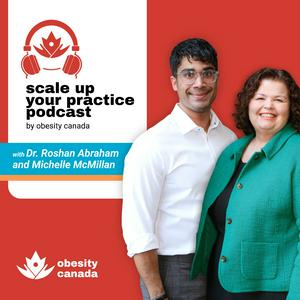
Tune into Scale Up Your Practice, Obesity Canada’s podcast for healthcare professionals.
Hosted by Dr. Roshan Abraham and Michelle McMillan, each episode dives into practical, evidence-informed conversations about obesity care—covering topics like weight stigma, patient-centered approaches, and the connection between obesity and other health conditions.
You’ll hear expert perspectives, real-world experiences, and insights to help you provide better, more compassionate care.
Listen now and scale up your practice.
🎧 Available on Spotify, Apple Podcasts, and YouTube.
Podcast websiteListen to Scale Up Your Practice by Obesity Canada, Sexe Oral and many other podcasts from around the world with the radio.net app
Get the free radio.net app
- Stations and podcasts to bookmark
- Stream via Wi-Fi or Bluetooth
- Supports Carplay & Android Auto
- Many other app features
Get the free radio.net app
- Stations and podcasts to bookmark
- Stream via Wi-Fi or Bluetooth
- Supports Carplay & Android Auto
- Many other app features
Scale Up Your Practice by Obesity Canada
Scan code,
download the app,
start listening.
download the app,
start listening.
 Canada - english