
Listen to this podcast in the app for free: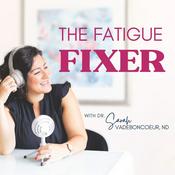 Download for free in the App Store
radio.net
Sleep timer
Save favourites
61 episodes
57. The One Where You Stop Fighting Your Body
2026-08-26 | 33 mins.In this final episode of The Fatigue Fixer, Dr. Sarah explores weight bias, internalized weight stigma, body image, self-acceptance, and the emotional exhaustion that can come from constantly trying to change your body.
After nearly three years and 56 episodes, Sarah shares why she’s decided to bring The Fatigue Fixer podcast to a close — and what this decision has taught her about letting go of things that are still “good” when they no longer feel fulfilling.
Fittingly, the conversation circles back to a theme from the very first episode: the clothes in our closets that no longer fit, and the quiet expectation that our bodies should somehow return to an earlier version of themselves.
Sarah explores how the desire to lose weight can become an enormous drain on our mental and emotional energy — and how, for many women, what they truly want isn’t necessarily a smaller body, but freedom from thinking about their weight all the time.
She unpacks the prevalence of weight bias in our culture, families, workplaces, friendships and healthcare system, as well as the harm caused when those beliefs become internalized. Weight stigma doesn’t motivate people toward better health. In fact, it can increase stress, contribute to disordered eating and bingeing, reduce engagement in physical activity, discourage people from seeking healthcare and make sustainable behaviour change even harder.
Ultimately, this episode is an invitation to consider a different path: one built on respect, compassion and the understanding that your body is your home — not a never-ending self-improvement project.
As The Fatigue Fixer comes to an end, Sarah leaves you with one final question:
What might become possible if you stopped spending so much energy fighting yourself?
Key Takeaways:
Keeping clothes that no longer fit can reinforce the belief that your current body is temporary, unacceptable or something you need to “fix”
The desire to lose weight can consume a tremendous amount of mental and emotional energy
Weight bias is deeply embedded in our culture and can come from family members, friends, workplaces, healthcare providers — and eventually ourselves
Internalized weight stigma can increase stress, contribute to binge eating and disordered eating behaviours, reduce motivation to exercise and negatively affect healthcare-seeking behaviours
Criticizing your body is not an effective strategy for creating sustainable healthy habits.
Internalized weight bias may also make maintaining weight loss more difficult
Self-compassion does not mean giving up on your health. It means pursuing health without making your worth conditional on your body size
Your body is not a project you need to continually improve. It is the place you get to live your life
Letting go of the fight with your body may free up energy for the things that matter much more
Additional Episodes You May Enjoy:
EP 1: The One Where Your Pants Don’t Fit
EP 56: The One Where Strong Feels Better Than Skinny with Leslie Robertson
EP 44: The One Where Exercise Stops Feeling So Hard
Dr. Sarah Vadeboncoeur is a Naturopathic Doctor, mom, and fatigue fixer who’s on a mission to help women fix their fatigue and get the health care they deserve. You can find her talking about all things fatigue on Instagram and learn more about her services at drsarahv.ca.
The Fatigue Fixer is produced by Story Studio Network.56. The One Where Strong Feels Better Than Skinny with Leslie Robertson
2026-08-12 | 46 mins.Have you ever looked at a photo of yourself and immediately started picking yourself apart?
If so, you're not alone
In this episode, I sit down with my friend Leslie Robertson—health and fitness coach, former NCAA Division I athlete, and owner of Prime Personal Training Studio—for an honest conversation about what it really takes to make peace with your changing body in midlife.
We talk about the pressure so many women feel to look a certain way, how our own bodies have changed over the years, and why chasing a smaller body often steals energy from the things that matter most. Instead, we explore what happens when you shift your focus toward strength, performance, health, and living a life that feels good.
We also share practical strategies for quieting negative body talk, navigating those difficult moments when photos or videos trigger self-criticism, and raising children who have a healthier relationship with food, movement, and their bodies than many of us grew up with.
If you've ever felt like your body has become the enemy, this conversation will remind you that you are so much more than your size—and that there is incredible freedom in learning to treat yourself with the same kindness you offer everyone else.
Key Takeaways:
Why body acceptance doesn't mean giving up on your health
How shifting from appearance-based goals to performance-based goals can transform your relationship with exercise
Why "leaner" doesn't automatically mean healthier—or happier
Practical ways to challenge negative body thoughts when they show up
How to redefine fitness around strength, energy, confidence, and longevity
Why the way we talk about our own bodies matters for the next generation
Simple ways to model a healthy relationship with food, exercise, and body image for your children
Encouragement for anyone struggling to accept the body they're living in today
Additional Episodes You May Enjoy:
EP 44. The One Where Exercise Stops Feeling So Hard
EP 19. The One Where You’re Stronger Than You Think
EP 1. The One Where Your Pants Don’t Fit
Connect with Leslie:
Leslie Robertson is a dedicated health and fitness coach with a rich background in athletic performance and wellness. As a former NCAA Division 1 athlete and physical education teacher, Leslie holds a B.Sc. in Human Performance from Southern Miss. With 17 years of experience, she’s the founder, owner, and head trainer at PRIME Personal Training studio, where she empowers women to achieve sustainable health goals.
As a passionate advocate for women’s health, Leslie understands the challenges busy moms face in regaining their energy and confidence. Through her coaching programs, she provides sustainable and realistic fitness strategies that seamlessly fit into the hectic lives of mothers.
Having navigated her own health challenges, Leslie believes that wellness shouldn’t be an all-or-nothing endeavour. Her approach focuses on building healthy foundations with simple, achievable steps, fostering a mindset that values progress over perfection, and creating long-term success that doesn’t add to the stress of daily life.
IG: Get Fit With Les
Website: PrimePersonalTraining.ca
💌 Leave Me a Voicemail!
I want to hear from YOU!
Share your questions, stories, or thoughts about this episode — your message might even be featured on a future show.
Leave me a voicemail here: Speakpipe.com/TheFatigueFixer
Dr. Sarah Vadeboncoeur is a Naturopathic Doctor, mom, and fatigue fixer who’s on a mission to help women fix their fatigue and get the health care they deserve. You can find her talking about all things fatigue on Instagram and learn more about her services at drsarahv.ca.
The Fatigue Fixer is produced by Story Studio Network.55. The One Where Honesty Gives You More Energy
2026-07-29 | 30 mins.What does a birthday cake have to do with your energy?
More than you might think.
In this solo episode, I share a surprisingly emotional story about my birthday cake—and how a simple disappointment uncovered a much bigger conversation about emotional suppression. For years, I believed that keeping the peace meant keeping my feelings to myself. But what I've learned is that suppressing emotions doesn't make them disappear. It simply costs us energy.
We explore why bottling up disappointment, anger, or sadness drains your emotional reserves, affects your physical health, and creates distance in your relationships. I also share the science behind emotional suppression, why speaking your truth is one of the most powerful forms of self-care, and practical ways to start expressing your needs with honesty and compassion.
If you've ever told yourself, "It's not a big deal," while quietly carrying the weight of hurt or resentment, this episode is for you.
Key Takeaways:
What emotional suppression is and why so many women fall into the habit of doing it
How holding in your feelings quietly drains your energy and contributes to emotional exhaustion
Why suppressing emotions can affect both your physical health and your relationships
The "beach ball underwater" analogy that explains why emotions eventually find a way to surface
Why expressing disappointment or anger isn't selfish—it's an important part of healthy communication
How speaking your truth can improve your self-esteem, relationships, and overall well-being
Simple ways to start recognizing and expressing your emotions before they become resentment
Why your voice may be one of the most powerful tools you have for protecting your energy
Additional Episodes You May Enjoy:
EP 51: The One Where Fibroids Get Mistreated with Nam Kiwanuka
EP 45: The One Where You Feel Safe to Speak Up with Elise Besler
EP 17: The One Where You Bite Your Tongue with Vivian Kaye
EP 9: The One Where You Didn’t Sign Up for This with Dr. Tracy Dalgleish
EP 2: The One Where You Hear Your Body Speak
💌 Leave Me a Voicemail!
I want to hear from YOU!
Share your questions, stories, or thoughts about this episode — your message might even be featured on a future show.
Leave me a voicemail here: Speakpipe.com/TheFatigueFixer
Dr. Sarah Vadeboncoeur is a Naturopathic Doctor, mom, and fatigue fixer who’s on a mission to help women fix their fatigue and get the health care they deserve. You can find her talking about all things fatigue on Instagram and learn more about her services at drsarahv.ca.
The Fatigue Fixer is produced by Story Studio Network.54. The One About Choosing Trust Over Control with Olga Lacroix
2026-07-15 | 51 mins.Calling all control freaks: if you’re exhausted from trying to hold everything and everyone together, this episode is for you.
Join me as I sit down with Olga Lacroix (Registered Social Worker and Master Certified Coach) to explore one of the biggest hidden drains on our energy: the need to control everything. We unpack why so many high-achieving women feel responsible for everyone else's happiness, why checking all the boxes still doesn't make us feel like we're enough, and how perfectionism quietly fuels burnout.
Together, we explore the difference between control and trust, why boundaries are really about changing our own behaviour—not someone else's—and how shifting from an outcome-focused mindset to a process-focused one can create more peace, confidence, and joy. We also discuss practical strategies like conducting an energy audit, noticing negative self-talk, practicing mindfulness, and redefining success in a way that actually supports your well-being.
If you've ever felt like you're doing everything "right" but still feel exhausted, overwhelmed, or like you're never quite enough, this conversation will leave you feeling lighter, more compassionate toward yourself, and with practical tools you can start using today.
Key Takeaways:
Why trying to control people and outcomes is one of the fastest ways to drain your emotional energy.
The surprising relationship between perfectionism, achievement, and chronic fatigue.
How childhood experiences often shape our need for control and external validation.
Why success doesn't automatically lead to fulfillment and what actually does.
The difference between an outcome mindset and a growth mindset.
How self-compassion helps reduce burnout more effectively than self-criticism.
Practical ways to challenge negative self-talk and become aware of your inner critic.
Why boundaries are about what you will do, not changing someone else's behaviour.
How to perform an energy audit to identify what's filling and draining your emotional, mental, and physical energy.
Why measuring your life by joy instead of productivity can completely change the way you make decisions.
Additional Episodes You Might Enjoy:
49. The One Where You’re in Energy Debt
41. The One Where Burnout Becomes a Wake-Up Call
12. The One Where You Redefine Success
Connect with Olga:
Olga Lacroix is a mom, Registered Social Worker, and Master Certified Coach who helps high achievers so they can feel calmer, more confident, and more fulfilled in both their personal and professional lives. With more than 20 years of experience, she works with ambitious professionals, leaders, entrepreneurs, and parents who are ready to break free from burnout, perfectionism, and relentless self-pressure, and build a life that feels successful on the inside as well as the outside.
Through her practice Olga’s Way, she helps clients overcome anxiety, self-doubt, people-pleasing, and chronic overwhelm so they can set healthier boundaries, trust themselves, strengthen their relationships, and lead with clarity and confidence. Her approach blends evidence-based psychology with practical coaching, compassion, and a healthy dose of real-life experience, empowering clients to create sustainable habits and meaningful results that last. When she’s not working with clients, you’ll find her spending time with her husband and son, writing, traveling, and exploring what it means to live a meaningful life beyond achievement.
IG: Olga's Way Coaching
Website: OlgasWay.com
💌 Leave Me a Voicemail!
I want to hear from YOU!
Share your questions, stories, or thoughts about this episode — your message might even be featured on a future show.
Leave me a voicemail here: Speakpipe.com/TheFatigueFixer
Dr. Sarah Vadeboncoeur is a Naturopathic Doctor, mom, and fatigue fixer who’s on a mission to help women fix their fatigue and get the health care they deserve. You can find her talking about all things fatigue on Instagram and learn more about her services at drsarahv.ca.
The Fatigue Fixer is produced by Story Studio Network.53. The One About Getting Out of Fight or Flight Mode with Valerie Beaulieu
2026-07-01 | 47 mins.Nervous system dysregulation, chronic pain, migraines, fatigue, and perfectionism are all connected in ways most of us were never taught to understand.
In this episode, I sit down with Valerie Beaulieu (former Athletic Therapist, Migraine and Neuroplasticity Expert) to explore what the nervous system actually does, what nervous system dysregulation looks like in real life, and why so many high-achieving women find themselves stuck in cycles of exhaustion, pain, people-pleasing, and survival mode.
We discuss the role fear plays in chronic symptoms, how fight, flight, freeze, and fawn responses show up in everyday life, and why silence can feel so uncomfortable when your nervous system is constantly scanning for danger. Valerie also shares the latest thinking on neuroplastic pain, including how the brain can continue to generate pain signals even after an injury has healed, and how our beliefs, emotions, and internal narratives can influence healing.
If you've ever wondered why you feel stuck despite doing all the "right" things, this conversation offers a fascinating perspective on the connection between your brain, body, emotions, and energy.
Key Takeaways:
Your nervous system is constantly gathering information and determining whether you are safe or under threat.
Many women spend years operating in survival mode without realizing it.
Fight, flight, freeze, and fawn responses can show up as perfectionism, overworking, people-pleasing, procrastination, or feeling stuck.
Fear is often at the root of chronic stress patterns, even when it appears as anger, guilt, shame, or frustration.
The stories and beliefs you attach to your symptoms can influence how your brain experiences pain and fatigue.
Neuroplastic pain is real pain generated by learned brain pathways rather than ongoing tissue damage.
Chronic pain and chronic fatigue are not "all in your head," but your brain plays an important role in how symptoms are experienced.
Additional Episodes You Might Enjoy:
32. The One That Sets The Record Straight on Cortisol
45. The One Where You Feel Safe To Speak Up with Elise Besler
22. The One Where You Take Care of Everyone But Yourself with Amanda Rocheleau
Connect with Valerie:
Valerie Beaulieu is a former Athletic Therapist, Migraine and Neuroplasticity Expert with over 17 years of experience helping people overcome acute sports-related injuries, chronic pain, and stress-related symptoms. After years of working with everyone from everyday individuals to Olympic athletes, she discovered that achieving freedom from chronic pain and symptoms goes far beyond the physical body and is deeply connected to the brain, nervous system, emotions, and identity patterns.
Today, Valerie specializes in helping women break free from chronic migraines, pain, and symptoms by retraining the brain and nervous system through a powerful mind-body approach. Through her speaking, coaching, and signature R.I.S.E. program, she empowers women to stop living in survival mode, regain trust in their bodies, and reclaim agency over their health and lives.
Linktree: Linktr.ee/ValerieMindBodyRx
IG: @valerie_mindbody_coach
FB: Valerie Beaulieu - Mind-Body Living Rx
YouTube: Valerie Beaulieu | Rise Above Pain
💌 Leave Me a Voicemail!
I want to hear from YOU!
Share your questions, stories, or thoughts about this episode — your message might even be featured on a future show.
Leave me a voicemail here: Speakpipe.com/TheFatigueFixer
Dr. Sarah Vadeboncoeur is a Naturopathic Doctor, mom, and fatigue fixer who’s on a mission to help women fix their fatigue and get the health care they deserve. You can find her talking about all things fatigue on Instagram and learn more about her services at drsarahv.ca.
The Fatigue Fixer is produced by Story Studio Network.
More Health & Wellness podcasts







Trending Health & Wellness podcasts












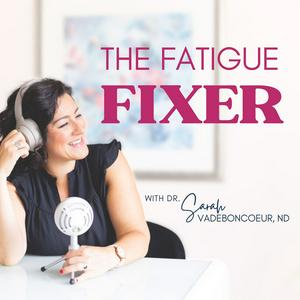
About The Fatigue Fixer
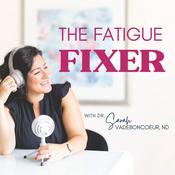
Join Dr. Sarah Vadeboncoeur, a Naturopathic Doctor who's been the guiding light for thousands of women struggling with fatigue for over a decade. Dr. Sarah challenges the common misconception that feeling drained equates to being flawed. In "The Fatigue Fixer", she offers insights into our body's messages, reminding us that our tiredness isn't a sign of weakness, but a signal of misalignment. By truly understanding and caring for our bodies, we can navigate the road to better energy.In a world filled with immeasurable expectations, Sarah aims to support every woman, from the hands-on mom to the aspiring Prime Minister. Dive in as we dissect the physical, emotional and societal pressures draining our energy, and together, shift the narrative around fatigue. Your exhaustion has a story; let's rewrite it together.Get your daily dose of fatigue fixing tips over on Dr. Sarah’s Instagram @sarahvadeboncoeur or visit her website at www.docereclinic.ca to learn more about how you can work with her.
Podcast websiteListen to The Fatigue Fixer, Mayim Bialik's Breakdown and many other podcasts from around the world with the radio.net app
Get the free radio.net app
- Stations and podcasts to bookmark
- Stream via Wi-Fi or Bluetooth
- Supports Carplay & Android Auto
- Many other app features
Get the free radio.net app
- Stations and podcasts to bookmark
- Stream via Wi-Fi or Bluetooth
- Supports Carplay & Android Auto
- Many other app features

The Fatigue Fixer
Scan code,
download the app,
start listening.
download the app,
start listening.
 Canada - english

