
Listen to this podcast in the app for free: Download for free in the App Store
radio.net
Sleep timer
Save favourites
397 episodes
397. Testosterone, hair loss, the female prostate and more with Dr. Yih
2026-11-15 | 46 mins.Episode 397: Dr. Jessica Yih on Sexual Health, Testosterone, and Hair Loss
Does testosterone always make your hair fall out?
No. But that’s what a lot of people, including a lot of doctors, believe.
This week I’m joined by my friend Dr. Jessica Yih, a professor at UC Irvine who works in sexual health. We talk about why research takes so long to reach patients, what it’s like being a woman in urology, why informed consent before pelvic surgery should include sexual function, and what the evidence actually says about testosterone and hair loss.
It’s a wide-ranging and honest conversation about how sexual medicine research and care really work, and where they still fall short.
In this episode:
Research barriers. Bureaucratic hurdles and open-access publishing, including research on vaginal estrogen and on testosterone and hair loss. Research delays cost lives and slow progress.
Women in urology. Why women are still underrepresented in urology and academic medicine, and why mentorship and representation matter.
Dr. Yih’s path to urology. An elective, and placing a ureteral stent, drew her to the field.
Rethinking anatomy. How learning about the female prostate and Skene’s glands changed her understanding of sexual anatomy.
Informed consent after pelvic surgery. Patients deserve to hear about possible changes in sexual function. That doesn’t mean don’t have surgery. It means know what you’re signing up for.
Fellowship work. Persistent sexual side effects after SSRIs, post-finasteride syndrome, and how hard it can be to find a clinician who understands either one.
Testosterone and hair loss. We challenge the assumption that testosterone always causes hair loss. We go through the evidence and the open questions, the difference between serum hormone levels and what may be happening at the follicle, and how to think about hair loss before starting treatment.
The placebo effect. What it tells us about testosterone studies.
Conference highlights. Pellets versus gel, injections, lab testing and assay accuracy, prescribing practices, and new research on women’s sexual health.
Advocacy. Why public comments to the FDA matter.
Blood flow and sexual response. A small study of sublingual testosterone combined with sildenafil, and a vibrator study measuring clitoral blood flow. Blood flow is key to sexual health and response.
Looking ahead. Education, mentorship, and Dr. Yih’s work in sexual health across genders and in male infertility.
https://www.instagram.com/drsexandsperm/
As always, this podcast is for educational purposes and is not a substitute for individualized medical advice — talk to your own doctor about your own health.
Subscribe, leave a review, and share this episode with someone who needs it.
🎙️ You Are Not Broken is available on Apple Podcasts, Spotify, and wherever you listen.
Take my Adult Sex Ed Master Class:
My Website
Interested in my sexual health and hormone clinic? Clinic is Open
Listen to this podcast on Pinnacle to earn CME
Thanks to our sponsor: Addyi, the little pink pill. To find out if Addyi is right for you, go to addyi.com/notbroken and use code NOTBROKEN for a $10 telemedicine appointment.And great news: with commercial insurance coverage Addyi is as little as $20 a month! Visit Addyi.com/notbroken. Eligible patients only. Restrictions apply. See Full Prescribing Information including Boxed Warning at addyi.com/pi
This episode is sponsored by Joi and Blokes.
If you’ve been wondering whether hormones could be playing a role in how you feel, Joi and Blokes can help you get answers. Start with comprehensive lab testing, then work with a licensed clinician to understand your results and discuss treatment options that may be right for you.
Visit JoiAndBlokes.com/notbroken and use code NOTBROKEN for 65% off labs and 20% off treatment.
See Privacy Policy at https://art19.com/privacy and California Privacy Notice at https://art19.com/privacy#do-not-sell-my-info.396. Hope Is Not a Strategy — Dr. Marty Klein on Communication, Masculinity, and What Makes Sex Satisfying
2026-11-08 | 40 mins.Episode 396: Hope Is Not a Strategy — Dr. Marty Klein on Communication, Masculinity, and What Makes Sex Satisfying
What if the biggest obstacle in your sex life isn’t your body? What if it’s your expectations?
This week I sit down with sex therapist Dr. Marty Klein for a wide-ranging conversation about communication, intimacy, and what actually happens in a sex therapist’s office. We start with ego. When it drives the conversation, we listen to respond instead of to understand, and then we wonder why we feel disconnected. Marty also shares what he sees in his Silicon Valley practice, where a culture built on optimization and problem-solving shapes how people approach intimacy. We talk about people turning to AI for relationship advice. It’s convenient, and it might simplify things. But it can’t replace the depth of a real human connection, and it may just tell your ego what it wants to hear.
Then we get into sexual function. Expectations play a huge role in erectile dysfunction, and good therapy starts by asking a simple question: what do you actually want? Marty explains why defining a “satisfying sexual event” matters so much, especially for older adults looking for intimacy. His blunt reminder: hope alone is not a treatment plan.
We also take on modern masculinity. We talk about the manosphere, the anger many young men are carrying, and why anger is not an effective way to attract a partner. Many young men feel isolated and are struggling with the social skills dating requires. Early wounds to masculinity can shape a man’s confidence for decades, and Marty explains why men often have a harder time recovering from them than women. We close with trauma, relaxation, and the body. Relaxation matters more than intensity. Sex is an idea as much as a physical act. And you can have a full, rich life without being defined by what happened to you.
In this episode, we talk about:
How ego undermines communication, and the habit of listening to respond instead of to understand
Active listening, open-ended questions, and validating feelings
How Silicon Valley’s culture shapes the way people approach intimacy
AI as a relationship advisor: what it offers, and what it can’t replace
What sex therapists actually do, and why they help with non-sexual relationship problems too
The role of expectations in erectile dysfunction
Why defining a “satisfying sexual event” is central to sex therapy
The unique challenges older adults face in finding intimacy
Why therapy should focus on what clients want to achieve, and why hope alone is not a strategy
Why understanding the context of sexual dysfunction is essential
The manosphere, and why anger doesn’t attract partners
Isolation and the social skills deficit many young men face in dating
The long-lasting effects of early wounds to masculinity
How trauma affects identity and recovery
Reconnecting with your body for a more fulfilling sex life
Why relaxation matters more than intensity
Sex as an idea, not just a physical act
Building a fulfilling life after trauma
https://www.instagram.com/doctormartyklein
https://www.youtube.com/c/DrMartyKlein1
Dr. Klein's Book "Sexual Intelligence"
As always, this podcast is for educational purposes and is not a substitute for individualized medical advice — talk to your own doctor about your own health.
Subscribe, leave a review, and share this episode with someone who needs it.
🎙️ You Are Not Broken is available on Apple Podcasts, Spotify, and wherever you listen.
Take my Adult Sex Ed Master Class:
My Website
Interested in my sexual health and hormone clinic? Clinic is Open
Listen to this podcast on Pinnacle to earn CME
Thanks to our sponsor: Addyi, the little pink pill. To find out if Addyi is right for you, go to addyi.com/notbroken and use code NOTBROKEN for a $10 telemedicine appointment.And great news: with commercial insurance coverage Addyi is as little as $20 a month! Visit Addyi.com/notbroken. Eligible patients only. Restrictions apply. See Full Prescribing Information including Boxed Warning at addyi.com/pi
This episode is sponsored by Joi and Blokes.
If you’ve been wondering whether hormones could be playing a role in how you feel, Joi and Blokes can help you get answers. Start with comprehensive lab testing, then work with a licensed clinician to understand your results and discuss treatment options that may be right for you.
Visit JoiAndBlokes.com/notbroken and use code NOTBROKEN for 65% off labs and 20% off treatment.
See Privacy Policy at https://art19.com/privacy and California Privacy Notice at https://art19.com/privacy#do-not-sell-my-info.395. Numb, Addicted, or Replaced? Vibrator Myths Busted
2026-11-01 | 1h 3 mins.Vibrator 101: Everything You Wanted to Know, But Were Too Embarrassed to Ask
Use code "notbroken20" at elixirplay.com for 20% off
Dr. Kelly Casperson explores vibrator basics through anatomy, blood flow, arousal, and pleasure. She discusses why sex education often misses important information about women’s bodies, reviews research on vibrator use, demonstrates different toy styles, and answers audience questions about squirting, pain, prolapse, and beginner-friendly options.
The conversation emphasizes education over shame: understanding the clitoris, allowing time for arousal, and seeing vibrators as one possible tool for sexual wellbeing—not a replacement for a partner or a one-size-fits-all solution.
Key topics
How blood flow relates to genital arousal and sexual function
The clitoris, the primary organ of orgasm for most women, and how it relates to the vagina
How desire can be responsive and emerge during or after arousal
Why arousal matters before penetration, particularly when pain or low hormones are involved
The G spot as a sensitive area associated with clitoral anatomy
Water-based, silicone-based, and oil-based lubricants
Research on vibrator use and sexual function, satisfaction, and pelvic health
Kelly’s HEAL framework: hormones, education, arousal and vibration, and lube and moisturizers
Different vibrator styles and considerations when choosing one
Myths about numbness, replacing partners, or becoming “addicted” to vibrators
Audience questions about squirting, prolapse, clitoral hood fusion, pain after orgasm, and antidepressants
As always, this podcast is for educational purposes and is not a substitute for individualized medical advice — talk to your own doctor about your own health.
Subscribe, leave a review, and share this episode with someone who needs it.
🎙️ You Are Not Broken is available on Apple Podcasts, Spotify, and wherever you listen.
Take my Adult Sex Ed Master Class:
My Website
Interested in my sexual health and hormone clinic? Clinic is Open
Listen to this podcast on Pinnacle to earn CME
Thanks to our sponsor: Addyi, the little pink pill. To find out if Addyi is right for you, go to addyi.com/notbroken and use code NOTBROKEN for a $10 telemedicine appointment.And great news: with commercial insurance coverage Addyi is as little as $20 a month! Visit Addyi.com/notbroken. Eligible patients only. Restrictions apply. See Full Prescribing Information including Boxed Warning at addyi.com/pi
This episode is sponsored by Joi and Blokes.
If you’ve been wondering whether hormones could be playing a role in how you feel, Joi and Blokes can help you get answers. Start with comprehensive lab testing, then work with a licensed clinician to understand your results and discuss treatment options that may be right for you.
Visit JoiAndBlokes.com/notbroken and use code NOTBROKEN for 65% off labs and 20% off treatment.
See Privacy Policy at https://art19.com/privacy and California Privacy Notice at https://art19.com/privacy#do-not-sell-my-info.394. Testicular Pain and Stage 4 Breast Cancer
2026-10-25 | 1h 2 mins.Episode 394 – Dr. Susan MacDonald on Testicular Pain, Pelvic Floor Dysfunction, and Rebuilding Life After Stage 4 Breast Cancer
Normal scan. Normal labs. Still in pain. Now what?
Dr. Casperson is joined by fellow urologist Dr. Susan MacDonald for a conversation that starts with male pelvic pain and ends somewhere much more personal. They discuss why men with testicular pain are so often dismissed, how chronic pain gets mislabeled, and why pelvic floor dysfunction and referred pain get missed again and again.
Then Dr. MacDonald shares her own story. She was diagnosed with de novo stage 4 bilateral breast cancer after missing her own early symptoms, and she describes what it's like to go from surgeon to patient. She talks openly about fatigue, grief, hormonal changes, and the career pivot she never chose. She also explains why she now wants to help patients move beyond survival mode toward resilience and joy.
In this episode:
How Dr. MacDonald found urology by accident (Grand Rounds, free pizza, and the realization that it's a surgical specialty)
Why male reconstruction and urethroplasty won her over
What urethral strictures are, and why tissue from inside the cheek is used to repair them
How common testicular and pelvic pain is. She estimates about 5% of urology consults.
Why chronic pain is harder to treat than a kidney stone, and why normal imaging doesn't mean the pain isn't real
The harm of forcing a diagnosis, and patients carrying "heavy bricks in a backpack" of labels
Thinking through a differential diagnosis out loud, with the patient as a partner
Placebo effects, and why antibiotics can seem to help even when infection isn't the cause
Pelvic floor dysfunction as the missing center of the Venn diagram, and the value of working with pelvic floor physical therapists
Her stage 4 breast cancer diagnosis, and how surgeons are trained to ignore their own bodies
Living through treatment: fatigue, insomnia, arthritis, hormonal changes, and grief
Why leaving full-time academic surgery was forced, not voluntary, and her pivot into video education and speaking
Sex after cancer, and why the messaging for men and women is so different
Tart cherry juice and hot flashes
Dr. MacDonald Linked In
As always, this podcast is for educational purposes and is not a substitute for individualized medical advice — talk to your own doctor about your own health.
Subscribe, leave a review, and share this episode with someone who needs it.
🎙️ You Are Not Broken is available on Apple Podcasts, Spotify, and wherever you listen.
Take my Adult Sex Ed Master Class:
My Website
Interested in my sexual health and hormone clinic? Clinic is Open
Listen to this podcast on Pinnacle to earn CME
Thanks to our sponsor: Addyi, the little pink pill. To find out if Addyi is right for you, go to addyi.com/notbroken and use code NOTBROKEN for a $10 telemedicine appointment.And great news: with commercial insurance coverage Addyi is as little as $20 a month! Visit Addyi.com/notbroken. Eligible patients only. Restrictions apply. See Full Prescribing Information including Boxed Warning at addyi.com/pi
This episode is sponsored by Joi and Blokes.
If you’ve been wondering whether hormones could be playing a role in how you feel, Joi and Blokes can help you get answers. Start with comprehensive lab testing, then work with a licensed clinician to understand your results and discuss treatment options that may be right for you.
Visit JoiAndBlokes.com/notbroken and use code NOTBROKEN for 65% off labs and 20% off treatment.
See Privacy Policy at https://art19.com/privacy and California Privacy Notice at https://art19.com/privacy#do-not-sell-my-info.393. Stronger in Midlife: Muscle, Hormones, and Longevity for Women
2026-10-18 | 1h 25 mins.Dr. Casperson is joined by Dr. Rebbecca Hertel, DO, MSCP, for a candid conversation about getting stronger through perimenopause and beyond. They talk about how hormonal shifts change training, recovery, and body composition. They also cover why bone health deserves your attention now, and how to read research and lab results with a critical eye.
Along the way, Dr. Hertel explains what osteopathic medicine actually is. She also shares why your pain might not be coming from where you feel it. The two dig into protein, GLP-1s, testosterone, and hormone therapy, and why finding a clinician who listens matters as much as any prescription.
In this episode:
What osteopathic medicine and osteopathic manipulative treatment (OMT) involve
Why pain can show up somewhere other than its source
How perimenopause affects muscle, recovery, sleep, and body composition
Why gaining muscle in midlife takes longer, and why it's still worth it
Bone health, fracture prevention, and the case for resistance training
Protein, hydration, and fueling your body during weight loss
GLP-1 medications and strategies to help preserve muscle
Hormone approaches in perimenopause and postmenopause
Why hormone therapy is not contraception
Testosterone: symptoms, side effects, and how to think about lab results
Health span, independence, and prevention across the lifespan
Hormone stigma and the need for better education at puberty, postpartum, and midlife
Dr. Hertel's IG
Dr Hertel's Website
As always, this podcast is for educational purposes and is not a substitute for individualized medical advice — talk to your own doctor about your own health.
Subscribe, leave a review, and share this episode with someone who needs it.
🎙️ You Are Not Broken is available on Apple Podcasts, Spotify, and wherever you listen.
Take my Adult Sex Ed Master Class:
My Website
Interested in my sexual health and hormone clinic? Clinic is Open
Listen to this podcast on Pinnacle to earn CME
Thanks to our sponsor: Addyi, the little pink pill. To find out if Addyi is right for you, go to addyi.com/notbroken and use code NOTBROKEN for a $10 telemedicine appointment.And great news: with commercial insurance coverage Addyi is as little as $20 a month! Visit Addyi.com/notbroken. Eligible patients only. Restrictions apply. See Full Prescribing Information including Boxed Warning at addyi.com/pi
This episode is sponsored by Joi and Blokes.
If you’ve been wondering whether hormones could be playing a role in how you feel, Joi and Blokes can help you get answers. Start with comprehensive lab testing, then work with a licensed clinician to understand your results and discuss treatment options that may be right for you.
Visit JoiAndBlokes.com/notbroken and use code NOTBROKEN for 65% off labs and 20% off treatment.
See Privacy Policy at https://art19.com/privacy and California Privacy Notice at https://art19.com/privacy#do-not-sell-my-info.
More Health & Wellness podcasts


Trending Health & Wellness podcasts








About You Are Not Broken
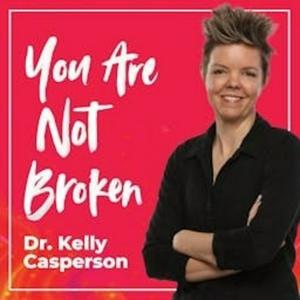
Welcome to the podcast that rewrites everything you thought you knew about sex, hormones, and midlife. I help women—and the people who love them—reconnect with their bodies, their minds, and their partners through science, mindset, and a whole lot of humor. Whether you’re navigating perimenopause, rediscovering desire, or just curious what’s possible, this show will remind you: you are not broken. (No medical advice here, just truth bombs and good conversation.)
Podcast websiteListen to You Are Not Broken, 10% Happier with Dan Harris and many other podcasts from around the world with the radio.net app
Get the free radio.net app
- Stations and podcasts to bookmark
- Stream via Wi-Fi or Bluetooth
- Supports Carplay & Android Auto
- Many other app features
 Canada - english

