
Listen to this podcast in the app for free: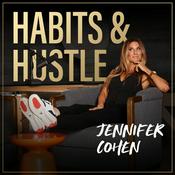 Download for free in the App Store
radio.net
Sleep timer
Save favourites
278 episodes
Episode 598: Human Connection in the AI Era: How Technology Is Reshaping Relationships
2026-10-23 | 22 mins.We're living in a culture where vulnerability gets attention, oversharing gets engagement, and followers can start to feel more like friends than strangers. The bigger question is what happens when social media and AI both become easier places to turn for connection than the people actually in our lives.
We dive into this in today's episode of Habits & Hustle. I sit down with Hamet Watt to talk about the difference between vulnerability and oversharing, why social media can incentivize people to reveal more than they normally would, and how AI is starting to change the way we look for advice, validation, and emotional support.
We also get into whether AI could sometimes be more useful than therapy in the moment, how to prompt it so it stops simply agreeing with you, why people may start comparing their real partners to AI companions, and whether a future where people choose highly personalized robot relationships is much closer than we think.
What's Discussed:
(04:36) Where vulnerability ends and oversharing begins on social media.
(06:08) Why people may be mistaking followers for real friends.
(06:49) How social media rewards increasingly personal and polarizing content.
(11:09) Why AI is becoming the relationship people wish they had with humans.
(11:51) How AI could sometimes be more useful than therapy in the moment.
(17:20) How to prompt AI for honest feedback instead of constant validation.
(18:35) Why people may start comparing their real partners to AI companions.
(20:23) Would you choose the perfect partner if they were a robot?
(21:41) How human-like robots could change dating, intimacy, and connection.
Thank You to Our Sponsors!
Magic Mind: Head over to magicmind.com/jen and use code JEN at checkout.
Momentous: Ready to try supplements that actually do what they claim? Head to livemomentous.com and use code JEN for 35% off your first subscription.
Kion: Visit getkion.com/habits for 20% off.
Tru Niagen®: For supplements that are rigorously tested, third-party verified, and actually deliver what's on the label, head to truniagen.com
AirDoctor: Head to AirDoctorPro.com and use promo code HUSTLE to get $250 off select AirDoctor air purifiers, including the 3500, 4000, and 5500 models. Plus, you'll receive a free 3 year warranty, an $84 value, and AirDoctor's 30-day money back guarantee.
Find more from Jen Cohen:
Website: jennifercohen.com
Instagram: @therealjencohen
Books: jennifercohen.com/books
Speaking: jennifercohen.com/speaking-engagements
Find more from Hamet Watt:
LinkedIn: Hamet WattEpisode 597: Dr. Sasha Hamdani: ADHD, Rejection & Being Too Sensitive: Why You Feel Everything So Deeply
2026-10-20 | 1h 5 mins.You can be incredibly successful at work and still struggle with everyday tasks, criticism, or rejection. For people with ADHD, these challenges can be especially frustrating, and the emotional side of ADHD often gets overlooked in conversations about focus and productivity.
We dive deeper into this in Habits & Hustle with Dr. Sasha Hamdani. We talk about why so many women go undiagnosed until adulthood, why some high achievers with ADHD struggle in their personal lives, and why rejection or criticism can trigger such intense emotional reactions. We also get into whether we've become too sensitive as a society and how to build better emotional resilience.
Dr. Sasha is a board-certified psychiatrist, ADHD expert, and New York Times bestselling author of Too Sensitive: Rejection, Resilience, and the Science of Feeling Deeply. She also has ADHD herself, giving her both a clinical and personal understanding of these challenges. She explains how ADHD affects much more than attention, why emotional regulation matters, and how understanding your own patterns can help you better manage your emotions, relationships, and daily life.
What's Discussed:
(09:13) Why so many women with ADHD go undiagnosed until adulthood.
(10:43) Why ADHD affects much more than your ability to focus.
(15:00) Why some of the most successful entrepreneurs have ADHD.
(17:35) Why ADHD medication alone may not be enough to manage symptoms.
(27:07) Why people with ADHD may experience rejection and criticism more intensely.
(34:22) Why rejection can feel physically overwhelming for emotionally sensitive people.
(43:28) How someone can be incredibly successful at work but struggle with basic tasks at home.
(45:29) Why being brutally honest can sometimes be a sign of poor emotional regulation.
(46:21) Whether we've become too emotionally sensitive as a society.
(49:42) How emotional sensitivity can affect confidence, relationships, and professional success.
Thank You to Our Sponsors!
Magic Mind: Head over to magicmind.com/jen and use code JEN at checkout.
Momentous: Ready to try supplements that actually do what they claim? Head to livemomentous.com and use code JEN for 35% off your first subscription.
Prolon: Prolon is offering listeners 30% off sitewide plus a $40 bonus gift when you subscribe to their 5-Day Program! Just visit prolonlife.com/JENNIFERCOHEN and use code JENNIFERCOHEN to claim your discount and your bonus gift.
Tru Niagen®: For supplements that are rigorously tested, third-party verified, and actually deliver what's on the label, head to truniagen.com
Kion: Visit getkion.com/habits for 20% off
AirDoctor: Head to AirDoctorPro.com and use promo code HUSTLE to get $250 off select AirDoctor air purifiers, including the 3500, 4000, and 5500 models. Plus, you'll receive a free 3 year warranty, an $84 value, and AirDoctor's 30-day money back guarantee.
Find more from Jen Cohen:
Website: jennifercohen.com
Instagram: @therealjencohen
Books: jennifercohen.com/books
TikTok: @therealjencohen
LinkedIn: Jennifer Cohen
Speaking: jennifercohen.com/speaking-engagements
Find more from Dr. Sasha Hamdani:
Website: drhamdanimd.com
Instagram: @thepsychdoctormd
TikTok: @thepsychdoctormd
YouTube: @thepsychdoctormd
Book: Too Sensitive: Rejection, Resilience, and the Science of Feeling DeeplyEpisode 596: Personal Branding Psychology: Scarcity, Overexposure, and Protecting Your Value
2026-10-16 | 26 mins.We live in a world that tells you to post more, share more, show up everywhere, and constantly stay visible. But at some point, does more exposure actually make you less interesting? And when you have already built credibility, success, and status, could a little scarcity make your personal brand even stronger?
We dive into this in today's episode of Habits & Hustle. I sit down with Hamet Watt to talk about Tom Brady, celebrity overexposure, and why I think there is real value in leaving people a little curious. We compare people like Tom Brady, Michael Jordan, Keanu Reeves, and Rihanna, and get into why some people seem to maintain their allure while others can start to feel overexposed.
We also get into the tension between doing whatever you want and protecting the value of your brand, why constant attention and validation can become a trap, and how scarcity applies far beyond celebrities. Whether you are building a personal brand, a business, or a product, there is a point where being everywhere can start working against you.
What's Discussed:
(01:02) Whether Tom Brady has become overexposed.
(02:16) How scarcity and mystery can make someone more interesting.
(04:03) Why a lower profile can sometimes increase your brand value.
(07:47) The qualities that made Tom Brady so compelling in the first place.
(09:40) How being everywhere can slowly dilute your appeal.
(11:53) What it looks like to reach a point where you stop caring what people think.
(13:00) Why high-status people may hurt their brand by playing in spaces beneath them.
(14:23) Michael Jordan as an example of maintaining status without constant visibility.
(20:02) How Keanu Reeves and Rihanna preserve mystery and intrigue.
(22:39) The science of scarcity and why overexposure can hurt personal and product brands.
Thank You to Our Sponsors!
Magic Mind: Head over to magicmind.com/jen and use code JEN at checkout.
Momentous: Ready to try supplements that actually do what they claim? Head to livemomentous.com and use code JEN for 35% off your first subscription.
Kion: Visit getkion.com/habits for 20% off.
Tru Niagen®: For supplements that are rigorously tested, third-party verified, and actually deliver what's on the label, head to truniagen.com
AirDoctor: Head to AirDoctorPro.com and use promo code HUSTLE to get $250 off select AirDoctor air purifiers, including the 3500, 4000, and 5500 models. Plus, you'll receive a free 3 year warranty, an $84 value, and AirDoctor's 30-day money back guarantee.
Find more from Jen Cohen:
Website: jennifercohen.com
Instagram: @therealjencohen
Books: jennifercohen.com/books
Speaking: jennifercohen.com/speaking-engagements
Find more from Hamet Watt:
LinkedIn: Hamet WattEpisode 595: Peter Crone: Rewiring Limiting Beliefs for More Confidence, Freedom, and Better Relationships
2026-10-13 | 1h 37 mins.What if the biggest thing holding you back is a belief you do not even realize you have?
We spend so much time trying to change our habits, become more disciplined, improve our relationships, make more money, and fix the parts of ourselves we think are falling short. But underneath many of those behaviors are subconscious beliefs that have been forming for years. "I'm not enough." "It's all up to me." "I'm not lovable." "I have to prove myself." Those beliefs can quietly drive perfectionism, overthinking, people pleasing, control, achievement, and even the way we choose relationships.
This matters because changing your behavior without understanding what is driving it can keep you stuck in the same patterns. Past disappointment can become evidence for future fear. High achievement can become an attempt to prove your worth. Independence can become protection from vulnerability. Even self-improvement can become another way to delay taking action. Becoming aware of the belief underneath the behavior gives you the opportunity to stop automatically reacting to your past and start making different choices.
Peter Crone is a mindset coach, speaker, and writer known as the "Mind Architect." His work focuses on helping people identify and break free from subconscious beliefs, emotional patterns, and mental limitations that shape the way they experience their health, relationships, careers, and lives. He has worked with professional athletes, business leaders, high performers, and people around the world to help them create greater freedom by changing the way they relate to themselves and their circumstances.
What's Discussed:
(15:03) How intelligent people can overthink themselves into analysis paralysis and become better at convincing themselves why something will not work.
(16:02) Why accumulated disappointment can become evidence for future fear and make people increasingly hesitant to take risks.
(19:51) How your triggers can reveal the subconscious beliefs and emotional patterns that are still controlling your reactions.
(30:57) How the belief "I'm not enough" can fuel achievement, perfectionism, relentless work, and the need to prove yourself.
(32:20) Why people spend so much energy resisting where they are and chasing the person they believe they should already be.
(36:40) How perfectionism, control, and noticing everything around you can sometimes be forms of vigilance rooted in fear.
(43:54) Why the love you experienced in a relationship still belongs to you, even after the relationship ends.
(54:44) How constantly trying to perfect yourself can become another form of procrastination that keeps you from taking action.
(57:43) Why dating and intimacy become harder when independence, self-protection, and a polished facade keep people disconnected from themselves.
(01:03:19) Why changing behavior alone can be difficult to sustain when deeper subconscious beliefs continue driving your thoughts, emotions, and choices.
Thank You to Our Sponsors!
Magic Mind: Head over to magicmind.com/jen and use code JEN at checkout.
Momentous: Ready to try supplements that actually do what they claim? Head to livemomentous.com and use code JEN for 35% off your first subscription.
Kion: Visit getkion.com/habits for 20% off.
Tru Niagen®: For supplements that are rigorously tested, third-party verified, and actually deliver what's on the label, head to truniagen.com
AirDoctor: Head to AirDoctorPro.com and use promo code HUSTLE to get $250 off select AirDoctor air purifiers, including the 3500, 4000, and 5500 models. Plus, you'll receive a free 3 year warranty, an $84 value, and AirDoctor's 30-day money back guarantee.
Find more from Jen Cohen:
Website: jennifercohen.com
Instagram: @therealjencohen
Books: jennifercohen.com/books
Speaking: jennifercohen.com/speaking-engagements
Find more from Peter Crone
Website: petercrone.com
Instagram: @petercrone
Facebook: Peter Crone - The Mind Architect
YouTube: @PeterCroneOfficial
LinkedIn: Peter CroneEpisode 594: Dr. Jonathan Schoeff: Biohacking for Longevity: What Works, What's Overhyped, and What Matters
2026-10-06 | 1h 5 mins.You can spend a lot of money trying to optimize your health and still miss the things that make the biggest difference. The wellness industry keeps giving us new treatments, tests, and biohacks to chase, but expensive does not automatically mean effective.
We dive deeper into this in Habits & Hustle with Dr. Jonathan Schoeff. We talk about which longevity trends are actually worth your attention, where people may be wasting their money, and why strength, sleep, and metabolic health still do more heavy lifting than many of the latest wellness trends.
Jonathan is a practicing surgeon and longevity physician who works with high performers on health optimization. He looks at wellness through both a clinical and performance lens, which makes him especially good at cutting through claims that sound impressive but do not have much evidence behind them. His approach is simple: look at the data, understand the outcome you are trying to improve, and stop confusing good marketing with good medicine.
What's Discussed:
(13:11) Why the most expensive biohacks may be the least effective.
(17:07) The basic health habits that still outperform most expensive longevity treatments.
(25:00) Why muscle may be one of the most important markers of healthy aging.
(28:03) How deadlifts can become risky when form, load, and spine health are ignored.
(33:20) Why lifting lighter weights for more reps may not build the strength women need.
(39:24) Why training three days a week may produce better results than constantly working out.
(48:54) Which popular longevity tools are actually worth the money and which are overhyped.
(53:32) Why GLP-1s may have benefits that go far beyond weight loss.
(1:02:11) Why high performers often invest in everything except a real health strategy.
Thank You to Our Sponsors!
Magic Mind: Head over to magicmind.com/jen and use code JEN at checkout.
Momentous: Ready to try supplements that actually do what they claim? Head to livemomentous.com and use code JEN for 35% off your first subscription.
Tru Niagen®: For supplements that are rigorously tested, third-party verified, and actually deliver what's on the label, head to truniagen.com
Kion: Visit getkion.com/habits for 20% off
AirDoctor: Head to AirDoctorPro.com and use promo code HUSTLE to get $250 off select AirDoctor air purifiers, including the 3500, 4000, and 5500 models. Plus, you'll receive a free 3 year warranty, an $84 value, and AirDoctor's 30-day money back guarantee.
Find more from Jen Cohen:
Website: jennifercohen.com
Instagram: @therealjencohen
Books: jennifercohen.com/books
Speaking: jennifercohen.com/speaking-engagements
Find more from Dr. Jonathan Schoeff
Website: longevitylabwellness.com
Instagram: @jonschoeff
Facebook: Dr. Jon Schoeff
YouTube: @drjonschoeff
More Business podcasts



Trending Business podcasts












About Habits and Hustle
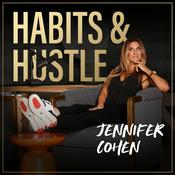
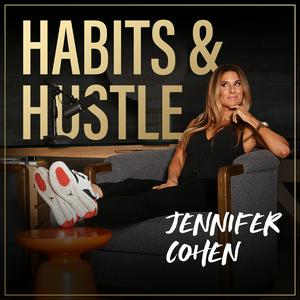
Habits and Hustle helps share the stories, habits, and rituals of people's journeys on living fulfilled lives. Host Jennifer Cohen interviews thought leaders, entrepreneurs, and overall extraordinary people who share their insight and open up about the normally hidden aspects that have made a difference in their success.
Podcast websiteListen to Habits and Hustle, The Loonie Hour and many other podcasts from around the world with the radio.net app
Get the free radio.net app
- Stations and podcasts to bookmark
- Stream via Wi-Fi or Bluetooth
- Supports Carplay & Android Auto
- Many other app features
Get the free radio.net app
- Stations and podcasts to bookmark
- Stream via Wi-Fi or Bluetooth
- Supports Carplay & Android Auto
- Many other app features
Habits and Hustle
Scan code,
download the app,
start listening.
download the app,
start listening.
 Canada - english