

Listen to this podcast in the app for free: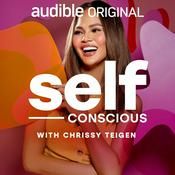 Download for free in the App Store
radio.net
Sleep timer
Save favourites
57 episodes
Andrew McCarthy: Who Needs Friends? The Male Loneliness Wake-Up Call
2026-03-26 | 30 mins.Chrissy sits down with actor and writer Andrew McCarthy to talk about the quiet crisis so many men are living inside: friendship drift, isolation, and the shame that keeps them from reaching out. After his son told him, “Dad, you don’t really have any friends,” Andrew drove nearly 10,000 miles across America to reconnect with old friends—and ask strangers a question men almost never talk about: How are you doing with friendship? In this episode, Andrew shares what he learned on the road about why men end up alone, how to restart the friendships that went silent, and how partners can support men without becoming their entire social world.
Key Takeaways
A kid’s mirror doesn’t lie: Andrew’s wake-up call wasn’t just “I’m lonely”—it was realizing he wasn’t modeling friendship for his son.
Men often treat friends as “background apps”: “I don’t see them, but I know they’re there” feels true—until it isn’t.
The friendship skill gap is real: many men have never once talked about their friendship, even with lifelong best friends.
Shame is the engine of isolation: the fear of being “not enough” makes men withdraw, go quiet, and disappear instead of reaching out.
Providing becomes a prison: the pressure to be the protector/provider can make men feel unsafe admitting they need help—so they go it alone.
See Privacy Policy at https://art19.com/privacy and California Privacy Notice at https://art19.com/privacy#do-not-sell-my-info.Julia Minson: Disagree Better: Hold Your Ground Without Lighting a Match
2026-03-19 | 48 mins.Harvard professor Julia Minson joins Chrissy to break down why most “conflict” isn’t about bad people—it’s about missing skills. She explains how disagreement turns toxic when we slip into judgment, certainty, and a win/lose mindset, and why “good intentions” don’t count if the other person can’t hear them. Then she gives a practical toolkit—naive realism, “listen with your mouth,” and her HEAR framework—to help you say what you mean, lower the temperature, and preserve the relationship for the next conversation.
Key Takeaways
Disagreement ≠ conflict: conflict starts when you judge the person (you’re ignorant / selfish / bad) instead of wrestling with the idea.
Most fights are “missing skills,” not bad intentions: people aren’t trained to show curiosity, signal respect, or stay regulated when heat rises.
Naive realism is the trap: we believe we’re seeing “objective reality,” so if you disagree, something must be wrong with you—and that’s how contempt enters.
People don’t want to change their minds—so stop arguing like they do: we assume they’re threatened; really, they’re usually just annoyed you won’t accept their “obvious” truth.
A good disagreement builds a bridge to the next one: success = the other person still wants to talk to you after, not “I won.”
See Privacy Policy at https://art19.com/privacy and California Privacy Notice at https://art19.com/privacy#do-not-sell-my-info.Elaine Welteroth: You Were Born Enough
2026-03-12 | 46 mins.Elaine Welteroth—bestselling author of More Than Enough and former Teen Vogue Editor-In-Chief—joins Chrissy for a reset on the lie that keeps so many of us small: the belief that we’re not enough. They talk about how confidence gets “chipped away,” how to spot when you’re performing for approval instead of living for yourself, and what it actually looks like to lead (and heal) in public. Plus: Elaine’s “Hell Yes or Hell No” decision framework to help you choose boundaries over burnout—and build a life that fits.
Key Takeaways
The “myth of inadequacy”: why feeling “not enough” isn’t personal—it’s learned, and it can be unlearned.
Performance vs. belonging: how to tell when you’re chasing applause (external validation) instead of listening to your own compass (intrinsic desire).
Confidence peaks early—and how to protect/rebuild it by creating your own “reflections” when the world doesn’t mirror you back.
Intent vs. impact: what real accountability looks like when you get something wrong, even with good intentions—and how to lead through it without hiding.
Elaine’s “Hell Yes / Hell No” tool: how to decide what deserves your time, and how to negotiate a “no” into a “hell yes” that actually aligns with you.
See Privacy Policy at https://art19.com/privacy and California Privacy Notice at https://art19.com/privacy#do-not-sell-my-info.Dan Harris: Even You Can Meditate (And Be Less Reactive)
2026-03-05 | 38 mins.Dan Harris—journalist, former Good Morning America anchor, and author of Meditation for Fidgety Skeptics—joins Chrissy to demystify meditation for people who think they “can’t” do it. After a panic attack on live TV, Dan found a practice that helped him quiet the mental chaos, stop taking his thoughts so personally, and become “less of a jerk” to himself and others. In this episode, he delivers a no-gurus, no-jargon toolkit: one-minute meditation, straw breathing, self-compassion, and a guided loving-kindness practice you can actually use today.
Key Takeaways
Start absurdly small: the brain isn’t built for long-term habit change—one minute counts and compounds.
Meditation isn’t clearing your mind: getting distracted is the point; noticing it and starting again is success, not failure.
Default Mode Network 101: mindfulness quiets the self-judging, future-tripping mental “default setting,” even briefly—and that’s liberating.
Straw breathing for instant regulation: inhale through the nose, exhale long through pursed lips (3–4x longer than the inhale) to settle your nervous system.
A five-minute guided practice is enough: breath focus + “start again” reps build attention and create distance from the harsh inner narrator.
See Privacy Policy at https://art19.com/privacy and California Privacy Notice at https://art19.com/privacy#do-not-sell-my-info.Sima Taparia: Why Perfection Is Ruining Your Love Life
2026-02-26 | 23 mins.World-famous matchmaker Sima Taparia (of Neflix’s Indian Matchmaking and the audiobook Your Perfect Partner Won’t Be Perfect) joins Chrissy to cut through modern dating burnout and unrealistic expectations. She explains why chasing “100%” compatibility keeps people stuck, how to tell the difference between settling and growing, and why flexibility, family context, and real-world connection matter more than apps and endless swiping. This episode is a reset for anyone tired of dating culture—and curious about building love that actually lasts.
Key Takeaways
Why no one gets 100% in a relationship—and how chasing perfection quietly sabotages connection.
How to tell the difference between settling and healthy adjustment, so you don’t abandon good relationships too early.
Why flexibility, patience, and understanding matter more than chemistry alone for long-term love.
How modern dating apps fuel burnout—and what in-person connection reveals that profiles never can.
Why successful relationships are built, not found, and how shared values and family context support durability over time.
See Privacy Policy at https://art19.com/privacy and California Privacy Notice at https://art19.com/privacy#do-not-sell-my-info.
More Education podcasts
 6 Minute EnglishEducation, Language Learning
 Hugo Girard - Sans LimiteEducation, Fitness, Health & Wellness, Hobbies, Leisure, Self-Improvement, Society & Culture
 How to Be a Better HumanEducation, Self-Improvement
 The Daily StoicBusiness, Education, Self-Improvement, Society & Culture
 The Mel Robbins PodcastEducation, Health & Wellness, Mental Health, Relationships, Self-Improvement, Society & Culture
 InnerFrenchEducation, Language Learning
 Coffee Break FrenchCourses, Education, Language Learning
 Motivation Daily by MotiversityEducation, Health & Wellness, Self-Improvement
 ParenthèseEducation, Health & Wellness, Kids & Family, Mental Health, Parenting, Self-Improvement
 The Rich Roll PodcastEducation, Health & Wellness, Self-Improvement, Society & Culture
Trending Education podcasts
 Hot WaterAlternative Health, Arts, Business, Education, Entrepreneurship, Fashion & Beauty, Health & Wellness, Religion & Spirituality, Self-Improvement, Spirituality
 How To! with Charles DuhiggBusiness, Education, Tutorials
 The Daily MotivationEducation, Self-Improvement
 Chill Spanish Listening PracticeEducation, Language Learning
 Dreaming Spanish Podcast – Chats in Beginner SpanishEducation, Language Learning
 The Other Side NDE (Near Death Experiences)Education, Religion & Spirituality
 The Daily Brain: Boost Your MindEducation, Self-Improvement
 News in Slow French (Intermediate)Education, Language Learning, News
 Learn Italian with Joy of LanguagesCourses, Education, Language Learning
About Self-Conscious with Chrissy Teigen
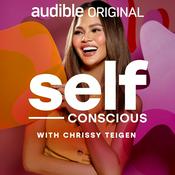
Illuminating conversation. Bold introspection. A safe space where the twists and turns of personal growth are embraced and shared openly, one conversation at a timeJoin inquisitive host Chrissy Teigen in her new well-being podcast from Audible as she explores the cutting edge of personal development with some of the world's leading experts and thinkers. Featuring authors of groundbreaking Audible Originals, exclusives, and bestselling audiobooks, Self-Conscious with Chrissy Teigen provides an inspiring and engaging environment for listeners to expand their self-awareness and gain the insights and practical tools they need to lead healthier, happier, and more productive lives.Each week, Chrissy dives deep with her guests, who span a wide range of expertise and lived experience. Demystify the concept of manifestation with Gabby Bernstein, tap into your hidden potential with Adam Grant, grasp Nedra Glover Tawwab's profound lessons on boundary setting, and understand the freeing power of Mel Robbins’ call to let go of what others think of you as each conversation introduces bold concepts and ushers in new ways of understanding ourselves. Whether you're new to the world of well-being or a lifelong traveler, Self-Conscious with Chrissy Teigen is the must-listen next stop on your journey.Listen to Self-Conscious with Chrissy Teigen on Audible and explore thousands of titles including bestsellers, new releases, podcasts and exclusive Audible Originals.
Podcast websiteListen to Self-Conscious with Chrissy Teigen, 6 Minute English and many other podcasts from around the world with the radio.net app
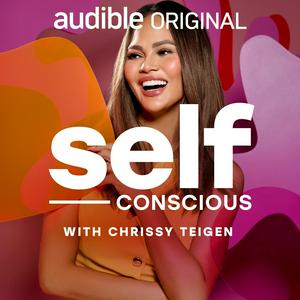
Get the free radio.net app
- Stations and podcasts to bookmark
- Stream via Wi-Fi or Bluetooth
- Supports Carplay & Android Auto
- Many other app features
Get the free radio.net app
- Stations and podcasts to bookmark
- Stream via Wi-Fi or Bluetooth
- Supports Carplay & Android Auto
- Many other app features

Self-Conscious with Chrissy Teigen
Scan code,
download the app,
start listening.
download the app,
start listening.
 Canada - english