Listen to this podcast in the app for free: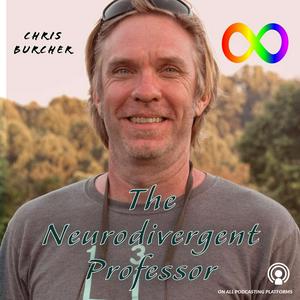 Download for free in the App Store
radio.net
Sleep timer
Save favourites
Available Episodes
5 of 209
- Hitting the Pause Button to Deliver Our BoatI want to let y’all know what is going on in my life.There will be a pause in my articles, podcast, and videos until at least August. For the next two weeks or so I will be delivering our boat from the BVI to the USA. Wait, WTaF?For those who don’t know, my family has been planning to live on a boat since before the pandemic. We are finally to the point of making the shift. We are selling our home and getting rid of most of our stuff. We are buying a boat and will move a very small amount of our stuff onto the boat. We will be living on the boat in Chesapeake Bay, USA until December when we will head to the Bahamas. It reminds me of this George Carlin skit:Leaving the Rat RaceI’ve talked and written a lot about this shift, but mostly we want to try something new. We hope to shed some of the pressures of American Life and redefine our values. I’m terrified by all of it and think this is a great opportunity for growth. I also realize we may be in over our heads. But that’s life, isn’t it?We may come crying back with our tails between our legs. Who knows? We’ll see. Good thing, bad thing, who knows. Reminds me of this Buddhist koan:Are These Bad Times or Good Times? The Story of the Zen FarmerWhen we stop trying to coerce life to go exactly the way we want, we naturally experience a greater sense of fluidity…mindfulness.comI look forward to sharing my experiences and discovering how this will change my writing, podcasting, and video. I’ll be back as soon as I can.In the meantime, please enjoy some of my older content and let me know how it holds up!If you are enjoying this content, please tell your friends.--------5:15
- We Can Reach Fitness by Returning to the Optimum Condition: NDP 182Have you ever sat down and thought about your values? Values are important, motivating, and provide guidance.I’ve done a lot of values work in therapy and find it challenging. I value many things, but prioritizing the top five to ten is difficult and dynamic.One thing I have learned during over a decade of values work is that many human values suck. I think a lot about universal or ‘optimum’ valuesAre there ‘optimum’ human values? For my purposes, optimum is an adjective meaning most favorable or desirable. The best. In biological systems, we can think of optimum in terms of homeostasis or balance. Please see here for more on that. An example of optimum is transportation. Can we identify an optimum mode of human transportation? Many suggest it is the bicycle: Science of Cycling: Human Power | Exploratorium© The bicycle is a tremendously efficient means of transportation. In fact cycling is more efficient than any other…annex.exploratorium.eduIn the case of transportation, we skipped past ‘optimum’ in pursuit of ‘better’. Now we burn jet fuel to fly around the planet. This uses more fossil fuels and creates more problems associated with that industry. We also change our valuesChange is inevitable. Everything is impermanent and evolves. Sometimes, we change toward improvement. Sometimes our pursuit of ‘better’ leads us astray. Words like improve, better, and success, are extremely subjective. Modernity induced a key shift away from optimum values and toward money, status, and power. Currently, artificial intelligence is exacerbating this transformation.With each technological advancement, we need to revisit our values. We are mistaken to believe that each step along the evolutionary ladder is an improvement. Rather, organisms experience increases in efficiency that facilitate new abilities. But these advancements are not always the optima.Consider, briefly, biological respiration. An amphibian requires minimal energetic investments to oxygenate cells across moist skin. Humans, on the other hand, must breathe. While humans can be more active and grow larger and more complex, are we ‘better’?So with evolution, knowing what is optimum is keyHumans evolved the ability to choose, which itself becomes a selection pressure. We can influence our evolution. If we want to remain extant we need to make better choices.Valuing money, status, and power leads to our demise. To enhance evolutionary fitness we must revisit our past. In our past, we may find more optimum values to guide our future.I will be assisting with delivering my future floating home for the next few weeks but will post when I can. Please check out my back catalog here and on The Neurodivergent Professor podcast and YouTube channel. If you are enjoying this content, please tell your friends.--------22:53
- On Being a Good Steward of Earth: NDP 181You don’t have to look far to find something to complain about. Climate changeInequalitySuicidal ideationMalnutritionLoneliness The world is full of problems.Now, I’m no doomer. My intent is not to illuminate human suffering. Rather, I accept the Buddhist notion that there will be suffering. My issue is all the EXTRA suffering. I can’t shake the naive, hippie belief that solutions are within our reach. When it comes to the end of the world I’m an optimist.The question is, what can we do to reduce suffering?Isolation and ‘rugged individualism’ are a big part of the problemI’m still wrapping my head around the concept of nonduality. I get that we are stardust. After all, I’m a huge fan of Crosby, Stills, Nash, and Young. I believe the Big Bang is a good explanation of what probably happened to get us here. I understand ecological cycles and geologic time. We are all connected, but I have seen little evidence of these connections in human behavior during my lifetime. We exist in this world simultaneously as individuals and as obligate members of the human species. Many of us experience cognitive dissonance around being two places at once and I get that. This is a feature of reality we have to embrace. It’s quite literally cosmic.We are going to have to hit ‘refresh’ on our valuesHuman values have shifted from the group to the individual. This ‘we to me’ transition aligns with modernity, the industrial revolution, financial systems, and religions. I continually ask, ‘What happened?’, to speculate about this transformation but we will never know.The great value shift from kindness, connection, and cooperation toward money, status, and power has created most of our problems. The solution is a shift away from individualism and toward collectivism. The problem is, that individualism promotes short-term fitness. Humans are hedonistic and we love a good dopamine hit. Our values shifted to maximize this. Moving back toward collectivism ain’t gonna be easy.How do we convince ourselves that the ‘success’ of the human race over evolutionary time is more important than feeling high for a few seconds? To move forward we have to understand our pastWinners write history. The shift from collectivism to individualism is characterized by strong men defeating weak communities. This story gets recorded and repeated because the strong remain to tell it. Cherry picking at its’ finest.Do we want the meaning of our existence to cater to a few men? Unfortunately, we continue to tell that story today. We value the strong. The competitive. The winners. We look down on the peaceful. The cooperative. The mutualisms.Humans are so much better than this. It’s time to move past maximizing the ‘line of cocaine dopamine bumps’ and understand the importance of delaying gratification. Our nervous systems evolved for more complex and intimate social interaction but we are headed the other way toward simpler and less interactive social behaviors. Rugged individualism is a great leap backward and spits in the face of our evolutionary prowess.Maybe we can stop treating life like a game of winners and losersWinning is not better than losing. They are the same when we experience the game as a community and not as individuals. We need to stop playing Monopoly with our DNA.Rather than socializing the gains and privatizing the losses, we can socialize gains by being a good steward of Earth and all its inhabitants. This is the pathway toward reduced suffering. We can change our values. There is still time.Frankly, I’m embarrassed for us if we continue to choose otherwise.If you are enjoying this content, please tell your friends.--------29:11
- Is Punctuated Equilibrium a Good Way to Change the World? NDP 180Have you seen (or read) “2001: A Space Odyssey”?The story opens at the time of early humans. Folks are going about their business when a ginormous monolith appears. Everyone freaks out at first, but then some develop the ability to use bones as tools. At first, I didn’t understand that the monolith represented punctuated equilibrium. This is a phrase used by evolutionary biologists to describe a quick shift in the fossil record representing a significant change. Compare this to gradualism, characterized by the slow accumulation of small changes. As an impatient person, I prefer punctuated equilibrium. Rather than waiting around and remaining comfortable, I’ve always been (generally) ok with quick changes toward a new condition. I don’t mind changing jobs (I’ve one it 32 times in 39 years) or homes (ten houses in 17 years). Some things, of course, I want to remain consistent, but I don’t fear change like a lot of people.I would go so far as to say I sometimes yearn for quick change, because most changes are painfully slow. And life is short.Mostly, though, changes happen slowly and punctuated equilibria are few and far between. The world is in dire need of change. Do we have the time to wait around for it to happen gradually? Can it happen gradually? This is the question that drives me, and this article.A built-in persistence mechanismNot changing is good for a system to persist. We have become experts in the bait-and-switch technique where we create fraudulent mechanisms for change that don’t result in actual change but make us believe they do.How long do we throw good money after bad, making minute alterations to existing systems in hopes that something changes? How many rounds of negative feedback evidence do we need to acquire before we stop? Something like UBI, for example, could be a monolithic mechanism to change the global economy. But, The risks of Punctuated Equilibrium are highMention to any neoclassical economist that capitalism is broken and prepare yourself for a tongue-lashing. Tell any politician that the government needs an overhaul and you may have your citizenship revoked. Tell a high-school principal that students should be learning about meditation and, well, you get the point.People don’t like change. Most of us fear the enemy we don’t know much more than the one we do. This explains why we stay in bad relationships, cruddy jobs, and unsuitable cities. Change is scary. But as I have mentioned in many an article, change is the underlying machinery of life. It is our DNA. That we fear change is not an excuse to avoid it. Look, I get it, leaping into the unknown abyss is scary. But sometimes it is the only option. Gradualism is ineffective, especially during stressIf a lion were chasing you, would you run or take some time to think about which direction to run? If you had to think about it, you’re dead.Sometimes gradual change takes too long. Though that sounds like something Yogi Berra might have said, it’s true. Sometimes we need a change. Mostly this is because we tolerated non-change for too long.Gradualism is about not changing. Not changing is resistance. What we resist, persists. Instead of protecting ourselves, we are going against the basic principles of biology. The universe changes. We must change with it. If we want to change something, gradualism is not likely to work. Our problems require faster and more severe solutions. If we can’t get comfortable with discomfort we will continue to gaslight ourselves into thinking things will be ok.If you are enjoying this content, please tell your friends.--------29:39
- Making a Good Life: NDP 179The unexamined life is not worth living — SocratesIt seems natural, even innate, to want to make the most of one’s life. To have a good life seems to require examination. Examining one’s life, growing, and continuing to be aware is part of our purpose.The purpose of life has two branches. The first is the ecological purpose and the second is more metaphysical.The ecological purpose of life is to reproduce to alleviate mortality. In other words, because all life dies, life reproduces itself. In this way, collective life persists despite the individual being terminal.Evolution and natural selection, especially of the central nervous system, have facilitated communication, social interaction, and parental care. Humans still struggle with how to manage this complexity.What is less derived is our metaphysical or non-scientific understanding of being human or of making a good life. Sure, we figured out how to keep the water (fairly) clean, eat, and build shelter, but how do we deal with our free time? What do we do with all the gains from understanding our physical needs?Once our basic needs are met, what do we do? First, we evolve a complex neurology that facilitates taking in more information from our environment. To process all this new information we also evolve a central processing unit. Combined, we developed unprecedented ways to interact with our environment, each other, and ourselves. At the intersection of the metaphysical and physical elements of human purpose is socialization. Sophisticated communication and interactions led to cooperation, community, and enhanced parental care. Ultimately, love evolved to enhance our connections to each other and our ecosystem. Neural complexity also led to art, medicine, science, and other technological derivations. Along the way, of course, less desirable states or conditions arose including violence, competition, and selfishness. These elements, ideally, will be selected out of our population (see here for more).The future of humankind depends on these metaphysical elements. Prioritizing values like love, connection, and kindness over money, power, and status is critical to our healthy future.The privileged and fortunate among us are self-aware. Self-awareness facilitates an examined life. An examined life will grow toward an enhanced and necessary value system understood through our neural gifts.Self-awareness permits the unlearning process. Don Miguel Ruiz, of “The Four Agreements” fame, and other Toltecs refer to domestication as the mechanism for our initial learnings. As children, we learn to walk, talk, sit, and stay according to the rules of our families, villages, and cultures. Few of us even realize this has happened. None of us consented.Once aware our life examination begins, and the first step is to realize we don’t know why we believe what we believe. We must audit our thoughts, ideas, and values to determine whether they belong to us. This is the first step.Self-awareness begets the undoing of domestication. Defining personal values and understanding one’s ecological and metaphysical needs defines a life. The next step is realizing we are interconnected to balance our individuality with our community. Finally, we figure out how to nudge our fellow humans in a similar direction.Understanding and meeting our own needs helps us as much as each other. This is the pathway toward a good life. We make it by doing the work, being ourselves, and nurturing awareness. If you are enjoying this content, please tell your friends.--------30:03
More Health & Wellness podcasts
 The School of GreatnessBusiness, Education, Health & Wellness, Entrepreneurship, Mental Health, Self-Improvement
 Huberman LabHealth & Wellness, Science, Life Sciences
 Passion Struck with John R. MilesEducation, Health & Wellness, Alternative Health, Self-Improvement
 Nothing much happens: bedtime stories to help you sleepFiction, Health & Wellness
 The Mindset MentorBusiness, Education, Health & Wellness
 The Dr. John Delony ShowHealth & Wellness, Society & Culture, Mental Health, Relationships
 10% Happier with Dan HarrisHealth & Wellness, Mental Health
 Sexe OralComedy, Health & Wellness, Leisure, Sexuality
 The Peter Attia DriveHealth & Wellness, Fitness, Medicine
 unPAUSED with Dr. Mary Claire HaverHealth & Wellness, Society & Culture, Medicine
Trending Health & Wellness podcasts
 SHE MDEducation, Health & Wellness, Medicine, Self-Improvement
 the goop podcastEducation, Health & Wellness, Society & Culture, Self-Improvement
 The Nick Bare PodcastHealth & Wellness
 A Really Good CryHealth & Wellness, Mental Health
 I Have ADHD PodcastEducation, Health & Wellness, Mental Health, Self-Improvement
 Inner LightHealth & Wellness
 OversharingEducation, Health & Wellness, Society & Culture, Mental Health, Relationships, Self-Improvement
 Le vrai du faux - Le baladoHealth & Wellness
 Emergency Medicine CasesEducation, Health & Wellness, Science, Courses, Medicine
 The Exam Room by the Physicians CommitteeArts, Health & Wellness, Science, Food, Medicine, Nutrition
 EXPANDED Podcast by To Be Magnetic™Education, Health & Wellness, Religion & Spirituality, Alternative Health, Self-Improvement, Spirituality
 Happy PlaceHealth & Wellness, Society & Culture, Mental Health, Relationships
 The Dr. Layne Norton PodcastBusiness, Education, Health & Wellness
 The Model Health ShowHealth & Wellness, Fitness, Nutrition
 The High Performance PodcastEducation, Health & Wellness, Sports, Self-Improvement
 The Curbsiders Internal Medicine PodcastEducation, Health & Wellness, Science, Medicine
 The Wellness ProcessHealth & Wellness, Alternative Health
 آدمیزادHealth & Wellness, Mental Health
About The Neurodivergent Professor
Let's revolutionize human evolution by reintegrating uniqueness to maximize diversity using a systems approach to individuality and community.More at www.chrisburcher.com
Podcast websiteListen to The Neurodivergent Professor, The School of Greatness and many other podcasts from around the world with the radio.net app
Get the free radio.net app
- Stations and podcasts to bookmark
- Stream via Wi-Fi or Bluetooth
- Supports Carplay & Android Auto
- Many other app features
Get the free radio.net app
- Stations and podcasts to bookmark
- Stream via Wi-Fi or Bluetooth
- Supports Carplay & Android Auto
- Many other app features

The Neurodivergent Professor
Scan code,
download the app,
start listening.
download the app,
start listening.
 Canada - english