

Listen to this podcast in the app for free: Download for free in the App Store
radio.net
Sleep timer
Save favourites
43 episodes

#39 Nerd Notes | Victim Mentality vs. Real Harm
2026-09-18 | 14 mins.In this solo episode, Eli dives into one of the most nuanced — and most needed — conversations in the world of relational health: the difference between genuinely being victimized and holding a victim mentality. With warmth and clarity, Eli walks you through the key markers of each, why abusive people often claim victim status, and why asking this question of yourself is actually a sign of health, not weakness.
Key Takeaways
Being victimized and having a victim mentality are not the same thing — and confusing the two can keep you stuck in harmful dynamics.
Claiming harm is not the same as being a victim — recognizing you've been hurt is an act of courage and wisdom.
A victim mentality uses perceived harm to justify harming others — whereas genuine victimization leads you toward healing, safety, and self-protection.
Abusive people commonly hold victim mentality — they often believe they are entitled to control and will frame any loss of control as being victimized.
There is a critical difference between hurt and harm, discomfort and trauma — learning to distinguish them is one of the most important relational skills you can develop.
If you're asking this question, you're probably not the problem — the very fact that you pause to reflect is a strong signal that you've experienced real harm, not that you're the one causing it.
Victim mentality is rooted in developmental trauma — it gets passed down through families and is a signal that healing and support are needed, not shame.
Resources Mentioned
📖 Why Does He Do That? Inside the Minds of Angry and Controlling Men by Lundy Bancroft — A foundational book on the mindset of abusive and controlling people. Referenced in this episode for Bancroft's research on how abusive individuals hold a distorted, entitlement-based view of the world.
Learn more about secure parenting:
https://www.attachmentnerd.com/secure-parenting-program
Connect with Eli:
Website: https://www.attachmentnerd.com/
Instagram: https://www.instagram.com/attachmentnerd/
TikTok: https://www.tiktok.com/@attachmentnerd
Music by Gold Child:
https://www.goldchildmusic.com/#38 How to Deal with Raising Conscious Sons and Daughters in an Anxious and Chaotic World | With Dr. Shefali Tsabary
2026-09-14 | 33 mins.Dr. Shefali Tsabary, Columbia-trained clinical psychologist and multiple NYT bestselling author, joins Eli to discuss her groundbreaking new companion books: Raising Conscious Sons and Raising Conscious Daughters.
Together they unpack the unique, gender-specific wounds our children carry — and what conscious parents can do to protect and restore their children's authentic selves.
Key Takeaways
Boys can only become empathic and vulnerable when they are first allowed to accept their own imperfections — teaching "limitlessness" is actually a disservice.
The father wound is often invisible: a father can be physically present but emotionally sealed off, and boys feel that absence in their bodies.
Mothers who over-function out of anxiety unintentionally send their sons the message that they are not trusted or capable — step back and allow wide spaces for exploration.
The 7 Pillars for Conscious Sons: Regulation, Competence, Vulnerability, Sovereignty, Sexuality and Power, Belonging, and Conscious Masculinity.
The 7 Pillars for Conscious Daughters: Voice, Embodiment, Enoughness, Anti-Fragility, Boundaries, Self-Authorship, and Sisterhood.
Appropriate developmental exposure is itself a form of protection — gradually increasing challenges builds resilience.
Toxic femininity — self-abandonment, poor boundaries, passivity — is just as real as toxic masculinity, and daughters need to be taught the difference between authentic femininity and its distorted form.
Parentified daughters — praised for being "mature" — are actually losing their sense of self long before their nervous systems are ready.
Connection is the most powerful form of protection we can give our children (Eli Harwood).
About the Guest
Dr. Shefali Tsabary is a Columbia-trained clinical psychologist, founder of the Conscious Parenting movement, and multiple New York Times bestselling author whose work has been called "revolutionary" by Oprah Winfrey. Her new companion books, Raising Conscious Sons and Raising Conscious Daughters, release September 15, 2026.
🌐 Website: https://www.drshefali.com/about/
📚 Parenting Summit (September 8–10, 2026; check current access): https://raisingconscious.drshefali.com/summit/
🎤 Book Tour Info: https://raisingconscious.drshefali.com/tour/
Resources Mentioned
Dr. Shefali's New Books
📖 Raising Conscious Sons — Official book page
📖 Raising Conscious Daughters — Official book page
📖 Dr. Shefali's full book catalog: https://www.drshefali.com/books/
Eli's Book
📖 Raising Securely Attached Kids by Eli Harwood — Amazon | Publisher (Penguin Random House)
Research & Studies Referenced
🔬 Alleged Meta/Facebook deleted-selfie ad targeting discussed in the interview — Allegations from former Facebook policy director Sarah Wynn-Williams, reported by Futurism and covered by Yahoo Tech
🔬 Brené Brown's research on vulnerability — Daring Greatly on Amazon | Brené Brown's TED Talk: "The Power of Vulnerability"
Organizations Mentioned
🤝 Big Brothers Big Sisters of America — https://www.bbbs.org
🏋️ Boys & Girls Club of America — https://www.bgca.org
🏊 YMCA (The Y) — https://www.ymca.org
Learn more about secure parenting:
https://www.attachmentnerd.com/secure-parenting-program
Connect with Eli:
Website: https://www.attachmentnerd.com/
Instagram: https://www.instagram.com/attachmentnerd/
TikTok: https://www.tiktok.com/@attachmentnerd
Music by Gold Child:
https://www.goldchildmusic.com/#37 How to Feel Worthy | With Dr. Marisa G. Franco
2026-09-04 | 29 mins.What if feeling unworthy isn't a flaw — it's a memory? In this deeply moving episode, Eli sits down with NYT bestselling psychologist Dr. Marisa G. Franco to unpack the science of self-worth: where it comes from, why it gets stuck, and how you can actually change it. From memory reconsolidation and inner child healing to attunement, identity, and the power of community, this conversation is a must-listen for anyone breaking generational cycles.
Key Takeaways
• Worthiness = treating your internal world as if it matters. It's not about feeling superior — it's about validating your feelings and using them as information.
• There are two types of high self-esteem. One comes at others' expense (grandiosity). The other — "Type C" — is compassionate, connected, and the kind worth building.
• Memories are the database of self-esteem. They don't just record the past — they predict the future. That's why compliments feel threatening and success feels suspicious when we feel unworthy.
• You can change the past — at the neural level. Memory reconsolidation research shows that revisiting painful memories and picturing a different outcome literally changes how those memories live in your brain, including in the hippocampus.
• Stigma shows up as self-surveillance. People from marginalized groups often begin to see themselves through the negative lens of others — and the antidote is curating community and media that reflect more positive, affirming identities.
• Attunement is the master skill. Listening deeply to yourself, your children, and your relationships — and allowing multiple realities to coexist — is the foundation of both worthiness and connection.
• You don't have to feel worthy to be worthy. Worth is inherent. Self-worth is the felt sense of it — and that can be developed, no matter where you're starting from.
About the Guest
Dr. Marisa G. Franco is a psychologist, professor at the University of Maryland, TED speaker, and NYT bestselling author. Her new book Worth: The New Science of Self-Esteem and Secure Attachment explores the cutting-edge science of memory, stigma, and identity to help readers build lasting self-worth from the inside out. She is also the author of the instant NYT bestseller Platonic: How the Science of Attachment Can Help You Make — and Keep — Friends.
• 🌐 Website: drmarisagfranco.com: https://drmarisagfranco.com
• 📸 Instagram: @drmarisagfranco: https://www.instagram.com/drmarisagfranco/
• 📬 Substack: Attached by Dr. Marisa G. Franco: https://drmarisagfranco.substack.com/
Resources Mentioned
• 📘 Worth: The New Science of Self-Esteem and Secure Attachment by Dr. Marisa G. Franco
◦ Publisher (Penguin Random House): https://www.penguinrandomhouse.com/books/784327/worth-by-marisa-g-franco-phd/
◦ Amazon (Audiobook): https://www.amazon.com/Worth-Science-Self-Esteem-Secure-Attachment/dp/B0GGNPKM6S
• 📘 Platonic: How the Science of Attachment Can Help You Make — and Keep — Friends by Dr. Marisa G. Franco
◦ Amazon: https://www.amazon.com/Platonic-Science-Attachment-Make-Keep-Friends/dp/0593331893
• 📘 Invisible Man by Ralph Ellison (referenced in discussion of stigma and self-perception)
◦ Amazon: https://www.amazon.com/Invisible-Man-Novel-Ralph-Ellison/dp/0375507914
• 📘 Entangled Life: How Fungi Make Our Worlds, Change Our Minds & Shape Our Futures by Merlin Sheldrake (referenced in discussion of humans as ecologies, not individuals)
◦ Amazon: https://www.amazon.com/Entangled-Life-Fungi-Worlds-Futures/dp/0525510311
• 🔬 Memory Reconsolidation Research (the neuroscience of updating emotional memories)
◦ Springer: How Memory Reconsolidation Advances Psychotherapy: https://link.springer.com/article/10.1007/s10615-020-00754-z
◦ NIH: Reconsolidation Therapies for PTSD (Systematic Review): https://www.ncbi.nlm.nih.gov/pmc/articles/PMC8417130/
Connect
Learn more about secure parenting:
https://www.attachmentnerd.com/secure-parenting-program
Connect with Eli:
• Website: https://www.attachmentnerd.com/
• Instagram: https://www.instagram.com/attachmentnerd/
• TikTok: https://www.tiktok.com/@attachmentnerd
Music by Gold Child:
https://www.goldchildmusic.com/#36 How to Deal with The Mental Load | With Eve Rodsky
2026-08-29 | 39 mins.Eli sits down with Eve Rodsky — Harvard-trained lawyer, NYT bestselling author, and founder of the Fair Play movement — to dig into the invisible crisis hiding in most partnerships: the unequal mental load.
From the blueberries text that changed everything to a card system now translated into 27 languages, Eve shares why fairness in the home isn't just a relationship issue — it's a systemic one.
This is a must-listen for anyone who has ever thought, "Why am I the only one who notices what needs to be done?"
Key Takeaways
The mental load gap is not personal — it's structural. Women shoulder two-thirds or more of unpaid domestic labor, and even the best-intentioned partners do 5–15 hours less per week once kids arrive.
Over-functioning is a symptom of broken accountability and trust, not a personality flaw.
The CPE model (Conception → Planning → Execution) explains why "going to the store" is only one-third of the work — and why standards aren't "too high" when you own the full task.
Toxic time messages ("I should just do it myself," "I don't have bandwidth to teach him") keep women stuck in the cycle.
The Fair Play system works for neurodivergent families too — because it's a system, not a reliance on internal motivation.
The magic of parenting lives in the mundane moments. Sharing the load invites your partner into those moments — it's a gift, not a punishment.
Fairness requires fighting — against cultural norms, school systems, extended family patterns, and the pay gap. Becoming a "cultural warrior" together is the goal.
About the Guest
Eve Rodsky is a Harvard-trained lawyer, organizational management expert, and NYT bestselling author of Fair Play. After sobbing on the side of the road over a text from her husband about blueberries, she spent 15 years researching the gendered division of labor across 27+ countries. Her work has evolved into a full movement, a nonprofit policy institute, and a card deck used by couples worldwide.
🌐 Website: https://www.everodsky.com
📘 Fair Play Life: https://www.fairplaylife.com
📸 Instagram (Eve): https://www.instagram.com/everodsky/
📸 Instagram (Fair Play): https://www.instagram.com/fairplaylife/
🏛️ Fair Play Policy Institute: https://fairplaypolicy.org
Resources Mentioned
📖 Fair Play (book) by Eve Rodsky — Amazon
🃏 The Fair Play Deck (card deck) by Eve Rodsky — Amazon | Penguin Random House
🆓 Free Fair Play Resources (nonprofit downloads) — https://www.fairplaylife.com
🏛️ Fair Play Policy Institute (systemic advocacy work) — https://fairplaypolicy.org
🎓 Darby Saxbe, PhD — USC Professor of Psychology, Fair Play research collaborator — USC Profile
📊 USC/Fair Play Policy Institute Study (2024): The Fair Play Method: Can We Solve for the Unequal Division of Domestic Labor? — Read the research
👩⚕️ Tovah Klein, PhD — Director, Barnard College Center for Toddler Development (quoted: "all bonding comes in the spaces in between") — Barnard Profile
🎬 Fair Play Documentary (dir. Jennifer Siebel Newsom, Hello Sunshine) — https://www.fairplaylife.com/documentary
Learn more about secure parenting: https://www.attachmentnerd.com/secure-parenting-program
Connect with Eli:
Website: https://www.attachmentnerd.com/
Instagram: https://www.instagram.com/attachmentnerd/
TikTok: https://www.tiktok.com/@attachmentnerd
Music by Gold Child: https://www.goldchildmusic.com/#35 How to Deal with Rejection Sensitivity | With Dr. Sasha Hamdin
2026-08-21 | 28 mins.Eli sits down with board-certified psychiatrist and ADHD specialist Dr. Sasha Hamdani to unpack one of the most misunderstood emotional experiences: Rejection Sensitive Dysphoria (RSD). Together they explore the neuroscience behind why some of us feel rejection so intensely — and why that sensitivity might actually be a gift. Dr. Hamdani also shares personal stories and practical tools from her upcoming book, Too Sensitive: Rejection, Resilience, and the Science of Feeling Deeply.
Key Takeaways
RSD is not a personality flaw — it's a neurological response rooted in how your brain is wired, involving amygdala hyperactivity, dopamine dysregulation, and weaker prefrontal override.
Sensitivity has roots in multiple places: genetics, attachment history, identity-based rejection (racism, homophobia, misogyny), and hormonal fluctuations all play a role.
Emotional sensitivity ≠ weakness. When paired with the right tools, it becomes emotional intelligence — a true superpower in relationships and caregiving.
Your body tells you what you're feeling before your brain catches up. Learning where RSD lands in your body (chest, stomach, head) is the critical first step.
Movement is a powerful acute tool for interrupting RSD spirals — it pushes oxygenated glucose to the frontal lobe to help override the emotional response.
Attachment styles shape how we cope with RSD: some people cling, some flee — both are adaptations, not character defects.
Making more noise about RSD matters — it's not yet a formal DSM diagnosis, but clinical advocates like Dr. Hamdani are working to change that.
About the Guest
Dr. Sasha Hamdani, MD is a board-certified psychiatrist and ADHD clinical expert specializing in RSD and emotional regulation. She reaches over 2 million followers across social media with evidence-backed mental health content, and has been recognized by Harvard as a public health leader. She is the creator of the FocusGenie ADHD management app and the author of Self-Care for People with ADHD (2023). Her groundbreaking new book, Too Sensitive: Rejection, Resilience, and the Science of Feeling Deeply, publishes August 25, 2026.
🌐 Website: drhamdanimd.com
📸 Instagram: @thepsychdoctormd
🎵 TikTok: @thepsychdoctormd
▶️ YouTube: @thepsychdoctormd
Resources Mentioned
📖 Too Sensitive: Rejection, Resilience, and the Science of Feeling Deeply by Dr. Sasha Hamdani MD — Pre-order on Amazon (Pub. August 25, 2026)
📱 FocusGenie App — Dr. Hamdani's ADHD management app (the first created by a board-certified psychiatrist)
🧠 What Is Rejection Sensitive Dysphoria? — Cleveland Clinic — Overview of RSD, its link to ADHD, and what's happening in the brain
📄 RSD & ADHD Emotional Dysregulation — ADDitude Magazine — Deep dive into RSD as a symptom of ADHD
🏥 Dr. Hamdani's Practice — Book an appointment or learn more
Connect
Learn more about secure parenting: https://www.attachmentnerd.com/secure-parenting-program
Connect with Eli:
Website: https://www.attachmentnerd.com/
Instagram: https://www.instagram.com/attachmentnerd/
TikTok: https://www.tiktok.com/@attachmentnerd
Music by Gold Child: https://www.goldchildmusic.com/
More Health & Wellness podcasts
 White Coat, Black ArtHealth & Wellness, Medicine, Science
 The School of GreatnessBusiness, Education, Entrepreneurship, Health & Wellness, Mental Health, Self-Improvement
 Sexe OralComedy, Health & Wellness, Leisure, Sexuality
 Get Sleepy: stories for sleepAlternative Health, Drama, Fiction, Health & Wellness, Kids & Family, Stories for Kids
 Passion Struck with John R. MilesAlternative Health, Education, Health & Wellness, Mental Health, Self-Improvement
 The Dr. John Delony ShowHealth & Wellness, Mental Health, Relationships, Society & Culture
 Nothing much happens: bedtime stories to help you sleepFiction, Health & Wellness
 Feel Better, Live More with Dr Rangan ChatterjeeAlternative Health, Health & Wellness
 On Purpose with Jay ShettyBusiness, Health & Wellness, Mental Health
 10% Happier with Dan HarrisHealth & Wellness, Mental Health
Trending Health & Wellness podcasts
 All In The MindHealth & Wellness, Life Sciences, Mental Health, Science
 The Chalene Show | Pop Culture, Women's Health, & FitnessEducation, Entertainment News, Fitness, Health & Wellness, Mental Health, News, Nutrition, Relationships, Self-Improvement, Society & Culture
 Listen To Sleep - Quiet Bedtime Stories & MeditationsHealth & Wellness, Mental Health
 Psychic MilitancyHealth & Wellness, Mental Health, Society & Culture
 Le vrai du faux - Le baladoHealth & Wellness
 The Exam Room by the Physicians CommitteeArts, Food, Health & Wellness, Medicine, Nutrition, Science
 The Dr Louise Newson PodcastHealth & Wellness, Medicine
 Lifespan with Dr. David SinclairHealth & Wellness
About How To Deal
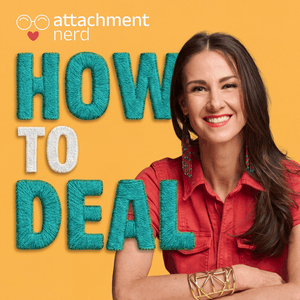
How To Deal is the podcast for parents who want to raise emotionally healthy kids in a world full of messy moments. Therapist and bestselling author Eli Harwood (aka The Attachment Nerd) brings you real stories, expert advice, and practical tools to build stronger relationships with your children—and yourself. Attachmentnerd.com
Podcast websiteListen to How To Deal, White Coat, Black Art and many other podcasts from around the world with the radio.net app
Get the free radio.net app
- Stations and podcasts to bookmark
- Stream via Wi-Fi or Bluetooth
- Supports Carplay & Android Auto
- Many other app features
Get the free radio.net app
- Stations and podcasts to bookmark
- Stream via Wi-Fi or Bluetooth
- Supports Carplay & Android Auto
- Many other app features
How To Deal
Scan code,
download the app,
start listening.
download the app,
start listening.
 Canada - english